Soil work & tillage buyer’s guide
Robots and autonomous tractors that till, hoe, mulch, fertilise and prepare seedbeds.
What these robots do
They pull or carry tools for soil work and drive themselves along GPS routes.
Soil work and tillage robots are driverless tractors and tool carriers. They till, hoe, mulch, spread fertiliser and prepare seedbeds. A seedbed is the fine, loose soil that seeds go into.
They pull or carry an implement. An implement is the tool at the front or back, such as a harrow or a cultivator. Some robots use normal tractor implements. Others need tools made for them.
They follow a planned route using GPS with RTK. RTK is a correction signal that makes GPS accurate to within centimetres.
Many are lighter than a tractor, so they press the soil down less. This pressing is called soil compaction, and it makes it harder for roots and water to go down.
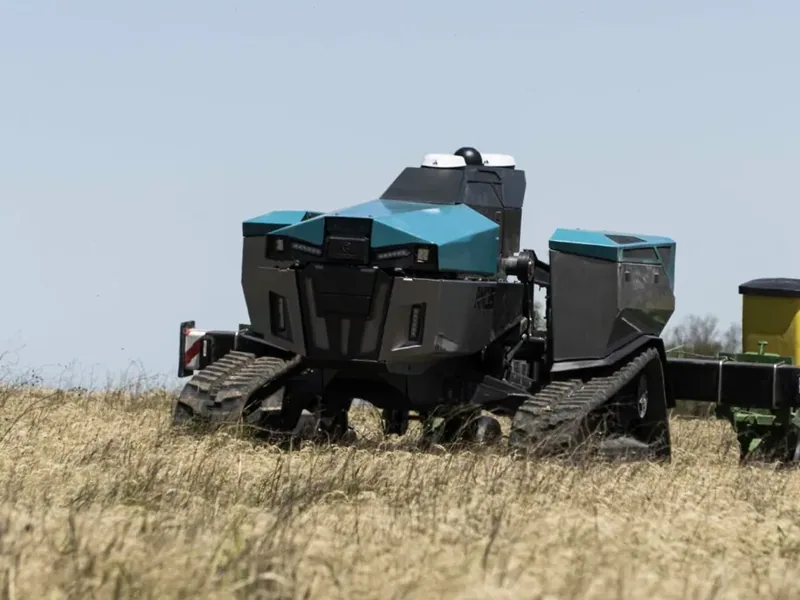
Amos autonomous electric tractor
Cab-less, fully electric, modular autonomous tractor with CAT II hitch for field and orchard work (cultivation…
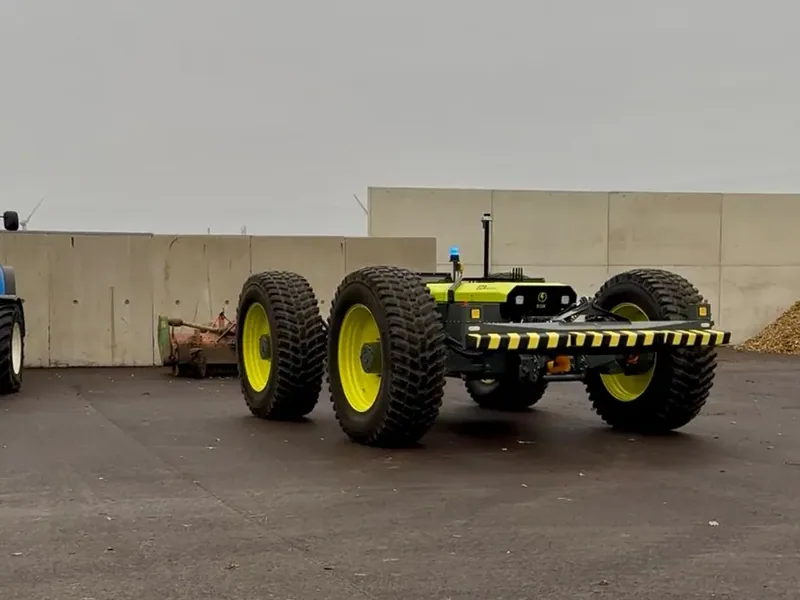
EOX Frontier
Fully autonomous battery-electric (hydrogen fuel-cell option) tractor/work robot for heavy fieldwork with…
How much they cost
Few makers publish prices, and the published ones go from €40,000 to €320,000.
19 of the 93 robots in our catalogue have a published price. For most of them you must ask the maker or a dealer for a quote.
Five of the published prices are in euros. The cheapest starts at €40,000, for a small battery carrier that works between rows. The median (middle) price is €150,000. The dearest is €320,000 excluding VAT, for a large tracked tractor.
Many prices start with "from". The final cost goes up with tools, options and the RTK signal service. Some makers also charge a yearly fee: one Australian robot is listed at A$330,000 plus A$12,500 a year.
If your old implements do not fit the robot, add the cost of new ones.
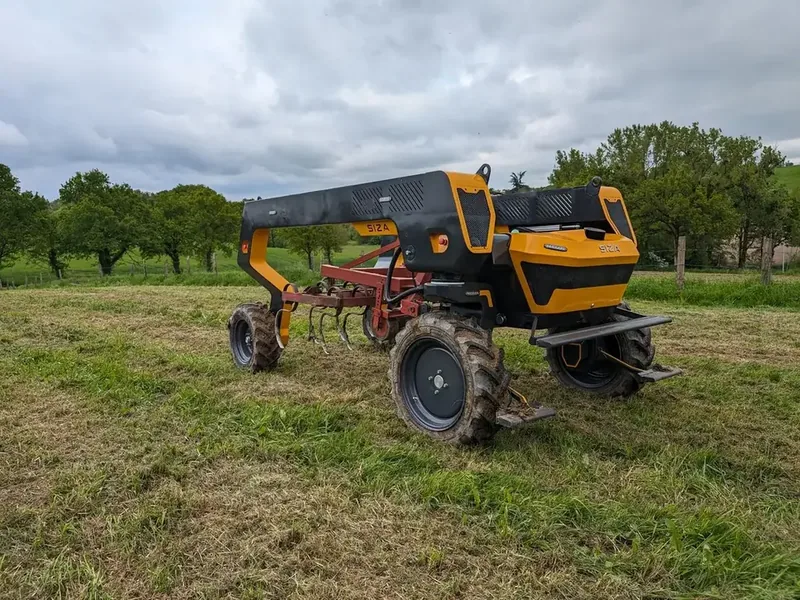
TOOGO 2.0
Autonomous 100% electric variable-track tool carrier with Cat-2 3-point hitch, PTO and hydraulics for row crops…
From €129,000
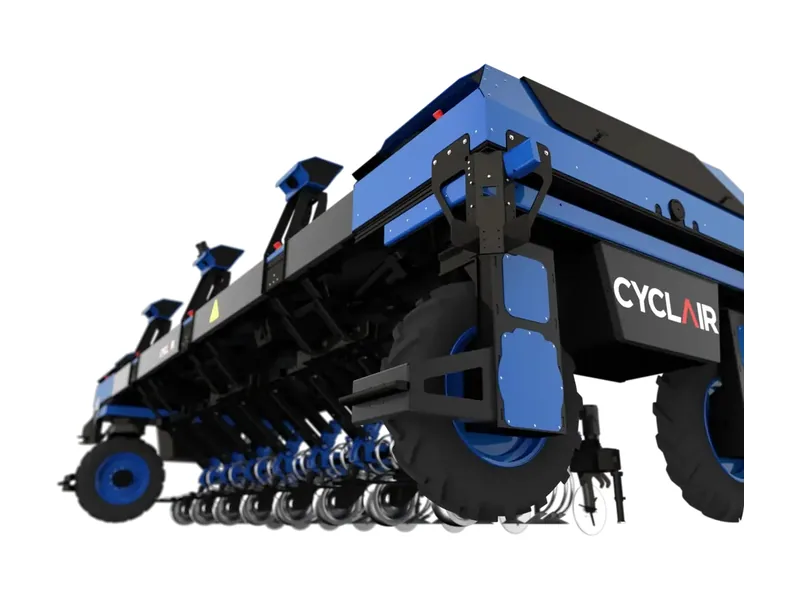
Rover GW
Autonomous AI weeding implement carrier for large-scale field crops. Carries hoes, Kress finger weeders, hilling…
From €200,000
The main kinds
Choose between a new robot tractor, a straddle or narrow robot, a kit for a normal tractor, or a drone.
The robots in this group work in very different ways. Start by choosing the kind that fits your crops and the machines you already have.
Robot tractors and tool carriers
These are new machines, usually without a cab. Most have a three-point linkage, the standard three-arm hitch on a tractor. Many also have a PTO (power take-off), a spinning shaft that drives the tool.
Big tracked models do heavy arable work. Smaller ones work in row crops and vegetables.
Straddle and narrow robots
Straddle robots drive over the vine or tree row, so the row passes under the body. Narrow robots drive between the rows.
Both kinds are made for vineyards, orchards and tree nurseries.
Kits for normal tractors
A kit adds cameras, sensors and a control box to a tractor. Some kits are fitted in the factory, others can be added to a tractor you already own.
Kits often fit only certain makes and series, so check that your tractor is on the list.
Drones that spread fertiliser
Several flying drones in the catalogue spread granular fertiliser or spray liquid feed. They do not touch the ground, so they cause no compaction.
They cannot till or hoe. They are an extra tool, not a replacement for soil work.
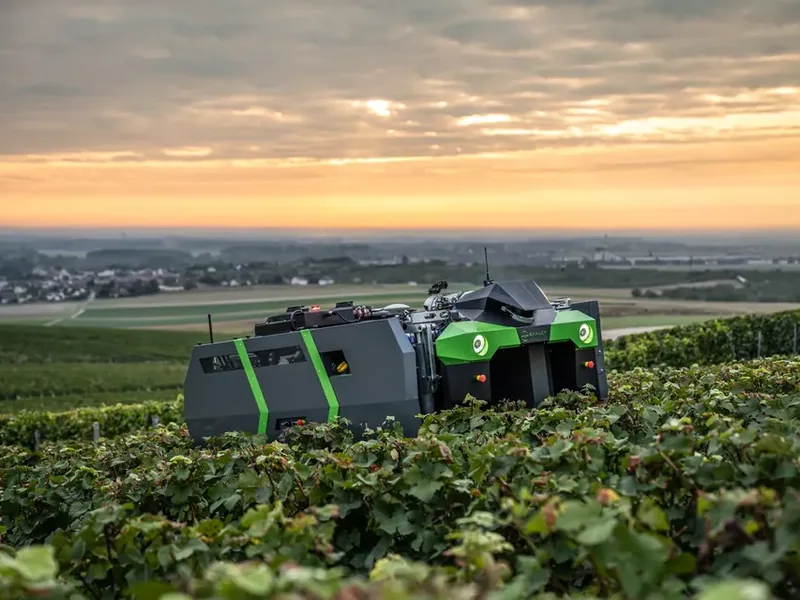
TRAXX
Autonomous single-row diesel straddle tractor (enjambeur) for soil work and spraying in narrow vineyards; RTK…
About €150,000
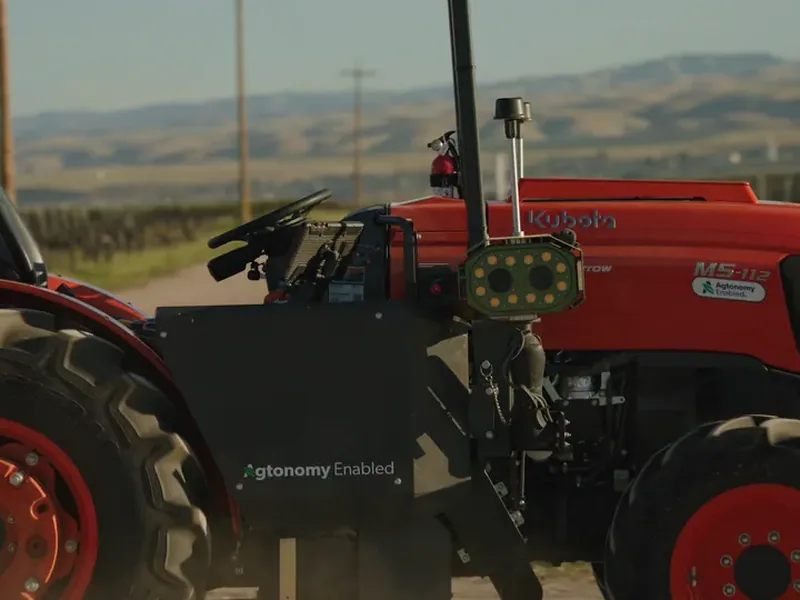
Agtonomy-Enabled tractors
Factory-integrated autonomy software for OEM tractors/off-road equipment plus app for job planning, monitoring…
Size it for your work
Match pulling power, hitch and width to your heaviest job and your rows.
Start with your heaviest job, such as ploughing or deep cultivation. It needs the most pulling power, also called draft.
Check the hitch category. Cat I is for small tractors, Cat II for medium ones and Cat III for large ones. In the catalogue, small vine robots lift 500 to 600 kg, while the largest tracked robots lift 8 or 9 t at the rear.
In vineyards and orchards, measure your narrowest row and the height of your plants. Straddle robots give a row spacing range and a clearance height.
A robot may work slower than a tractor, but it can keep going for many hours. Battery models list between 8 and 14 hours of work, depending on the tool.
- Your heaviest job and the power it needs
- Hitch category and lifting capacity
- Row spacing and plant height
- Hours of work you need per day
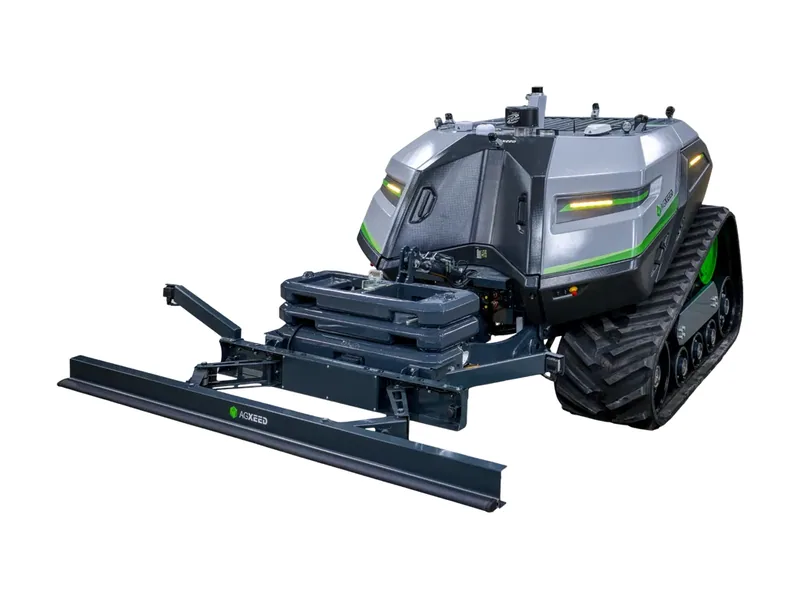
AgBot T2 7 Series
Most powerful tracked AgBot for high-draft heavy-duty work with low ground pressure
From €335,000
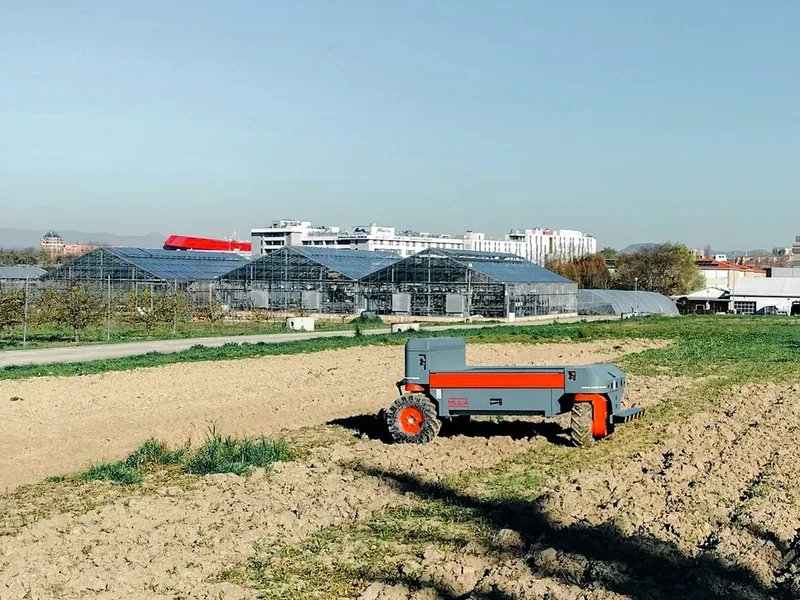
MULA 1250
Multipurpose autonomous electric 4x4 carrier that pulls/carries conventional implements (CAT I/II) for woody…
Weight, power and your soil
Light machines with tracks or low-pressure tyres protect your soil.
Heavy machines squeeze the soil. Water and roots then move through it less easily, and the damage can last a long time.
Compare empty weight and ground pressure. Ground pressure is the weight spread over the area that touches the ground. Tracks and wide, soft tyres spread the load; one vine robot runs its tyres at only 0.9 bar.
Power comes from diesel, batteries or both. A hybrid uses a diesel engine to make electricity for electric motors.
Battery robots are quiet and have no exhaust fumes, but they need charging. Makers list charging times from under 3 h to 8 h.
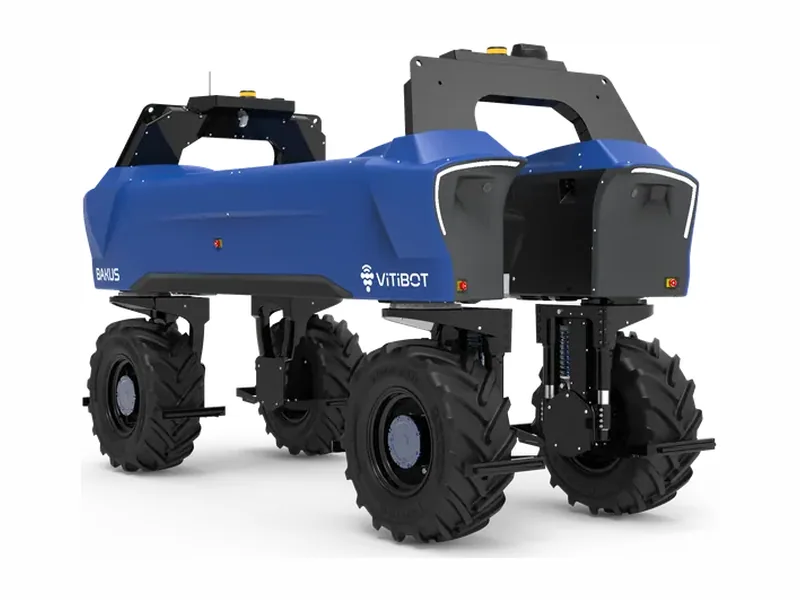
Bakus S (P75S)
Straddle (enjambeur) electric robot for narrow-row vineyards carrying modular tools on a tool-holder boom
€120,000–180,000
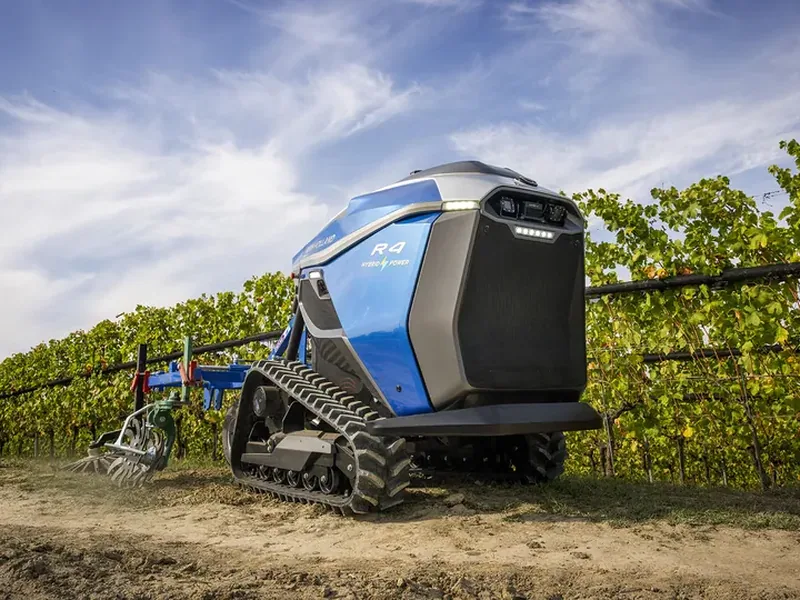
R4 Electric Power
Narrow battery-electric autonomous tracked robot for vineyards: inter-row mowing, tillage and spraying with…
What to check before you buy
Ask about implements, safety, signal and service, not only the price.
Check the stage. 55 of the 93 robots in our catalogue are on sale now. The others are pre-orders, pilots or prototypes.
Ask for the list of supported implements. Check the hitch, PTO and hydraulics, and if the robot uses ISOBUS, a standard that lets the tool and the machine talk to each other.
Rules for driverless machines are different in each country. Some places need a person to watch nearby or by remote. Robots that can also be driven by a person or by remote control are easier to move on roads.
Most robots need an RTK signal and mobile data for monitoring. Ask where the nearest service technician is, what the warranty covers and how fast spare parts arrive.
- Obstacle detection with cameras, LiDAR (a laser that measures distance) or radar
- An emergency stop button on the machine and on the remote
- Geofences: borders on a map that the robot will not cross
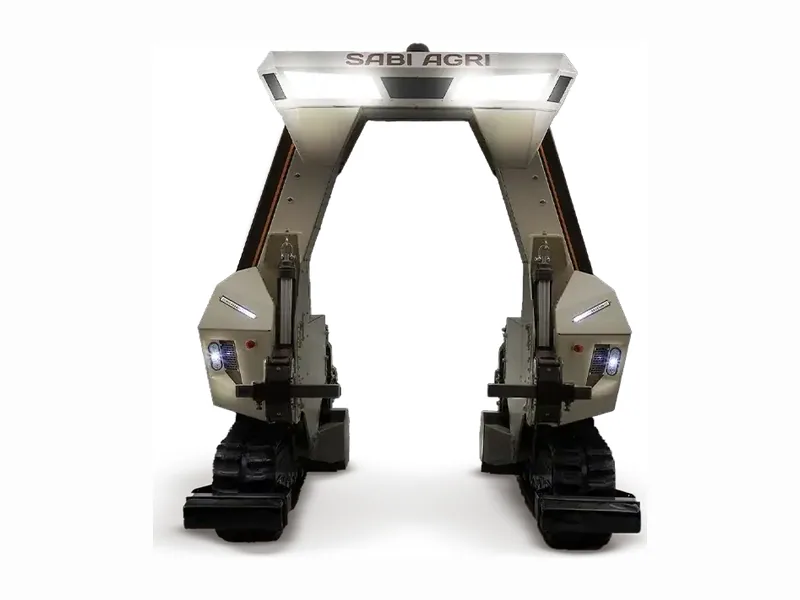
ZILUS
All-terrain electric tracked straddle carrier; modes: operator cab (HD), remote control, full autonomy with Zilus…
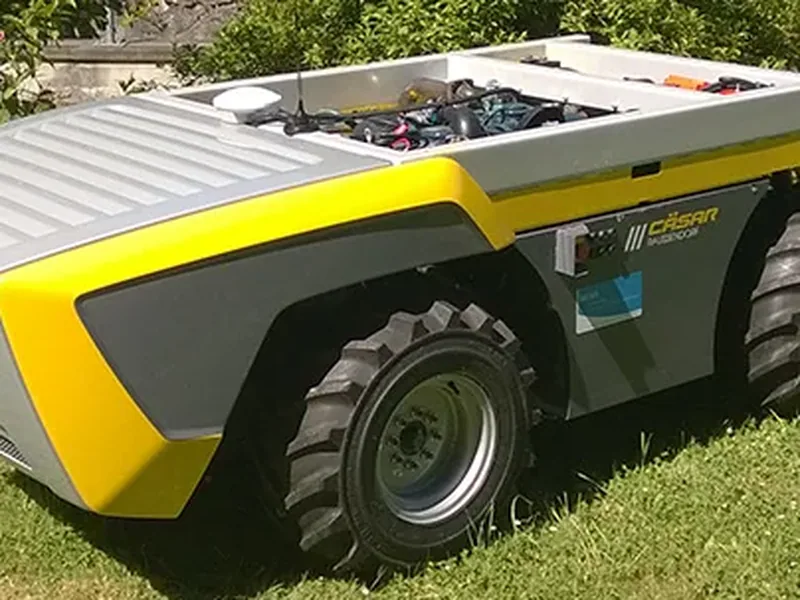
Obstroboter Cäsar
RTK-GPS guided autonomous carrier for orchards and vineyards doing spraying, tillage, fertilising, mowing…
Which one is for me?
- Large arable farm with heavy soil work: Look for a tracked robot with high pulling power, a Cat III linkage and a PTO. Check that your current implements fit and that a dealer can service it nearby. For example AgBot T2 5 Series.
- Vegetable or row-crop grower: Look for a light carrier with adjustable track width, so the wheels stay in your paths. Ask which hoes and cultivators it supports. For example AgBot W4 2 Series.
- Vineyard with narrow rows: Look for a straddle or narrow robot that fits your row spacing and vine height. Electric models are quiet near homes, but check the charging time. For example Ted.
- Orchard or vineyard on steep slopes: Check the maximum slope and cross-slope, and look for tracks. Ask how the robot finds its way under trees, where the GPS signal can be weak. For example Slopehelper.
- Farm that already owns good tractors: An autonomy kit lets you keep your tractors and implements. Check that your tractor make and series are supported, and who services the kit. For example PTx OutRun.
Compare the 93 soil work and tillage robots in the catalogue by kind, stage and specs. Then ask two or three makers for a quote and a demo on your own field.