Wind turbine blade robots buyer’s guide
Robots and drones that inspect, clean and repair wind-turbine blades, replacing rope-access work at height.
What these robots do
They inspect, clean and repair blades so fewer people have to work on ropes at height.
A wind turbine blade gets damaged by rain, dust, ice and lightning. Today, much of the checking and repair is done by rope-access technicians. These are workers who hang on ropes beside the blade.
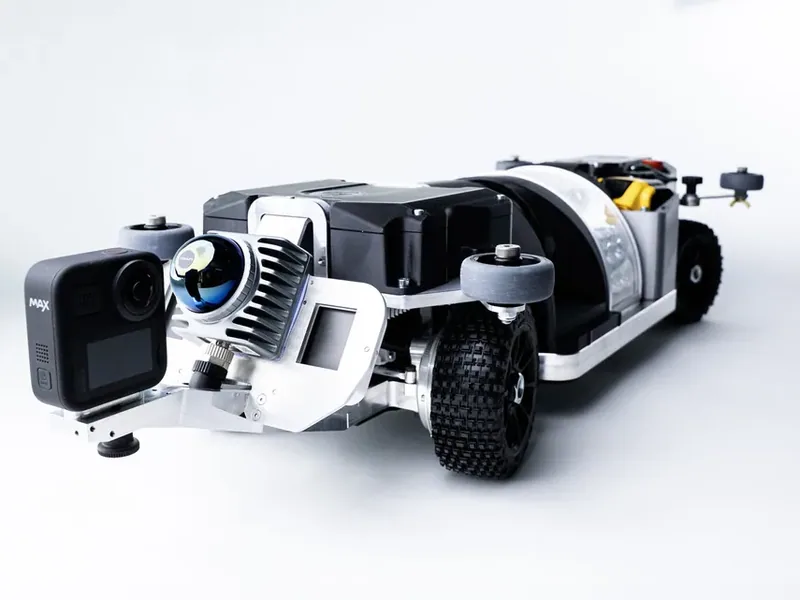
Blade robots take over part of this work. Some are crawlers, small machines on wheels or legs that move along or inside the blade. Others are drones, small flying machines that take photos or measure the blade.
Crawlers can climb the tower or hang from the nacelle. The nacelle is the box at the top of the tower that holds the generator. From there they move along the blade with cameras, sanding tools and coating tools.
How much they cost
No maker in our catalogue publishes a price, so you must ask for a quote.
Our catalogue lists 12 robots from 10 makers. None of them has a published price. Every model is "price on request".
When you ask for a quote, ask what is included. The robot may come with training, software, data reports and service, or these may cost extra.
Also ask how you can pay. Some buyers own the robot, others rent it or pay a service company per turbine. Compare the total cost with what you pay rope-access teams today.
The main kinds
Choose the kind by the job: looking inside, looking outside, testing below the surface, or repairing.
Blade robots fall into four main groups. Each group does a different job, so many owners use more than one.
Crawlers inside the blade
These small robots drive inside the hollow blade. They carry cameras and sometimes LiDAR, a laser scanner that measures shapes in 3D.
They find cracks and glue faults that you cannot see from outside. In our catalogue they weigh from 6 kg to 13 kg, so a technician can carry them up the tower.
Drones for photos outside
These drones fly around the stopped turbine and photograph each blade. Many use autonomous flight, which means the drone flies the route by itself.
Software, often called AI, then looks at the photos and marks possible damage. A person should still check the results.
Contact drones and testing robots
Some robots press a sensor against the blade or tower. This is non-destructive testing, or NDT: checking for hidden faults without cutting or breaking anything.
One drone in our catalogue can press with up to 30 N of force. Another robot walks on six legs over the blade to do ultrasonic tests, which use sound waves to look under the surface.
Repair robots on the blade
These robots hang on ropes or attach to the blade. They clean, grind or sand the surface and apply new coating.
Most work on the leading edge. This is the front edge of the blade, which wears away first from rain and dust. This wear is called erosion.
Inspection only or also repair
Decide first if you only need to find damage, or also to fix it.
Inspection robots and drones are simpler to use. They give you photos and reports, and people still do the repair.
Repair robots do the cleaning, sanding and coating themselves. They save more rope-access hours, but they are heavier work to set up.
A common plan is to inspect with a drone, then send a repair robot or team only to the blades that need it.
How to size it for your turbines
Check that the robot fits your turbine and blade type, and how long it needs per blade.
Blades come in many lengths and shapes. Ask the maker which turbine models and blade types the robot supports. An inside crawler may not reach the full blade on every model.
Ask how long one blade takes, including set-up and packing away. For crawlers, check the travel speed. One model in our catalogue inspects at 20 cm/sec.
Ask about wind limits. Drones and rope-hung robots can only work below a certain wind speed. On a windy site, this decides how many days a year you can use them.
What to check before you buy
Look at stage, service, safety and the reports you will get.
Check the stage of the model. 9 of the 12 robots in our catalogue are on sale now. Two are still at pilot stage, which means they are being tested with first customers. One is discontinued, so spare parts may be hard to get.
Ask who repairs the robot and how fast. A broken robot during the short summer season can cost you a lot of working days.
- Safety: who must be on site, and what training they need
- Rules: drone flying permits and the turbine owner's safety rules
- Data: what the report looks like and who owns the photos
- Power and connection: battery time, cables or tether, and signal at the site
Which one is for me?
- Farm or small owner with one to a few turbines: You probably do not need to own a robot. Ask a service company that uses inspection drones or crawlers, and compare their price per turbine with rope-access teams.
- Wind farm operator with many turbines: Look at an autonomous inspection drone for regular outside checks, plus an inside crawler for deeper checks. Check that the software gives clear reports you can compare from year to year.
- Blade repair contractor: Look at repair robots that clean, sand and coat the leading edge. Check which blade types they support, the wind limits, and how many people you still need on site.
- Inspection or testing company: Look at contact drones or climbing robots that do non-destructive testing. Check the sensors they carry and whether they also work on towers and other structures.
Compare all wind turbine blade robots in our catalogue, sorted by kind and stage. Then ask two or three makers for a quote for your own turbines.