Weeding robot buyer’s guide
Compared by Working Robots · 87 robots, 73 makers
Weeding robots remove weeds without (or with far less) herbicide, a growing need as products are banned or lose approval.
What a weeding robot does
It finds each weed with cameras and kills it, so you need little or no herbicide.
A weeding robot removes weeds without herbicide (weed-killing chemical), or with much less of it. This matters more each season, as weed-killers are banned or lose approval.
Cameras look at the ground. AI software, trained on many photos of plants, tells the crop from the weed.
Then the machine acts on the weed only. It can hoe it out, cut it, burn it with a laser, kill it with electricity or spray a tiny dose on it.
Our catalogue lists 87 weeding robots from 73 makers. 48 of them are on sale now. The others are on pre-order, in testing or no longer made.
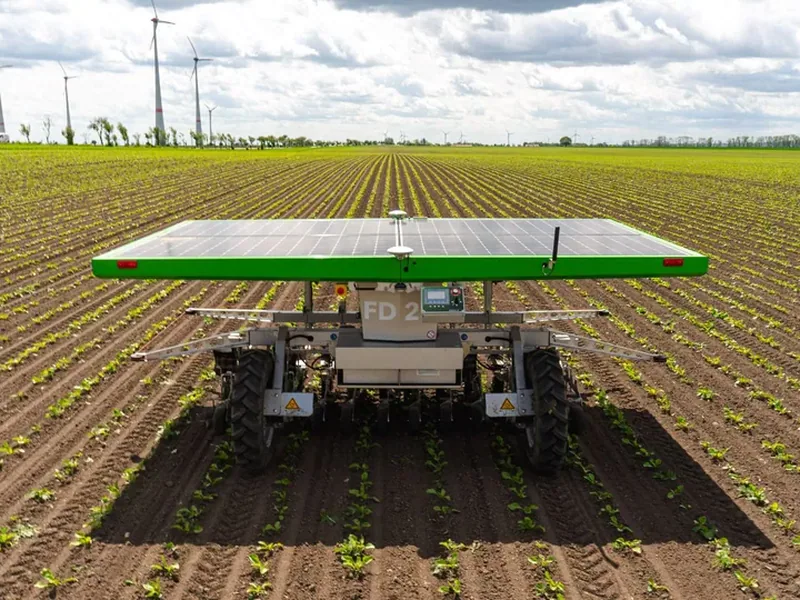
FarmDroid FD20
Solar-powered autonomous field robot that seeds with RTK-GPS position memory, then weeds inter-row and intra-row…
From €95,000
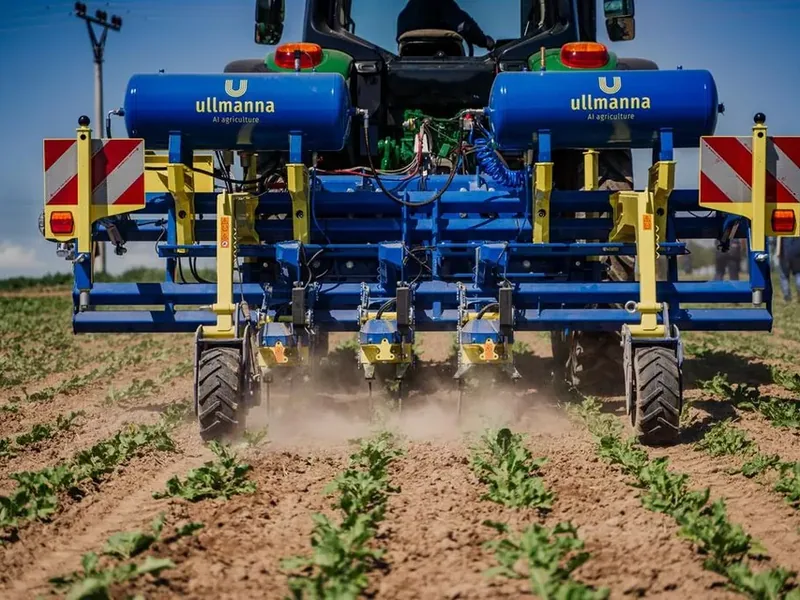
AROW
AI vision box (cameras, lights, compute, blade control) that finds crop root points and drives in-row weeding…
How much it costs
Prices go from a small market-garden kit to the price of a large tractor, and most makers only give prices on request.
Most makers do not publish prices. 13 of the 87 robots in our catalogue have a published price. For the others, plan to ask for a quote.
Among the 8 prices given in euros, the cheapest is €13,500 and the dearest is €205,000. The middle price is €112,000.
Small electric robots for market gardens are at the low end. Large self-driving laser or hoeing robots for big fields are at the high end.
A tractor implement (a machine your tractor carries or pulls) can cost less, but you need the tractor and a driver. Some makers sell weeding as a service: you pay for the work, not the machine.
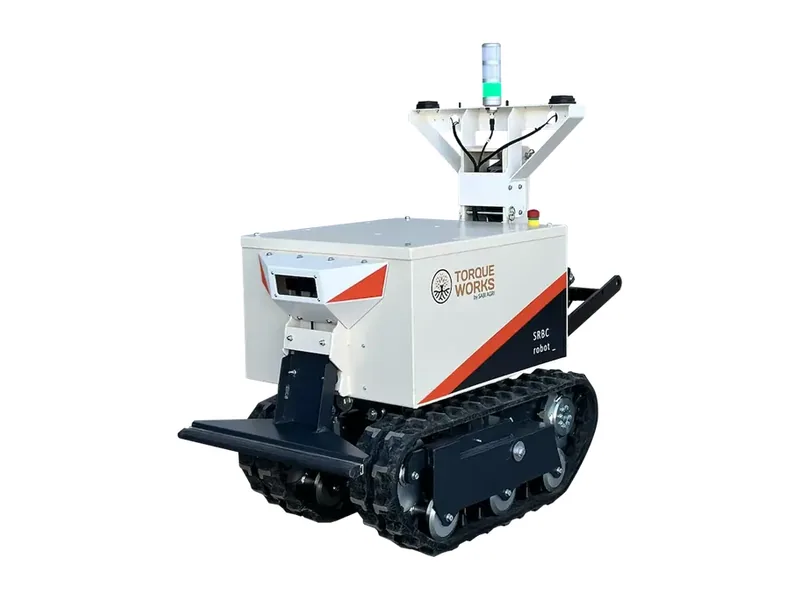
SRBC robots
Lightweight modular electric field robots/robot kits (bed-straddling or inter-row) for market gardening: hoeing…
€13,500–17,250
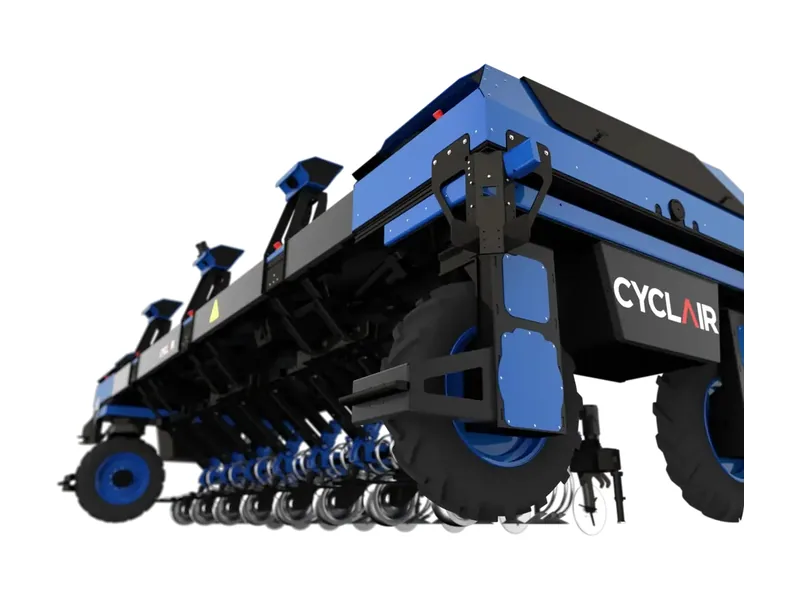
Rover GW
Autonomous AI weeding implement carrier for large-scale field crops. Carries hoes, Kress finger weeders, hilling…
From €200,000
How it kills the weed
Choose the method by your crop, your soil and whether you farm organic.
All weeding robots find the weed with cameras. They differ in how they kill it.
Hoes and blades
Steel tools cut or pull out the weed. In-row tools move in and out around each crop plant, guided by the camera.
No chemicals are used. The soil must be dry enough for the tools to work well.
Lasers
A strong beam of light heats the weed and kills it. The soil is not moved.
Lasers work best on very small weeds, so timing is important.
Electricity
A strong electric current goes through the weed and heats it from the inside, down to the root.
It is used under trees, vines and bushes, and in field crops.
Micro-spraying
The camera opens a nozzle only above a weed. You still use herbicide, but a much smaller amount.
Check that this fits your rules, for example if you are certified organic.
Other methods
A few robots use other ways, such as jets of hot vegetable oil, or stirring the water in rice fields to block light from weeds.
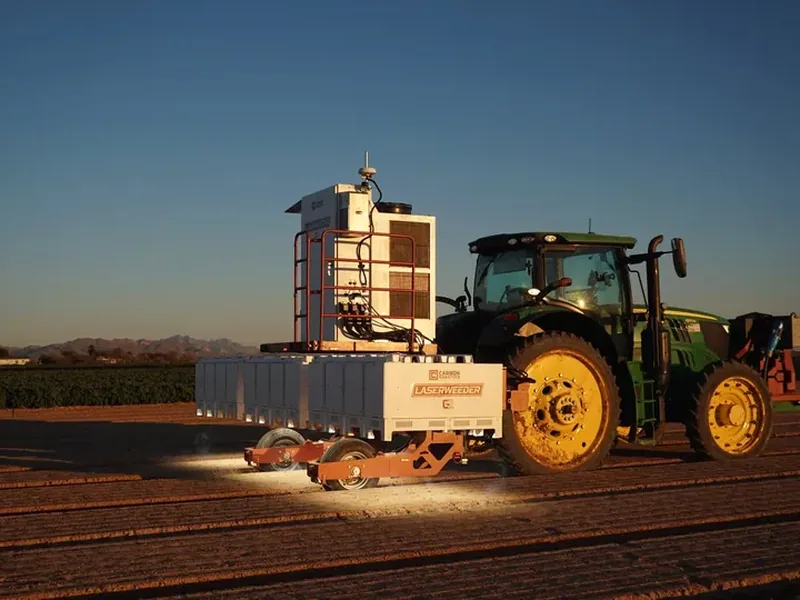
LaserWeeder G2
Tractor-pulled implement that uses computer vision (Carbon AI) to detect weeds and kill them with lasers…
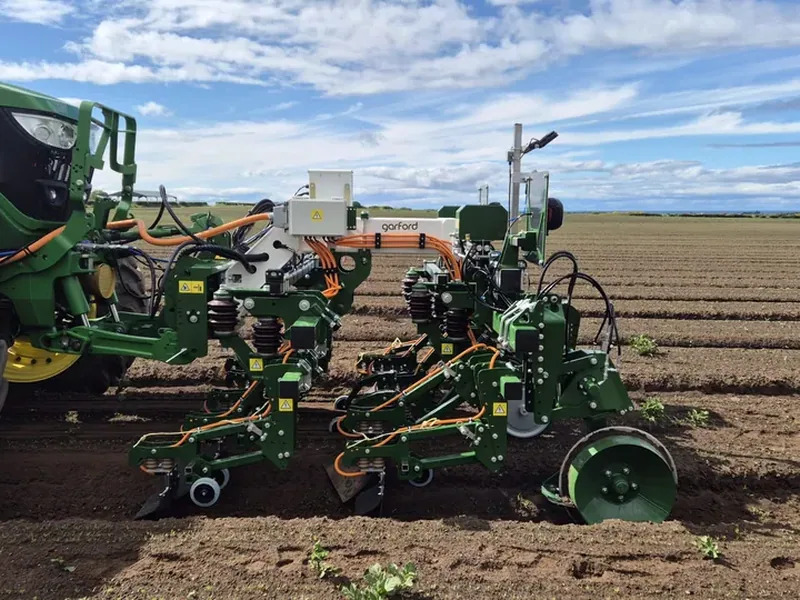
Robocrop Electric Weeder
Vision-guided high-frequency electrical weed control.
Self-driving robot or tractor implement
A self-driving robot saves a driver; a tractor implement uses the tractor you already have.
The catalogue has both kinds, plus driverless carriers that take ordinary weeding tools.
Self-driving robots
They steer themselves, often with RTK. RTK is satellite positioning with extra correction, accurate to about a centimetre.
Many run on batteries or solar panels. They work slowly but for long hours, some also at night. Someone must still check on them and move them between fields.
Tractor implements
These hang on the front or back of your tractor. They get power from the PTO (the turning shaft on the tractor that drives tools) or from hydraulics.
They often work faster, but they need a driver for every hour of work.
Tool carriers and kits
Some robots are driverless carriers. They pull or carry normal hoes and other tools, and can also mow, seed or spray.
There are also kits that make your own tractor driverless.
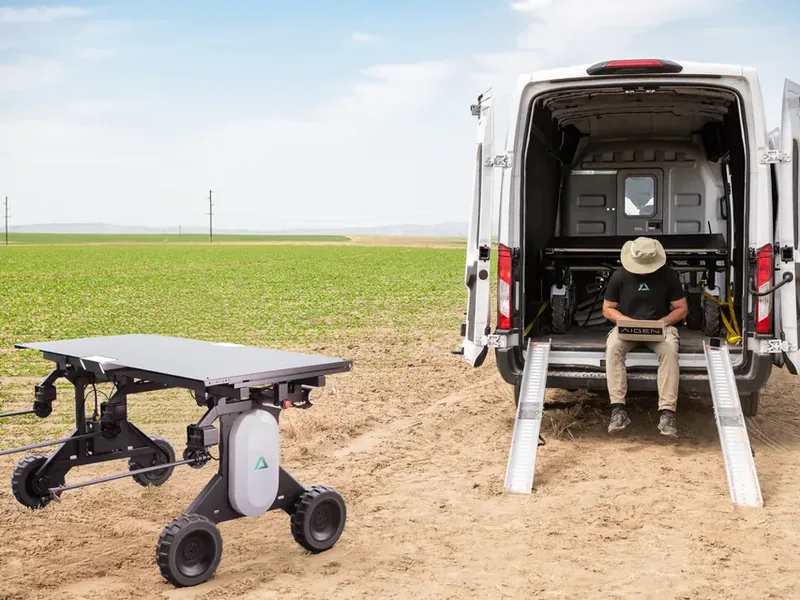
Element (Gen2)
Solar-powered autonomous robot that stays in the field all season, identifies weeds with AI vision and kills them…
From $50,000 per robot
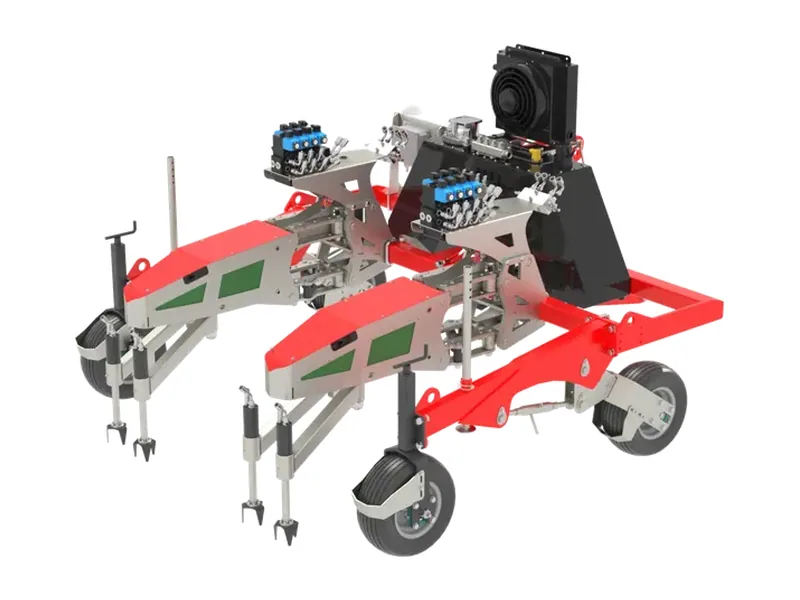
SA IA
Tractor-mounted in-row (inter-plant) weeder. AI recognises crop plants and automatically opens and closes rotary…
How to size it for your farm
Match the work rate to your hectares and to the short time when weeds are still small.
Weeds must be killed while they are small. So the real question is how many hectares the machine can cover in the few days or weeks of that window.
Makers give work rates per hour, per day or per season. Slow solar robots are sized per season: one maker states about 20 hectares per season for its smaller model and about 60 for the larger one.
Check that the machine fits your rows: row spacing, bed width and track width (the distance between the wheels). Many robots have an adjustable track.
For a tractor implement, check the tractor power it needs. One laser weeder asks for a 60 hp (horsepower) tractor, and its larger version for a 100 hp tractor.
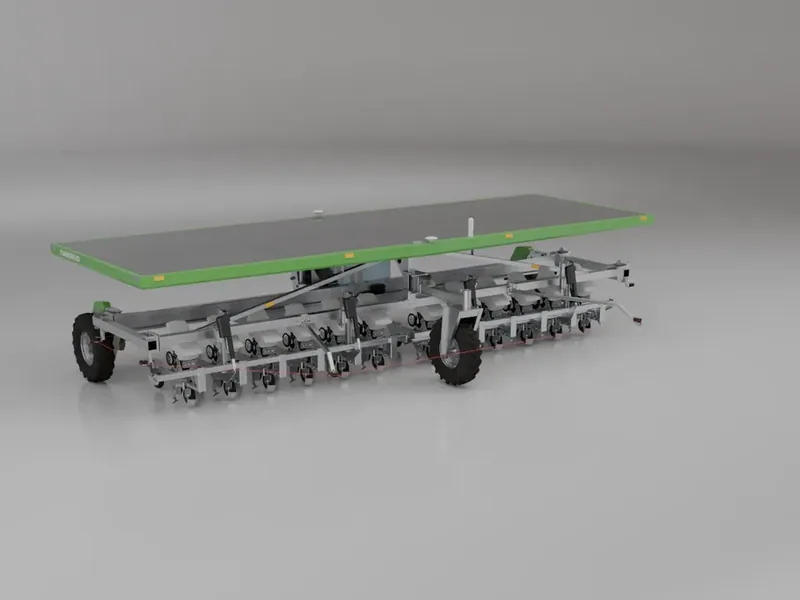
FarmDroid FD60
Larger solar + range-extender version for seeding and weeding bigger acreages
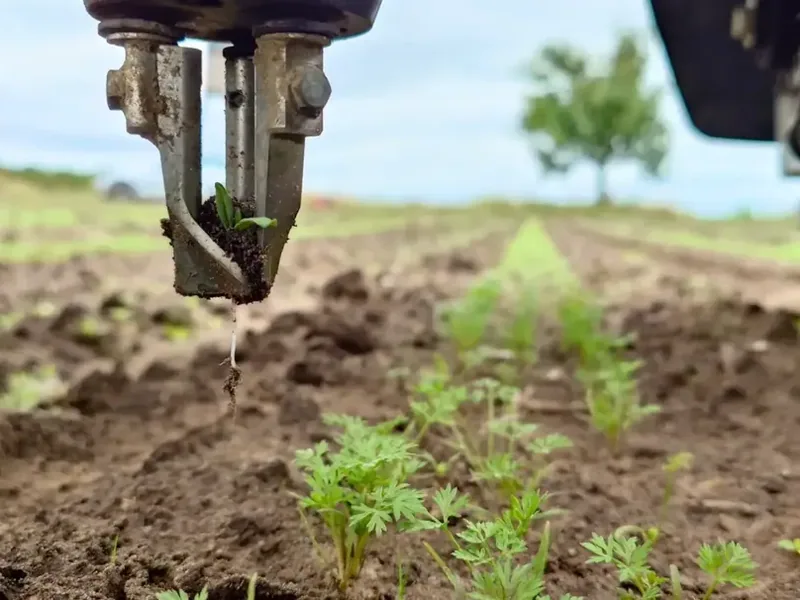
Maverick
Battery-electric autonomous robot that mechanically pulls/removes weeds in-row with vision-guided delta-arm…
What to check before you buy
Ask to see it work on your own crop, at your own growth stage, before you buy.
A robot that works well in one crop may not know another. Ask the maker for a demo on your fields, or for results from farms like yours.
Also check the stage of the machine. A robot on pre-order or in a pilot may still change before it reaches you.
- Crops and growth stages: which crops it is proven on, and how small or large the crop and weeds can be
- Work rate: hectares per day, and per charge or per tank
- Where it works: in the row (between crop plants), between the rows, or both
- Service and safety: a dealer and spare parts nearby, covers on lasers and electric parts, how it stops when a person comes close, and RTK or mobile signal on your fields
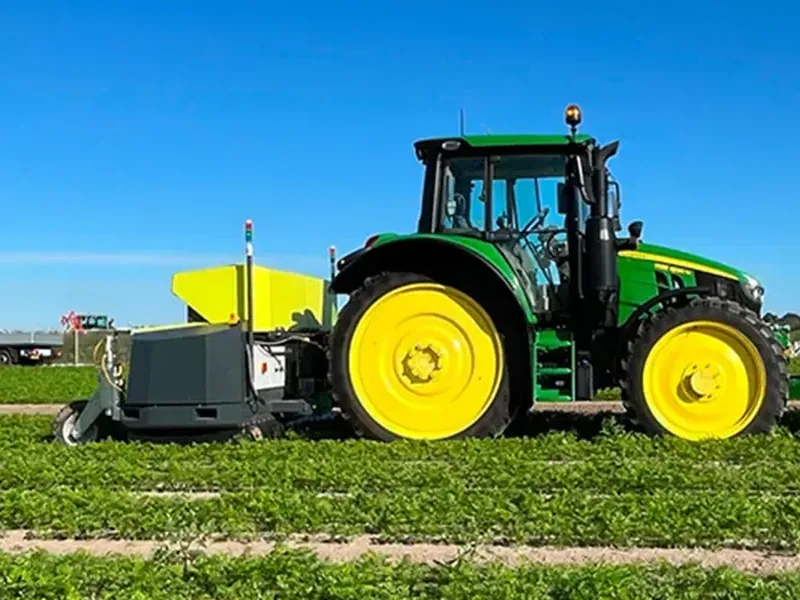
ESCARDA Compact System
Tractor-towed laser weeder: multispectral cameras + AI distinguish crop from weed, Class-1-enclosed laser kills…
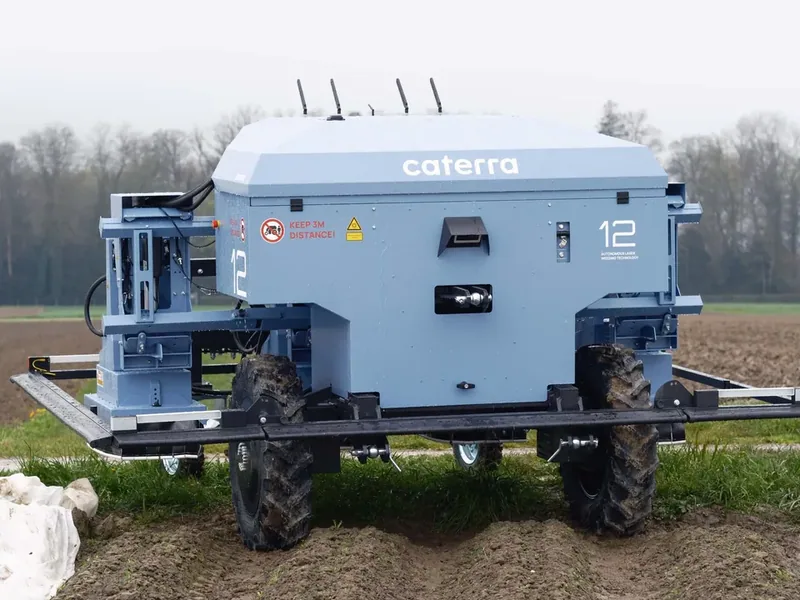
Robot Honeybee
Autonomous RTK/camera-guided laser weeding robot that works within 3 mm of crops day and night without a tractor.
Vineyards and orchards
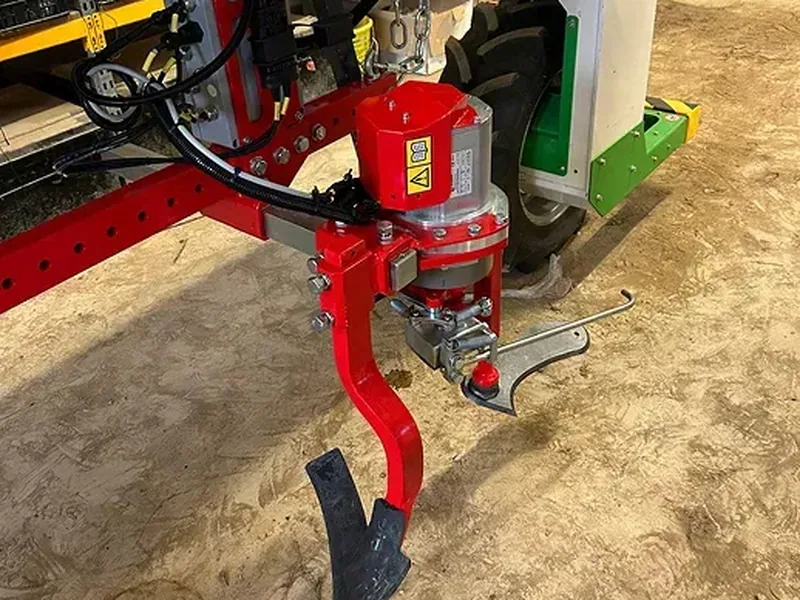
Under-vine work needs tools that swing around the trunk, on a machine that fits your rows.
In vineyards and orchards, the hard part is the strip under the vines or trees. Under-vine tools have sensing blades: they touch the trunk, swing around it and go back into the row.
Straddle robots drive over the row, with wheels on both sides. Other robots are narrow and drive between the rows. Check your row spacing and the height of your vines.
On steep slopes, look at tracked machines and at the maximum slope the maker gives.
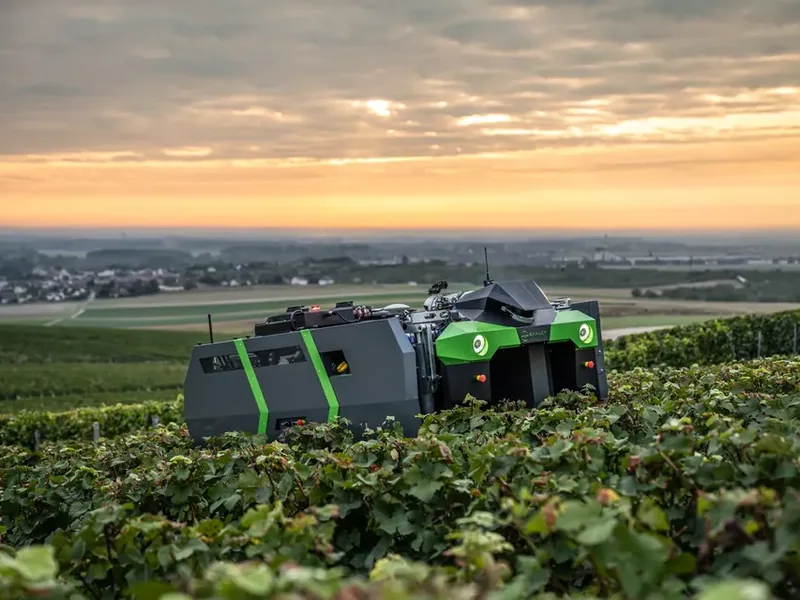
Ted
Autonomous electric vine straddler carrying under-vine and inter-row tools
TRAXX
Autonomous single-row diesel straddle tractor (enjambeur) for soil work and spraying in narrow vineyards; RTK…
Which one is for me?
- Small market garden with hand-worked beds: Look for a light electric robot that hoes between and along the beds, and can also seed or carry loads. A low price and easy setup matter more than speed. For example Oz.
- Vegetable farm growing sugar beet, onions or lettuce: Look for camera-guided in-row hoes or a laser weeder proven on your crop. Check how many rows it covers at once and how fast it goes. For example Robocrop InRow Weeder.
- Large arable farm with maize or soy: Look for a wide tractor-mounted spot sprayer or laser weeder. Work rate per hour matters most. Remember that spot spraying still uses some herbicide. For example RXF900.
- Vineyard with narrow rows: Look for a straddle or narrow robot that fits your row spacing and carries under-vine tools. Check the slope limit and the vine height it can pass over. For example Bakus S (P75S).
- Contractor weeding for several farms: Look for a fast machine that is easy to move by road and to set up for different crops and row widths. Ask about service and spare parts in your area. For example ESCARDA Flex System.
Use the catalogue to compare weeding robots by method, crop and price. Then ask two or three makers for a demo on your own fields.