Spraying & crop protection buyer’s guide
Spraying robots apply crop protection only where it is needed, cutting chemical use and keeping the operator away from the spray.
What a spraying robot does
A spraying robot puts crop protection only where it is needed, and the operator stays away from the spray.
Crop protection means products that fight weeds, pests and plant diseases. A spraying robot applies them without a driver on the machine.
Some robots drive the rows on their own and spray like a normal sprayer. Others use cameras to find single weeds or plants and spray only those. A few use UV-C light (a strong ultraviolet light) instead of chemicals.
Our catalogue lists 180 models from 106 makers. 131 of them are on sale now. The rest are pilots (tested on real farms), prototypes or pre-orders.
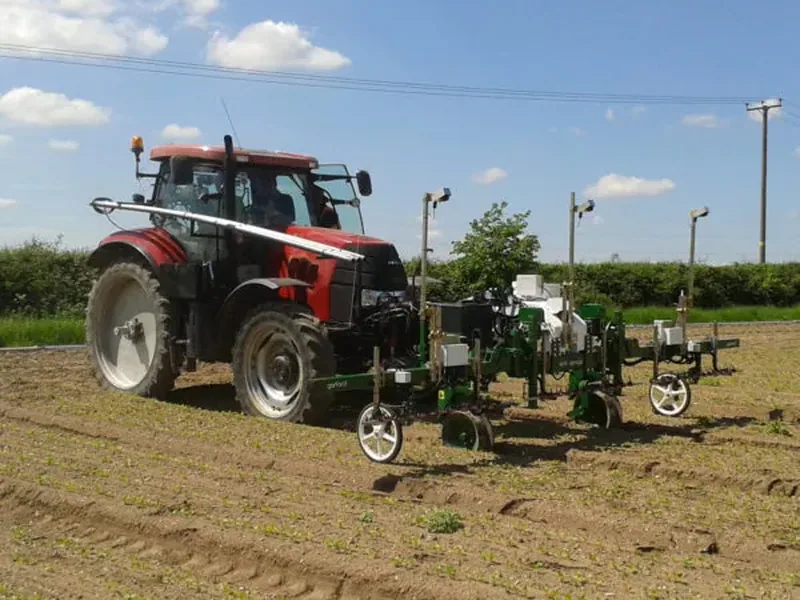
Robocrop Spot Sprayer
Vision-guided precision spot sprayer.
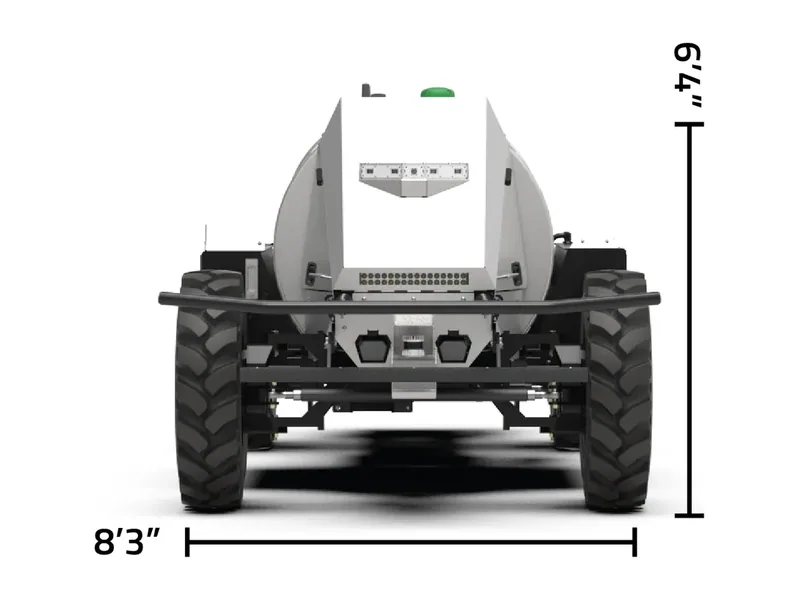
Orchard GUSS
Driverless autonomous air-blast sprayer for orchards; fleet supervised by one operator
About $307,500
How much it costs
Most makers give a price only on request, so ask for a full quote, including yearly fees.
25 of the 180 robots in our catalogue have a published price. For the others you ask the maker or a dealer for a quote.
Three models give a firm price in euros. They run from €18,000 to €95,000, and the median (the middle price) is €25,900.
Other published prices show how wide the range is. A small electric orchard sprayer costs $45,000–58,000. A kit that makes your own tractor driverless starts from $35,000 installed. A camera spot sprayer for the front of a tractor starts from £142,000. A driverless crop-spraying aircraft costs $550,000–580,000.
Some makers also charge a yearly fee for software or service, for example A$12,500/yr on top of the machine. Ask what the price includes: GPS correction signal, software, training, delivery and service.
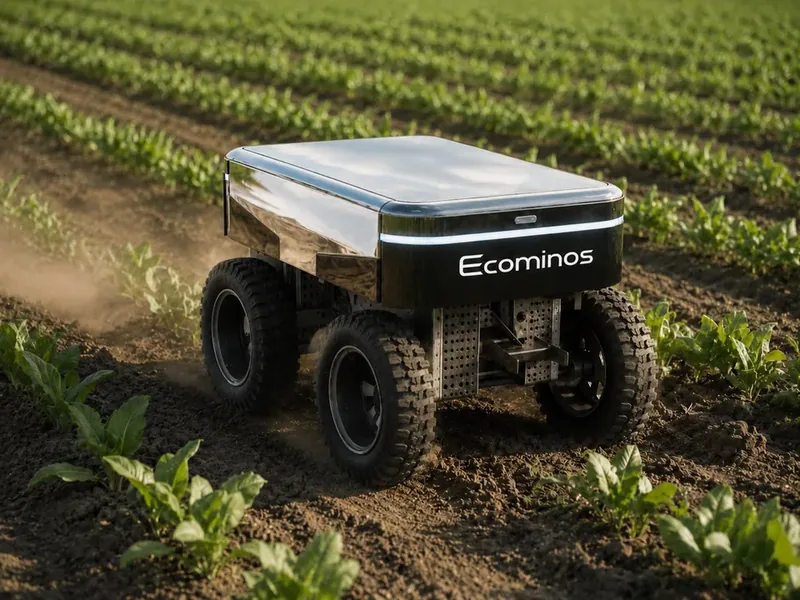
EcominoS
Compact battery-electric modular field robot for row-planted vegetables on small and medium organic and…
From €18,000
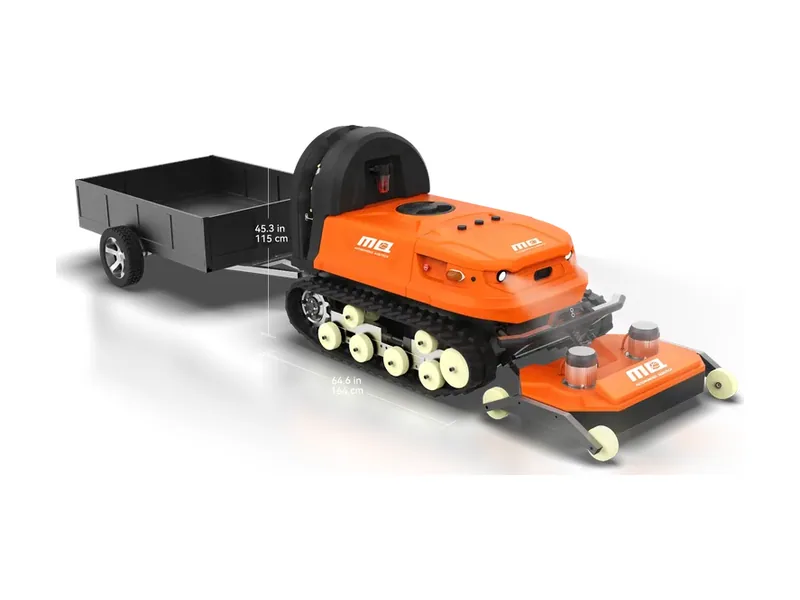
M200 autonomous sprayer
Compact all-electric tracked autonomous sprayer for orchards, vineyards and greenhouses; remote control or…
$45,000–58,000
The main kinds of spraying robot
Choose the kind by your crop: drones for open fields and hard-to-reach land, ground robots for rows, cameras for single weeds.
Spraying robots come in a few main kinds. Many makers sell more than one kind, and some machines mix them.
Spray drones
A spray drone flies over the crop on a planned route and sprays from above. It works well on wet ground, hills, rice paddies and fields with no tracks.
Drones carry small tanks and fly for a short time per tank, so you need spare batteries and a refill point close to the field.
Driverless ground sprayers
These drive between the rows of orchards, vineyards or field crops and spray like a tractor sprayer. Many are air-blast sprayers: a fan blows the spray into the trees or vines.
Some are tracked (they run on rubber tracks, like a small digger), which helps on slopes and soft ground.
Camera spot sprayers
Cameras and AI (software that learns to recognise plants) find each weed or crop plant. The machine then opens a nozzle only over that plant.
Some drive on their own. Others are mounted on a normal tractor and are not robots, but they do the same plant-by-plant spraying.
UV-C light instead of chemicals
These robots drive the rows at night and shine UV-C light on the plants. This is used against fungal diseases such as powdery mildew in vines and strawberries.
They can cut fungicide use, but they treat only certain diseases. Ask which ones.
Kits for your own tractor
A retrofit kit adds sensors, GPS and controls to a tractor you already own, so it can pull your sprayer with no driver. Check which tractor brands the kit fits.
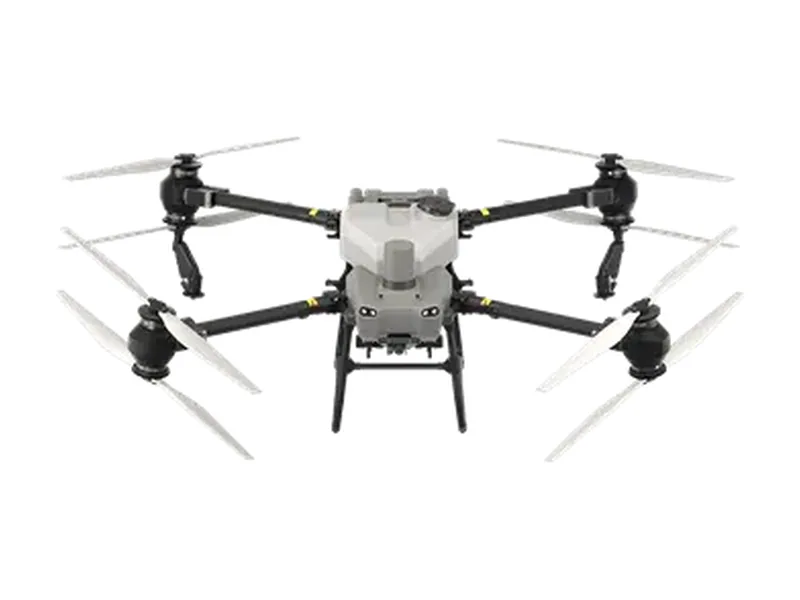
DJI Agras T50 / T25 / T25P
Mid-size and compact crop-protection spray drones.
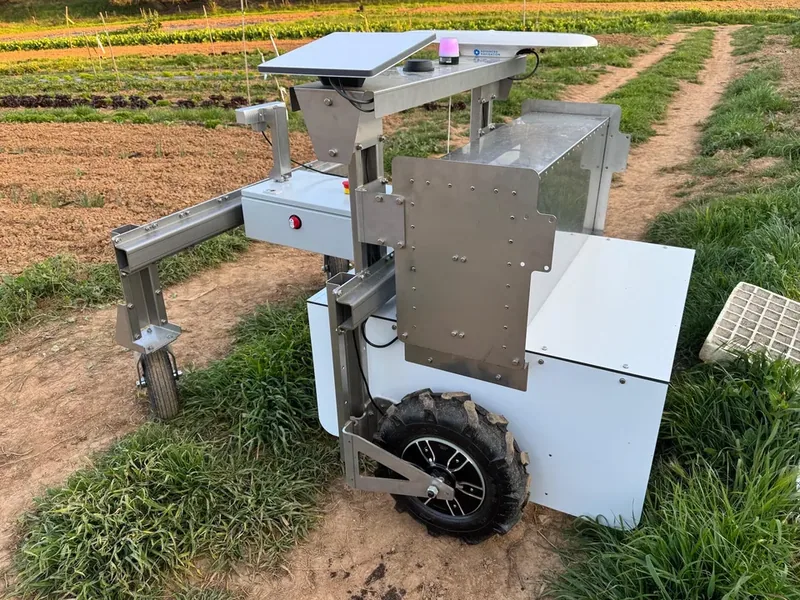
Wagus
Autonomous electric ground robot that treats crops with UV-C light plus AI to control fungal diseases instead of…
How to size it for your farm
Work out how many hectares you must spray in one weather window, then check tank size and hectares per hour.
Two numbers matter most: tank size and hectares per day. A small tank means more stops to refill, and every stop costs time.
Tanks vary a lot. Small drones carry 8 L and the heaviest drones carry 100 L. A tracked orchard sprayer may carry 450 L.
Work rates vary too. A small electric orchard robot covers 0.4–1.2 ha/h, a tractor camera spot sprayer up to 4 ha/h, and a large drone up to 24 ha/h. These are makers' figures, so ask for real results from a farm like yours.
Before you buy, answer these questions:
- How many hectares must be sprayed before the weather or the pest changes?
- How far is the water and mixing point from the fields?
- Can the robot work at night to add hours?
- How long does a battery charge or refuelling take?
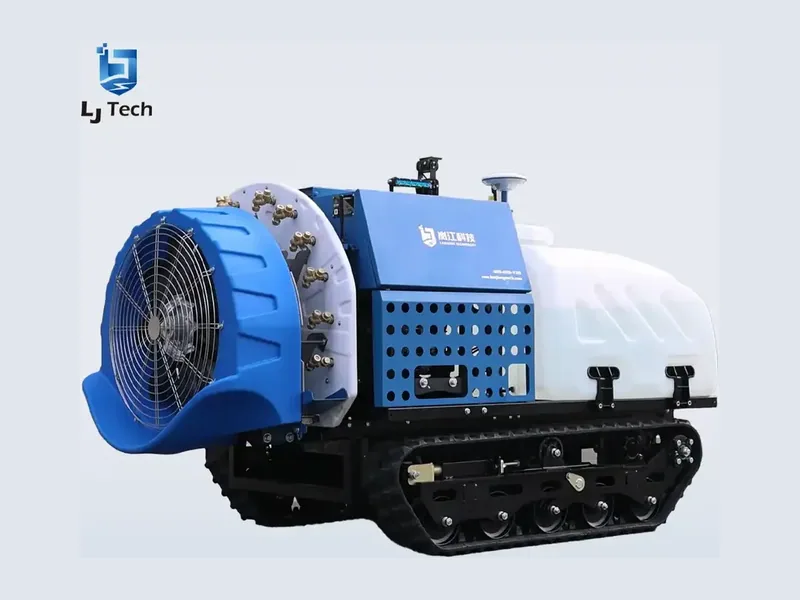
Unmanned Orchard Sprayer S450
Hybrid tracked autonomous air-blast sprayer (450 L) for orchards and vineyards.
From $27,750
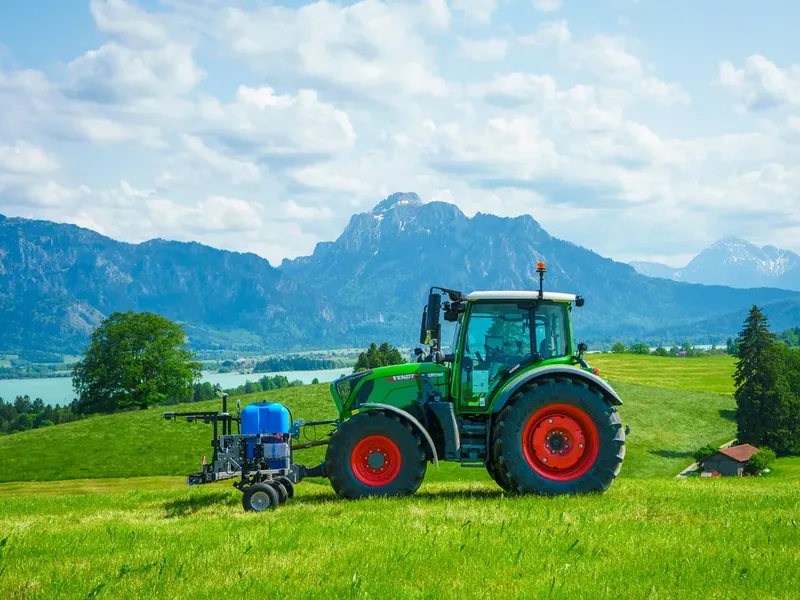
RXF600
6 m front-mounted AI spot sprayer for grassland (e.g. dock/Rumex control)
What to check before you buy
Make sure the robot is legally approved as a sprayer in your country, and ask how finely it controls the spray.
Rules first. In many countries a sprayer must be approved, and spray drones often need a pilot licence and a special permit. A driverless machine may need a trained person watching it. Ask your local authority or dealer before you buy.
Spray control. Section control turns parts of the boom on and off. Nozzle-level control opens and closes each nozzle on its own, which saves more product near field edges and on patchy weeds.
Positioning and signal. Most robots use RTK GPS, a correction signal that makes GPS accurate to a few centimetres. Check that you have a correction signal and mobile coverage in all your fields.
Also check:
- Safety: obstacle sensors, emergency stop and how people are kept out of the spray zone
- Service: a dealer nearby, spare parts and someone to call during the season
- Power: battery, diesel, petrol or hybrid, and where you will charge or refuel
- Cleaning: how easy it is to rinse the tank and lines between products
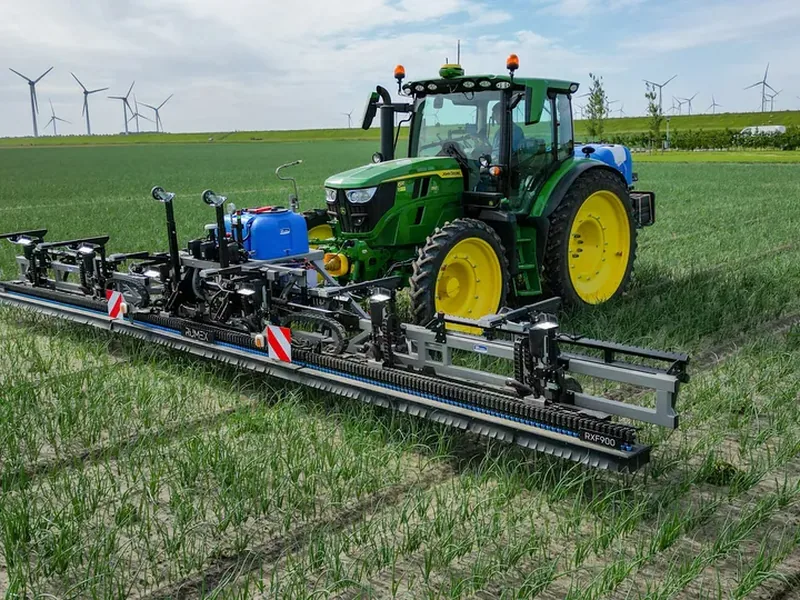
RXF900
Front-mounted tractor AI camera spot sprayer that opens individual nozzles only on detected weeds ('All Green'…
From £142,000
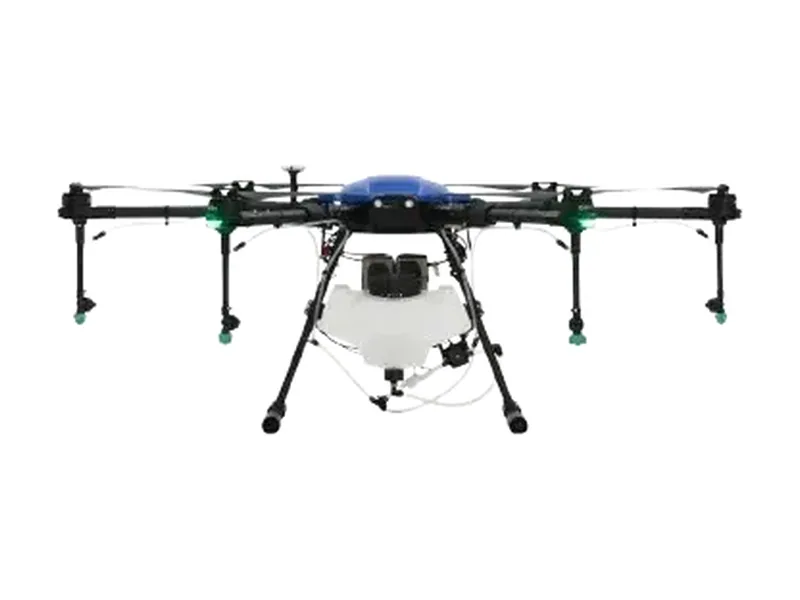
Agri Kisan Drone
DGCA type-certified agricultural drone for precision spraying of fertilisers, pesticides and nutrients with…
Orchards, vineyards and slopes
Measure your row width and steepest slope before you look at models.
In permanent crops (trees, vines and berries) the robot must fit your rows. One tracked carrier needs rows of at least 2.1 m, while a narrow vineyard straddle robot works in rows of 1.00-1.40 m. A straddle robot drives over the row, with one side in each gap.
Slopes matter too. Some tracked machines claim up to 60% slope, but side slopes are usually harder than going straight up. Ask the maker for both figures.
Check canopy height as well. Tall trees need towers or strong fans, and low vines need a machine that fits under the wires.
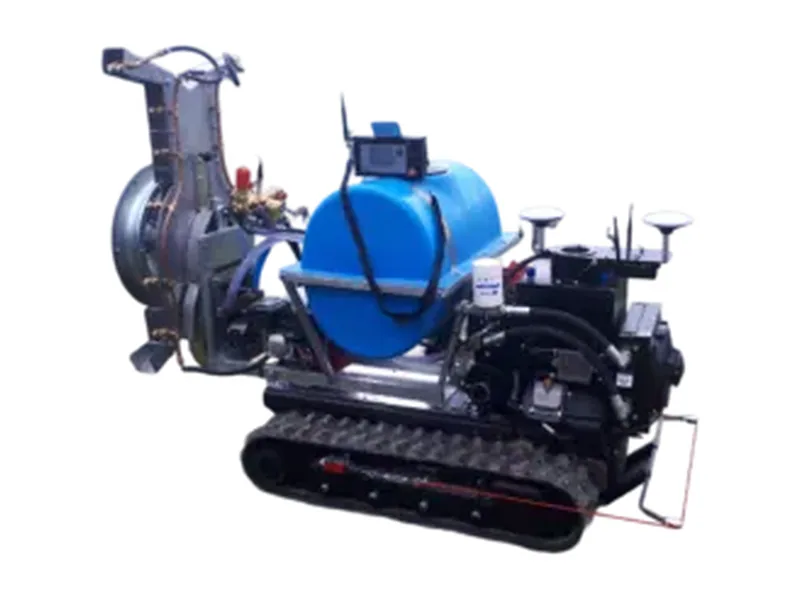
Vineatrac
Compact autonomous tracked petrol tool carrier for steep/narrow vineyards; autonomous or long-range remote control
About €55,000
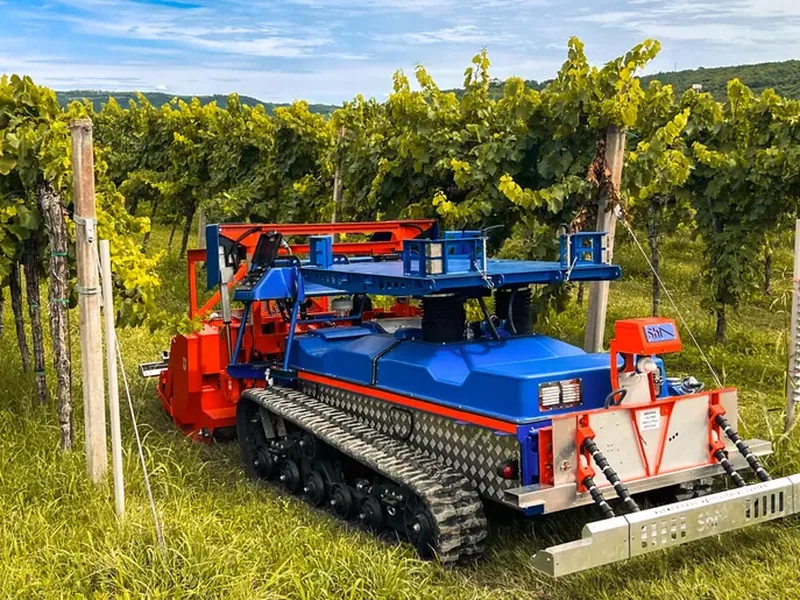
Slopehelper
Autonomous electric tracked carrier for orchards, vineyards and other permanent plantings with interchangeable…
Which one is for me?
- Arable or vegetable farm that wants to cut herbicide use: Look at camera spot sprayers with nozzle-level control. Ask how well the cameras tell your crop from the weeds, and at what speed. For example Niqo RoboWeeder.
- Steep or narrow vineyard: Look at tracked or straddle robots. Check row width, maximum slope and side slope, and how the robot is supervised when you are not on site. For example ZILUS.
- Large orchard or citrus grower: Look at driverless air-blast sprayers that adjust the spray to the tree canopy. Check tank size, hours per day and how many machines one person can watch. For example Arbus 4000 JAV.
- Spraying contractor serving many farms: Look at large spray drones with a big tank and fast refill. Check pilot licences, permits, spare batteries and how you move the kit between farms. For example DJI Agras T70P.
- Strawberry or grape grower fighting mildew: Look at UV-C robots that work at night. Ask which diseases they treat and whether you still need some fungicide sprays. For example Thorvald.
Compare the 180 spraying and crop protection models in the catalogue by kind, tank size and price. Then ask two or three makers for a demo on your own field.