Crop scouting & yield data buyer’s guide
Robots that walk or drive the crop and collect data: plant counts, disease spots, yield estimates and fruit size.
What these robots do
They look at every plant and turn what they see into a map you can act on.
A crop scouting robot drives or walks along your rows and collects data. It counts plants, finds disease spots, measures fruit size and estimates yield. Yield means how much crop you will harvest.
It does this with cameras and other sensors. Each picture is tagged with its GPS position, so the software can build a map plant by plant.
You or your agronomist use this map to plan treatments and harvest. An agronomist is a crop advisor. You can treat only the plants that need it, and you can plan pickers and storage before harvest.
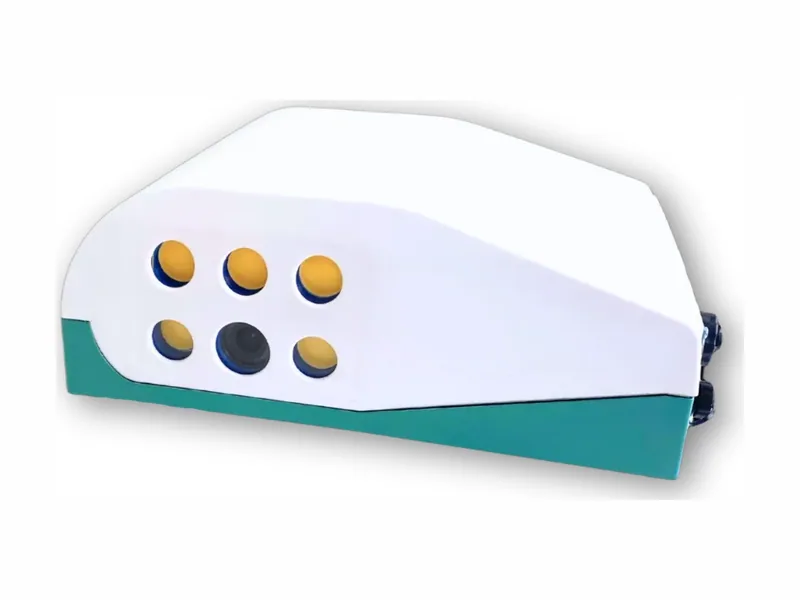
Viewer
AI camera system that mounts on a tractor (front hitch or hood), an implement or an ATV.
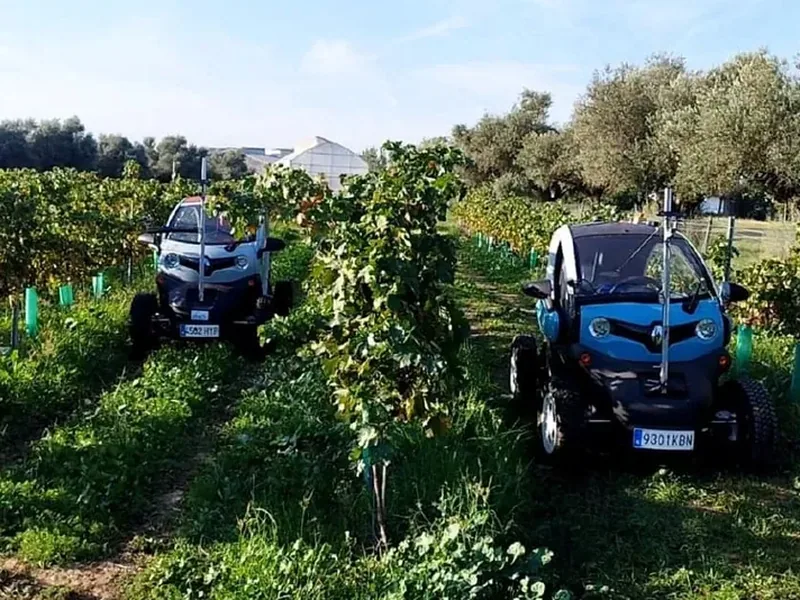
Autonomous crop-inspection vehicle
Commercial EV converted to full autonomy (steering, brake, throttle). It drives vine rows and headland turns on…
About €15,000
The main kinds
Choose between a robot that only scouts, a camera for a vehicle you already own, a robot that scouts while it works, or a drone.
The catalogue lists 35 robots from 30 makers. They collect crop data in very different ways.
Scouting robots
These robots drive the rows only to take pictures and measure the crop. They give the most detailed data, often for each single vine or tree.
Cameras on your own vehicle
Some systems are not a robot vehicle. They are a camera kit you fit on a tractor, an implement or an ATV (a small all-terrain vehicle). Your driver drives as usual, and the camera scans the crop on the way.
Robots that scout while they work
Many weeding, spraying, treatment and harvest robots also collect data as they work. For example, a harvest robot can count and size every fruit it picks.
This means one machine does two jobs. But check how good and how complete the data is, because scouting is not its main task.
Drones
Drones fly over the field and take pictures from above. Some carry multispectral cameras. These cameras see light that the human eye cannot see, which shows plant stress early.
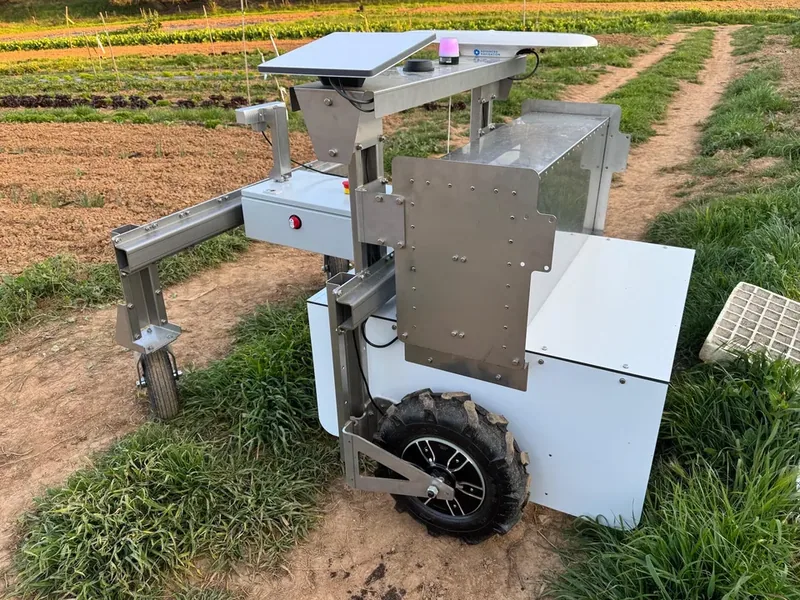
Wagus
Autonomous electric ground robot that treats crops with UV-C light plus AI to control fungal diseases instead of…
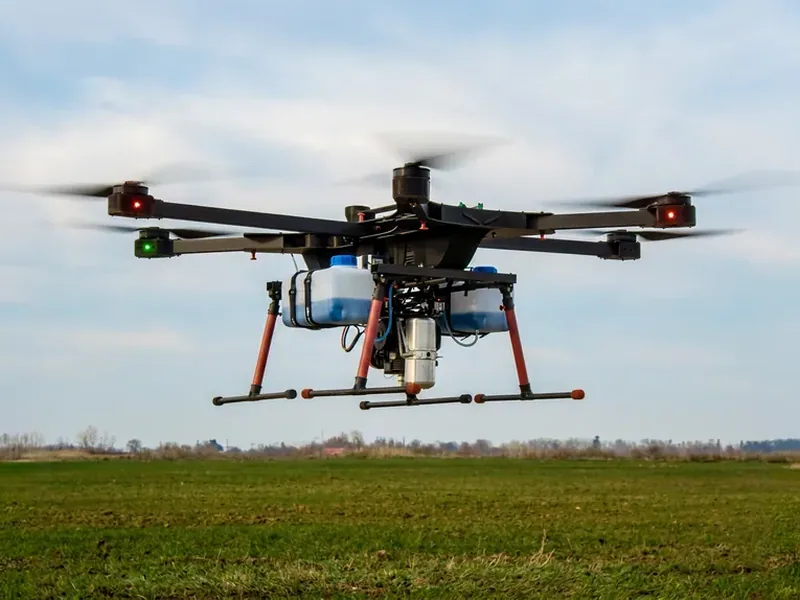
Harvest
Hybrid heavy-lift (about 1,000 lb class) drone for large-acreage spraying, spreading, seeding/reforestation and…
How much they cost
Most makers give prices only on request, so ask for a full quote with software costs.
7 of the 35 robots in our catalogue have a published price. Three of them list a price in euros.
Those euro prices go from €18,000 to €320,000. The middle price is €205,000. One maker lists a price from $50,000 per robot.
The big price range comes from the type of machine. A small field robot costs much less than a large autonomous tractor that also collects data.
Remember the running costs. Many makers charge a subscription for the software, the maps or a yield forecast service. Ask how much it costs each year and what happens to your data if you stop paying.
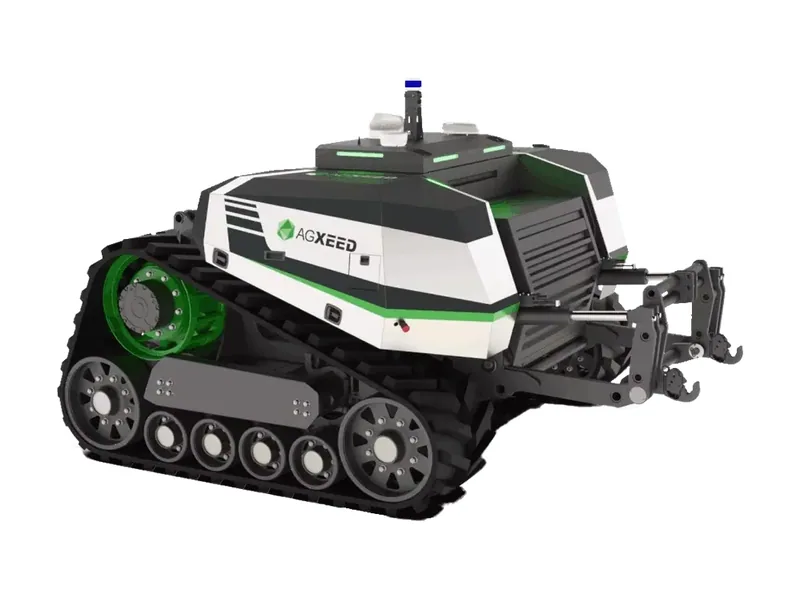
How to size it for your farm
Match the robot to your crop, your row layout and the area you need to cover in each scouting round.
First check the crop. Many scouting robots are made for vines, fruit trees, berries or row vegetables. A robot built for vineyards may not work in an open field crop.
Then check your rows. The robot must fit between or over your rows and handle your headlands, which are the turning areas at the end of the rows.
Then think about area and time. Ask how many hectares the robot covers in a day and how often you need fresh data. Some makers sell robots in crews, so you can add more robots as your farm grows.
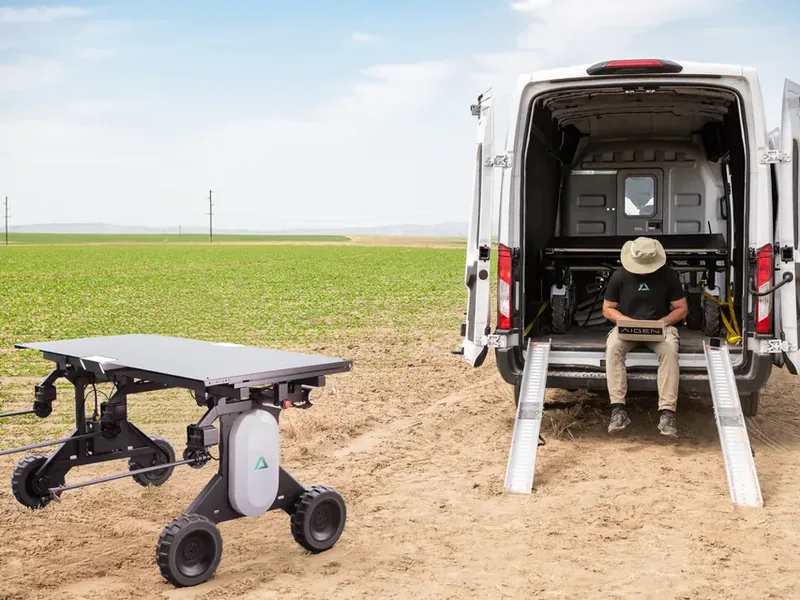
Element (Gen2)
Solar-powered autonomous robot that stays in the field all season, identifies weeds with AI vision and kills them…
From $50,000 per robot
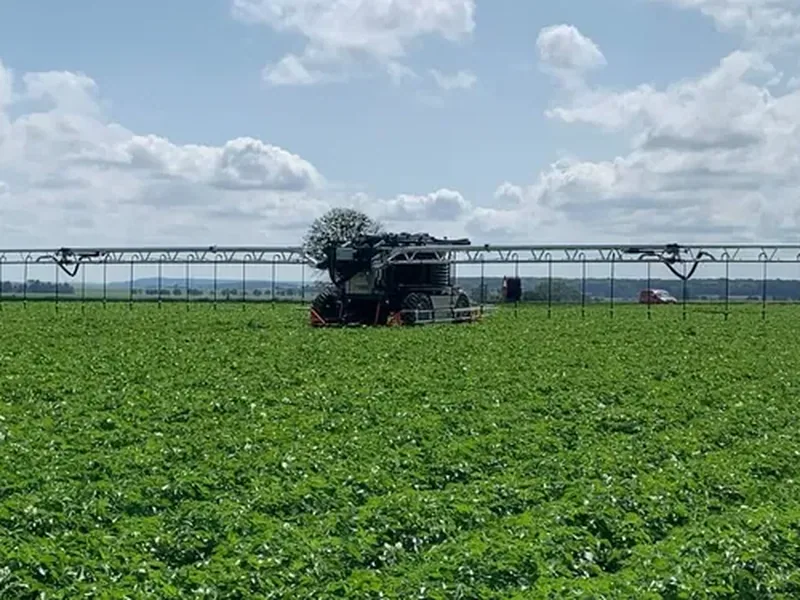
Oscar
Autonomous multi-purpose field robot that automates irrigation, plus fertigation and crop protection, for…
What to check before you buy
The data is only useful if it is accurate and goes straight into the software you already use.
Ask the maker what the robot measures and how accurate it is. Ask for results from a farm with your crop, not only a demo.
Check that the data exports to your farm software. A standard file format or a direct link saves a lot of manual work.
- Connectivity: does the robot need mobile signal or GPS correction in your field?
- Subscription: what is included, and who owns the data?
- Service: who repairs it near you, and how fast?
- Safety: how does it stop for people and animals in the rows?
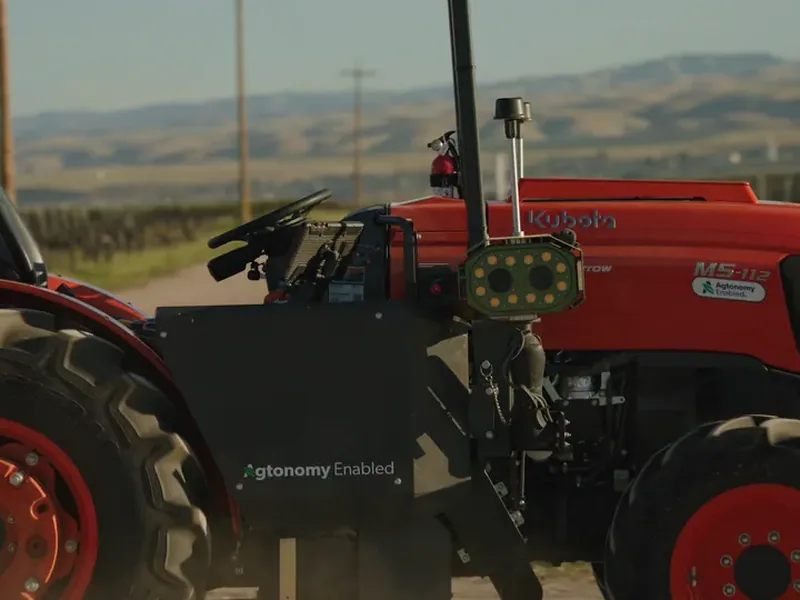
Agtonomy-Enabled tractors
Factory-integrated autonomy software for OEM tractors/off-road equipment plus app for job planning, monitoring…
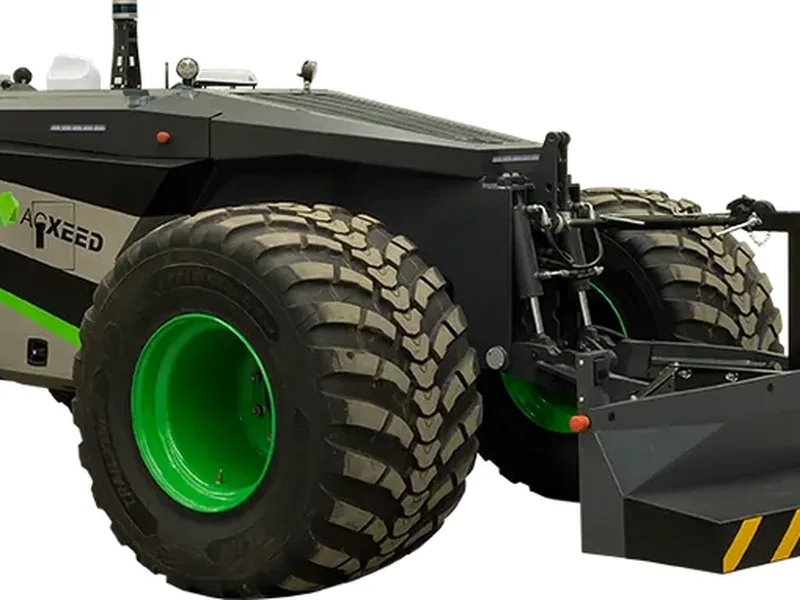
AgBot W4 2 Series
Lightweight four-wheel AgBot with adjustable track width for light soils, row crops, grassland and bed cultivation
From €220,000
Many models are still new
Check the stage of a model before you plan your season around it.
21 of the 35 robots in our catalogue are on sale now. The others are on pre-order, in pilot trials on real farms, or still prototypes.
A pilot or prototype robot can show where the technology is going. But it may change, and service and spare parts may not be ready yet. Ask the maker for a clear date and the terms of any trial.
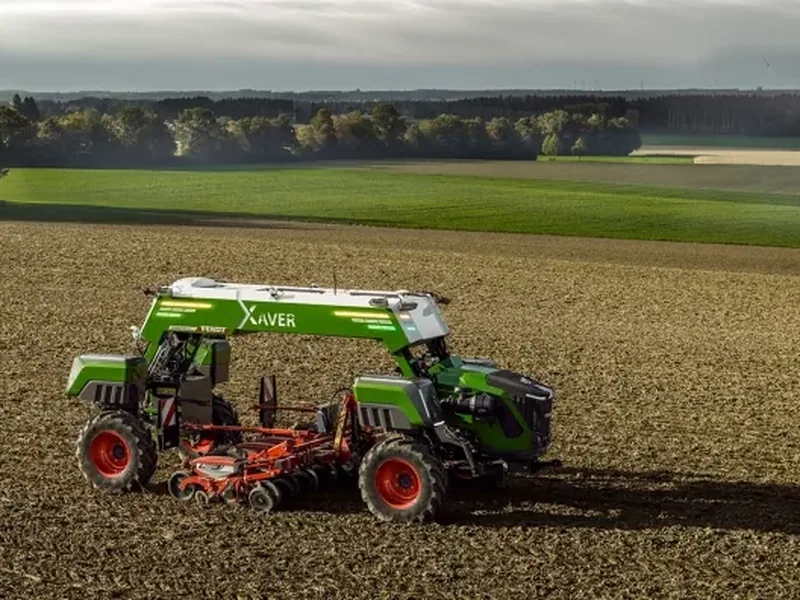
Fendt Xaver GT
Autonomous series-hybrid tool carrier concept for repetitive row-crop work (mechanical weeding, harrowing) with…
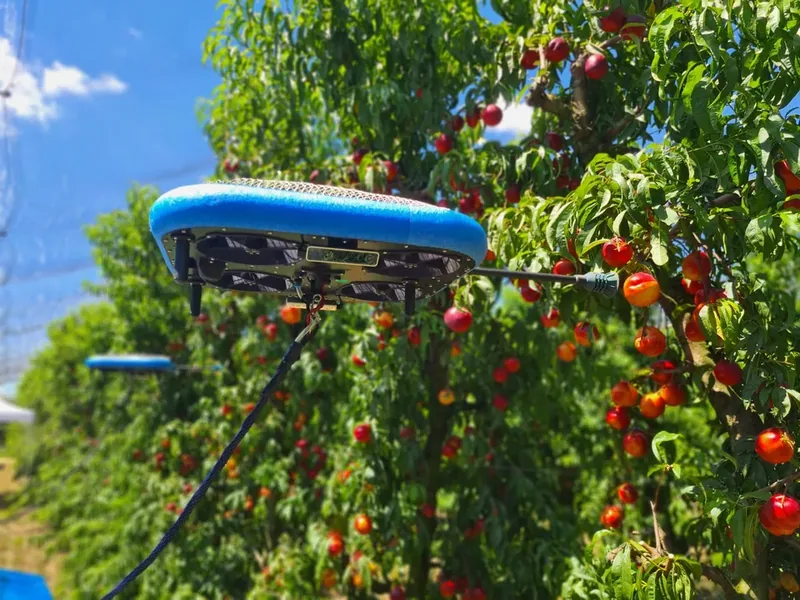
Flying Autonomous Robots (FAR)
Tethered AI drones on a ground platform that pick fruit selectively by ripeness/colour, around the clock, and log…
Which one is for me?
- Vineyard or orchard that wants counts and yield estimates: Look for a scouting robot that works in your row type and gives data for each vine or tree, such as bud, cluster or fruit counts and disease spots. For example Emma.
- Small organic or vegetable farm: Look for a compact, battery-electric robot with a lower price, cameras for plant detection and other jobs it can also do, such as weeding. For example EcominoS.
- Farm or contractor that already runs tractors: A camera kit for a tractor, implement or ATV can be the simplest start. Check that its maps can control your sprayer or fertiliser rate.
- College or research station: Look for an open, programmable platform with cameras and room for extra sensors, so students and staff can test their own ideas. For example Vitirover Academy.
Compare all 35 crop scouting and yield data robots in the catalogue. You can filter by stage, crop and price to find the models that fit your farm.