Pruning & thinning buyer’s guide
Robots that prune vines and trees, thin fruit and blossom, and remove suckers.
What these robots do
They cut or remove plant parts so the rest of the crop grows better.
These robots prune vines and trees, thin fruit and blossom, and remove suckers. Suckers are the unwanted shoots that grow from the base of a vine or tree.
A camera system (the robot's “eyes”) looks at each plant and decides where to cut. Then a tool arm, a blade, a sprayer or a laser makes the cut or removes the plant.
Pruning a vine is hard for a machine, because every plant looks different. That is why most true pruning robots are still pilots or early commercial machines.
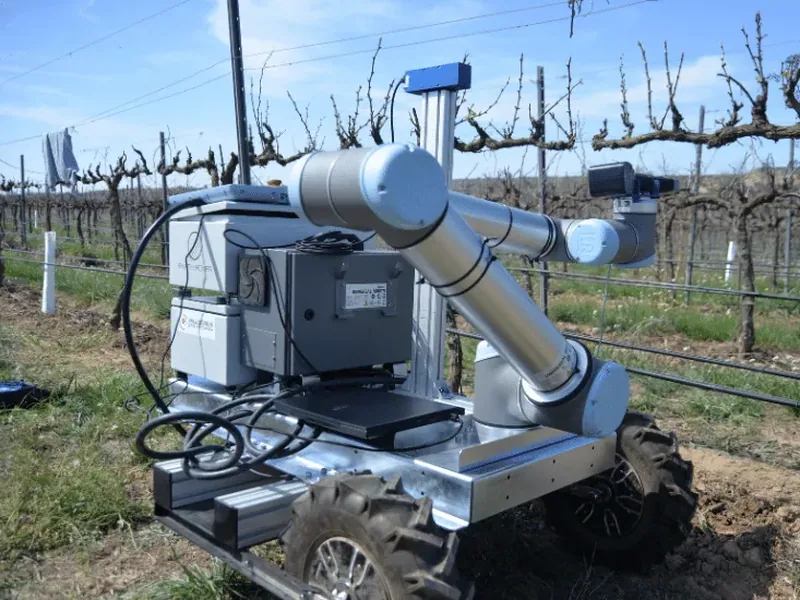
ROBOTRIM III
Vine-pruning robot prototype: 2D/3D vision detects cut points and a cobot with pneumatic shear cuts shoots; ATRIA…
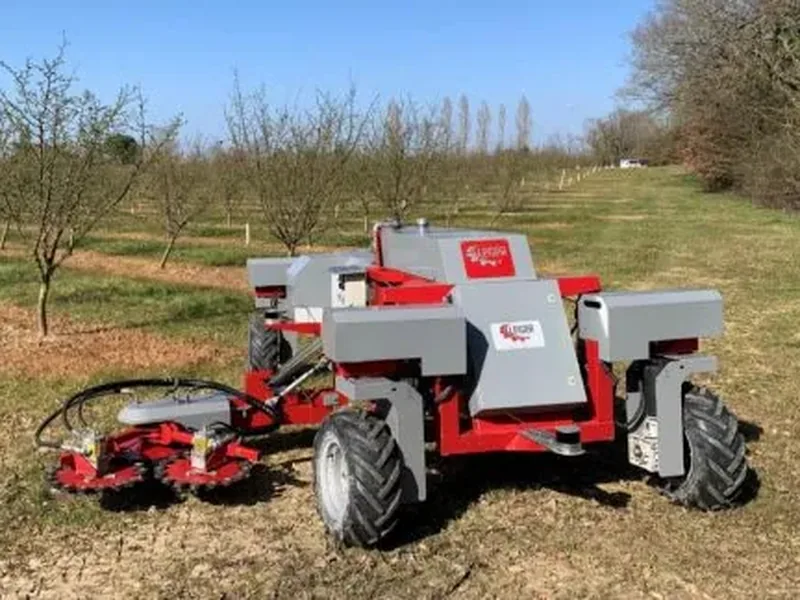
RoboCut360
Autonomous hybrid orchard maintenance robot: mows in/between tree rows, cuts suckers (EcoCut360 head), shreds…
How much they cost
No maker publishes a price, so you must ask for a quote.
Our catalogue lists 22 robots from 17 makers. None of them has a published price.
Ask each maker for a written quote. Ask what is included: the tools, the camera system, software, training and service.
Some makers give their own savings claims. For example, one thinning sprayer maker claims payback in about one and a half seasons. Treat such claims as the maker's view and check them on your own farm.
- Price of the base machine and each tool
- Yearly software or service fees
- Who repairs it, and how fast
- Can you rent it or try it first
The main kinds
Pick the kind that matches your crop: vines, trees or vegetable beds.
Machines in this group work in very different ways. Some are real pruning robots. Others are tool carriers or camera sprayers that also do thinning.
Pruning arms
A robot arm with shears cuts shoots on vines or branches on trees. Cameras find the right cut points.
Most of these are prototypes. A prototype is a test machine, not yet sold as a finished product.
Camera thinning in beds
For crops like lettuce, a tractor pulls a unit with cameras. It finds each plant and removes the extra ones with a spray shot or a laser.
These units often also kill weeds in the same pass. Several of them are on sale today.
Tool carriers for vines and orchards
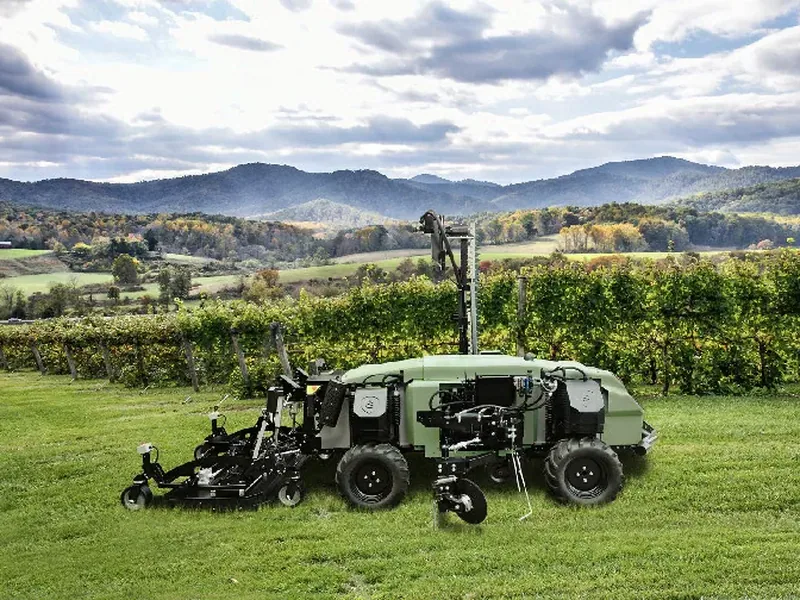
A self-driving vehicle carries cutting tools along the rows. It can remove suckers, cut under the vines and mow between rows.
A straddle robot drives over the vine row, with wheels on both sides. Other carriers drive between the rows.
Fruit thinning arms
Some test machines use many arms to pick small green apples off the tree. This lets the remaining fruit grow bigger.
These are still prototypes, so you cannot buy one yet.
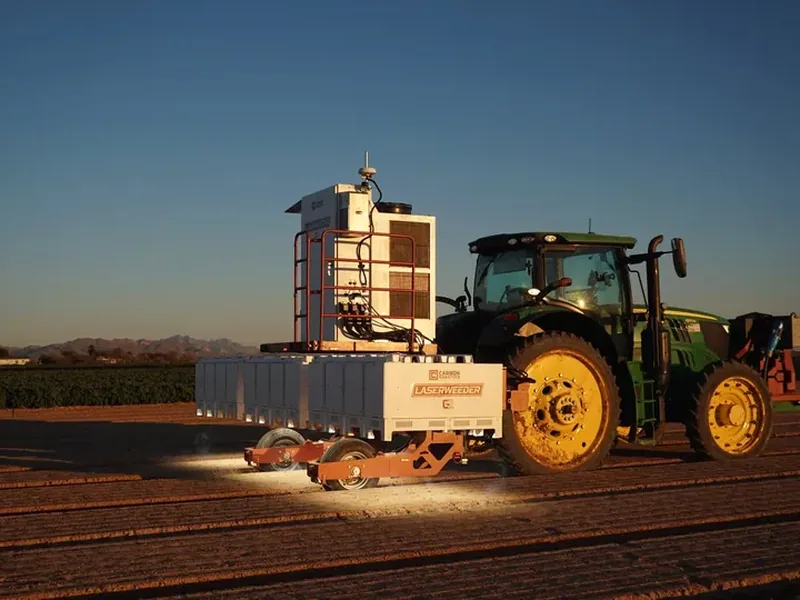
LaserWeeder G2
Tractor-pulled implement that uses computer vision (Carbon AI) to detect weeds and kill them with lasers…
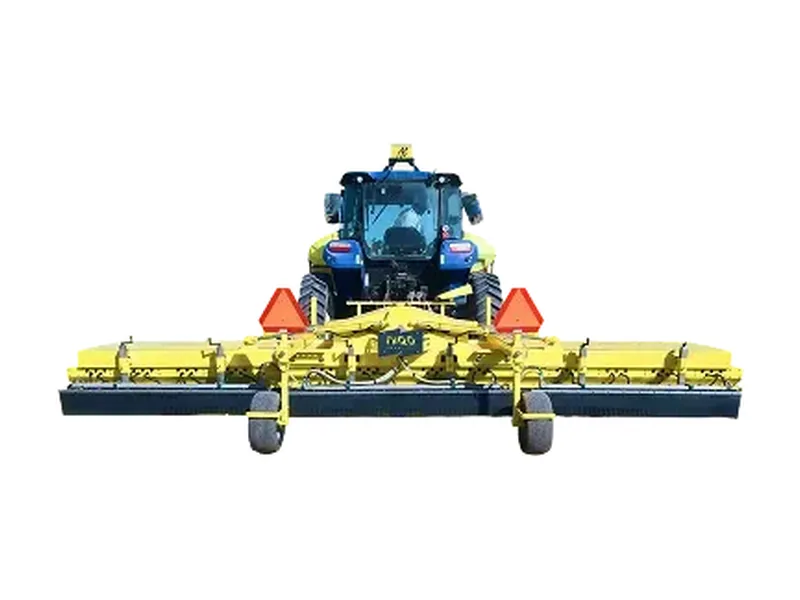
Niqo RoboWeeder
Tractor-mounted AI camera (Niqo Sense) precision sprayer that in one pass sprays weeds, thins crop and applies…
How to size it for your farm
Measure your rows, your vine height and your slope before you talk to makers.
Row width is the first thing to check. A straddle robot must fit over your vines. For example, the Bakus S passes over vines up to 0.60 m wide and 1.75 m high, while the Bakus L takes 0.80 m wide and 2.20 m high.
Carriers that drive between rows need enough space too. One tracked carrier needs a row spacing of 2.1 m or more and works on slopes up to 42°.
Ask how much area the robot covers in a day. One vine straddler claims up to 6.5 ha/day. Compare this with your own area and the short time window for pruning or thinning.
Also ask which training system it supports. The training system is the way your vines or trees are shaped and tied, for example on wires. A robot built for one system may not work on another.
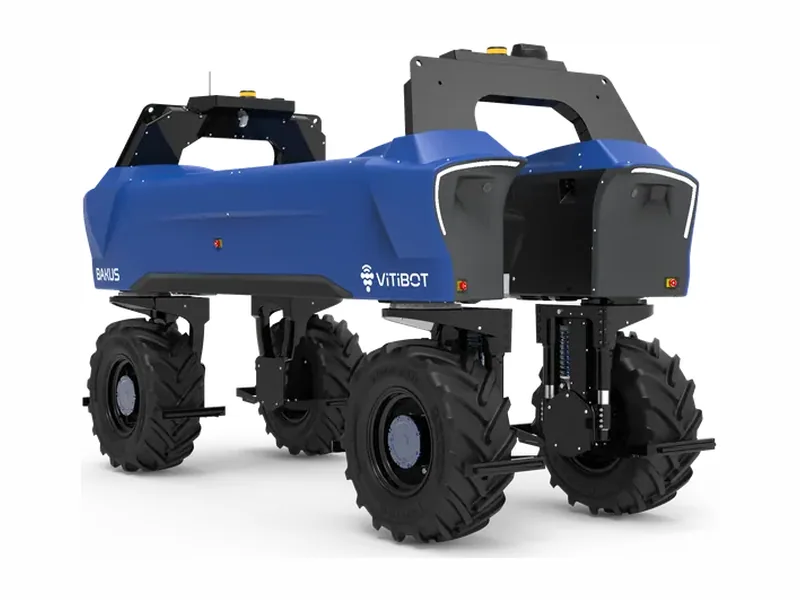
Bakus S (P75S)
Straddle (enjambeur) electric robot for narrow-row vineyards carrying modular tools on a tool-holder boom
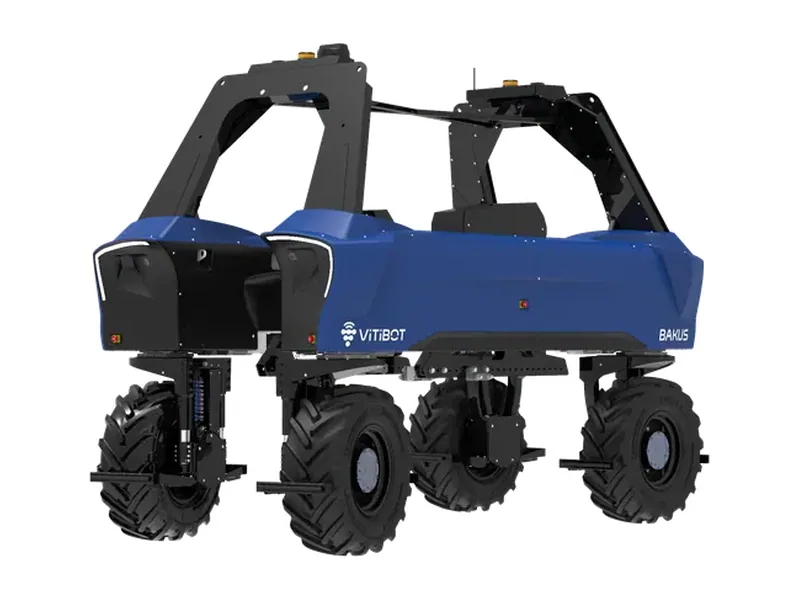
Bakus L (P75L)
Straddle electric robot for wide-row vineyards, same modular tool concept
What to check before you buy
Check the stage, the service and how the robot finds its way.
15 of the 22 robots in our catalogue are on sale now. The rest are prototypes or have no clear stage. Ask how many machines already work on real farms.
Many robots use RTK GPS. This is satellite positioning with a correction signal, so the robot knows its place in the row very exactly. Check that you have a good signal on your land. Some robots can also navigate without it.
For electric robots, ask about runtime and charging. One carrier claims 8-14 h of work and a fast charge of about 3.5 h.
- Safety: bumpers, stop buttons, and rules for people near the robot
- Service: a dealer near you and spare parts
- Tools: do your current implements fit
- Remote control and alerts on your phone
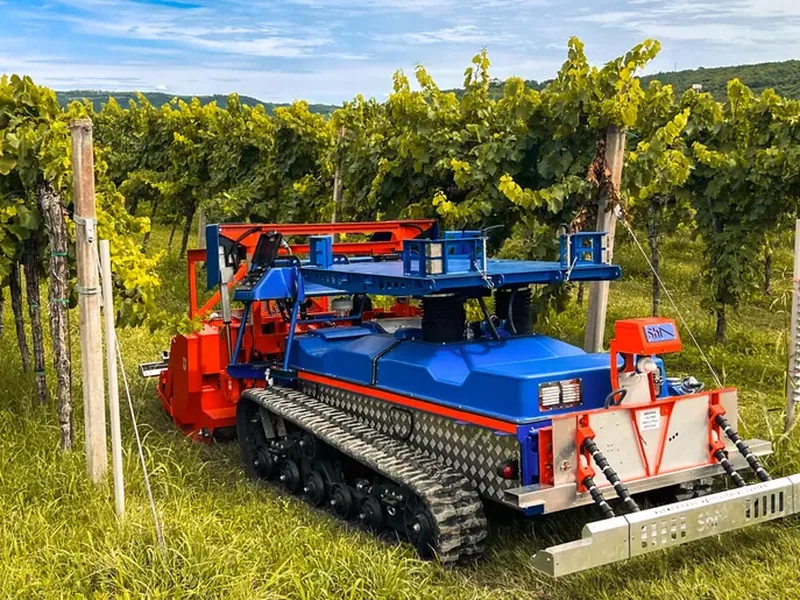
Slopehelper
Autonomous electric tracked carrier for orchards, vineyards and other permanent plantings with interchangeable…
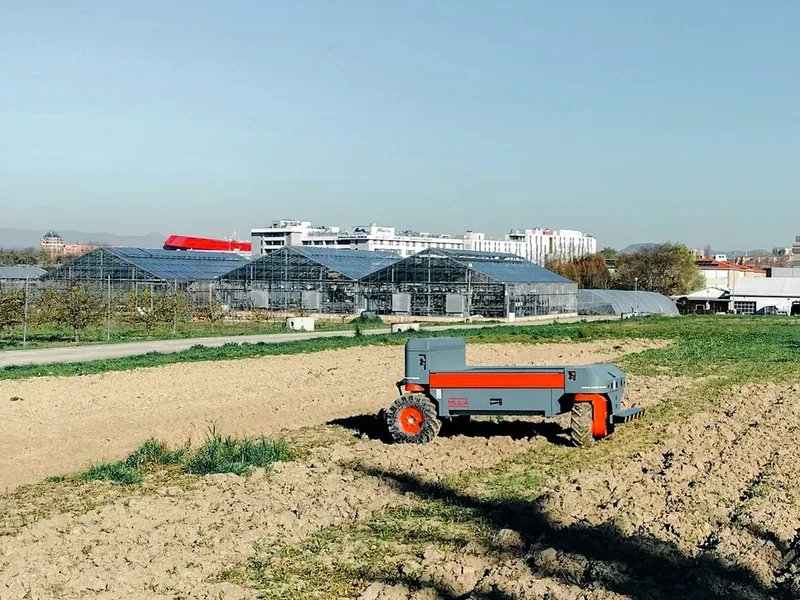
MULA 1250
Multipurpose autonomous electric 4x4 carrier that pulls/carries conventional implements (CAT I/II) for woody…
Working with pilots and prototypes
If you want a real pruning robot today, you will likely join a test, not buy a finished machine.
Many pruning and fruit thinning robots are still being developed. Makers often look for farms to test them in the field.
A pilot can give you early access and a say in the design. But the machine may be slow, may need staff from the maker, and may change a lot.
Before you join, agree in writing who pays for damage, who owns the data, and what happens at the end of the test.
Which one is for me?
- Vegetable grower thinning lettuce or other bed crops: Look for a camera unit that fits your bed width and can thin and weed in one pass. Check speed and how it handles different crops. For example Niqo RoboWeeder Solo.
- Vineyard with narrow rows: Look for an electric straddle robot that fits over your vines and carries under-vine tools. Check the passage width, height and the training system it supports. For example Ted.
- Vineyard where staff still drive, but want electric power: An operator-driven electric straddle tractor can be a simple step. Check runtime and how it handles slopes. For example Beagle.
- Apple or pear orchard with high-density rows: Fruit thinning robots are still prototypes. Ask makers about pilot programmes, and in the meantime look at carriers that remove suckers and cut under the trees.
- Contractor serving many farms: Look for a machine that is easy to move between sites, works on many row widths and has strong local service. Ask about rental or per-hectare deals.
Compare all 22 pruning and thinning robots in our catalogue by stage, row size and tools. Then ask the makers of your top picks for a quote and a field demo.