Multi-purpose farm robot platforms
Multi-purpose robot platforms buyer’s guide
Multi-purpose robot carriers, research platforms and announced machines that do not have one fixed job yet.
What a robot platform does
A platform is a self-driving base vehicle. The tool you fit to it decides the job.
A multi-purpose robot platform is a base vehicle that drives itself. It has power, navigation and a place to fit tools, such as a hitch or a tool rail.
Autonomous means the machine drives and works without a driver on board. A person still plans the job and watches it, often from a tablet or phone.
The tool does the actual work. A tool for farm machines is also called an implement, such as a hoe, a sprayer, a mower, a trailer or a sensor. Change the tool and you change the job.
Our catalogue lists 43 machines from 37 makers. Some carry many different tools. Some are research platforms, and some are announced machines that have no fixed job yet.
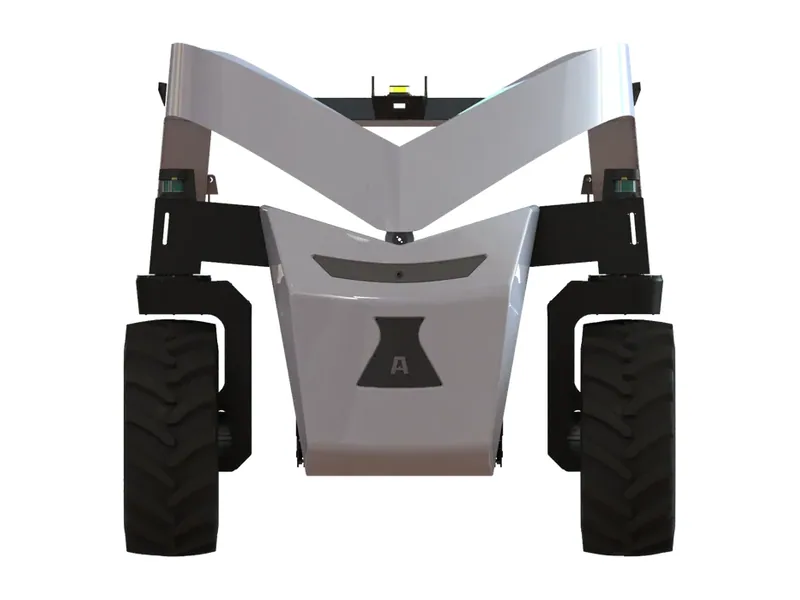
IC20
Fully electric GPS/lidar-guided autonomous implement carrier with 3-point hitch and PTO that works day and night.
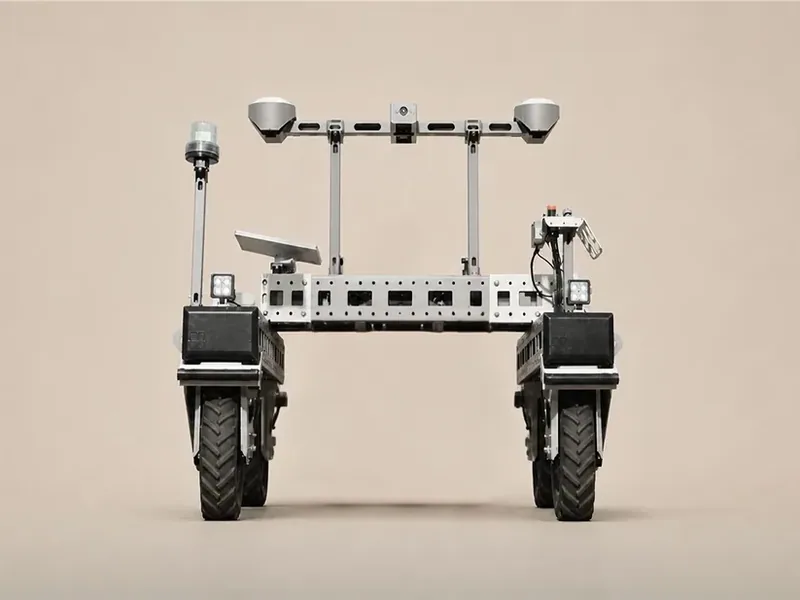
Amiga Flex
Small modular electric Amiga platform (successor of farm-ng Amiga) for mowing, R&D/education; WEED-IT spot-spray…
How much it costs
No maker in this catalogue publishes a price, so you must ask for a quote.
3 of the 43 robots in our catalogue have a published price. Every maker gives the price on request.
The price usually depends on the tools, the battery or engine, the navigation system and the service. Ask for a quote that lists each part on its own line.
Some makers rent out their robots or build a custom machine for one customer. Ask if they offer rental, a lease or a trial on your own land.
- Which tools are included in the price
- Any yearly fee for software or navigation signals
- Training, service and spare parts
The main kinds
First decide if you want a new robot carrier, a robot tractor or a kit for machines you already own.
Machines in this group fall into a few kinds. They differ in size, power and how many tools they can take.
Implement carriers
An implement carrier is a robot vehicle built to carry and pull tools. Many are electric and have no cab.
Some have a 3-point hitch and a PTO. A 3-point hitch is the standard three-arm tool mount used on tractors. A PTO (power take-off) is a turning shaft that drives the tool.
Robot tractors
These are tractors that can drive themselves on the field and use your normal tools. Some keep a cab, so a person can also drive them. Others have no cab at all.
Most need a person to supervise the work nearby or from a screen.
Autonomy kits
A kit adds sensors and a computer to a machine you already own. It turns that machine into a self-driving one.
Check which brands and models of tractor or machine the kit supports.
Small research platforms
These are small, light electric vehicles that you can program yourself. Colleges, researchers and small growers use them to test new tools and ideas.
Special-setting platforms
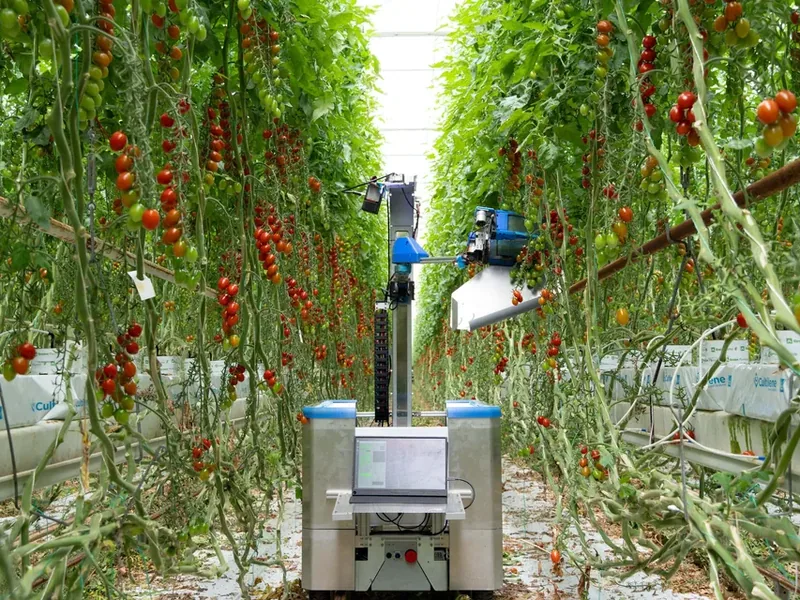
Some platforms are built for one place, such as a greenhouse, a vineyard row or a barn. They take different tools, but only for that setting.
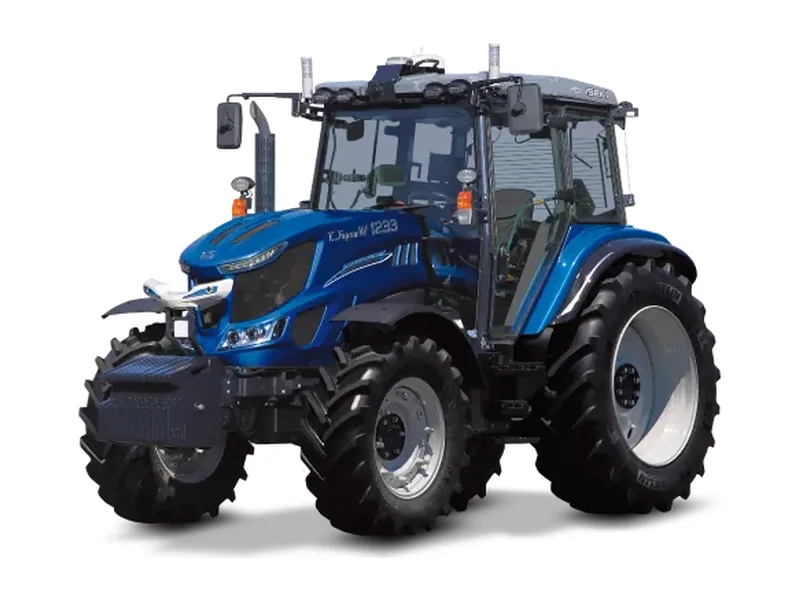
Robot tractor TJW1233-R
Robot tractor that works fields unmanned (straight runs and turns) under operator supervision via tablet and…
From ¥21,919,700
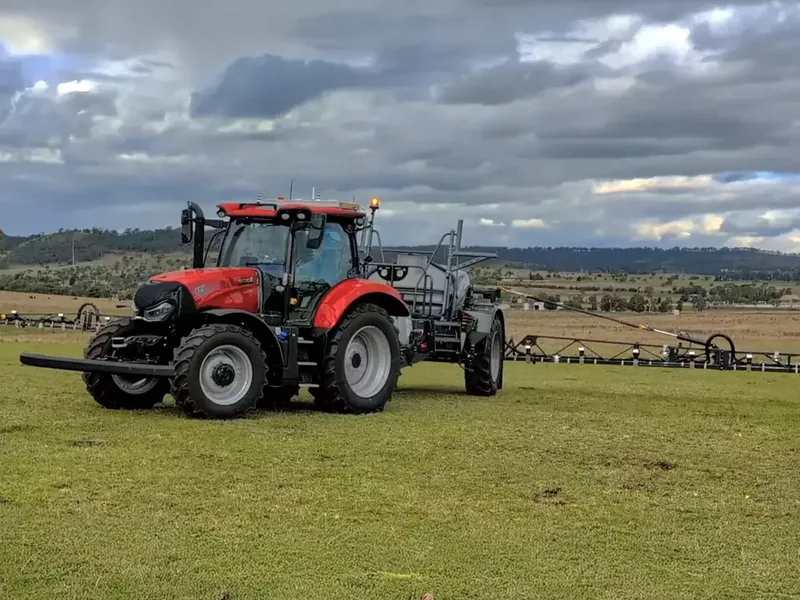
Agtecnic Machine Autonomy
Turnkey automated tractor and machine control system (CANBUS/ISOBUS) with dynamic path planning and hazard…
How to size it for your farm or site
Match the payload, power and run time to your heaviest tool and your longest working day.
Start with the heaviest tool you want to use. The robot must lift or carry it, and pull it through your soil.
Payload is the weight a robot can carry. For example, one small electric platform carries 800 lb (pounds), while one electric crawler carries 2500 kg.
For electric machines, check battery size and run time. Battery size is given in kWh (kilowatt-hours); a bigger number means longer work. One carrier comes with a 43 or 64 kWh battery, and one small platform lists a run time of 8 h.
Also check weight, width and slope. A heavy machine presses the soil, and a wide one may not fit your rows or gates. One tracked vineyard machine lists slopes of up to 70%.
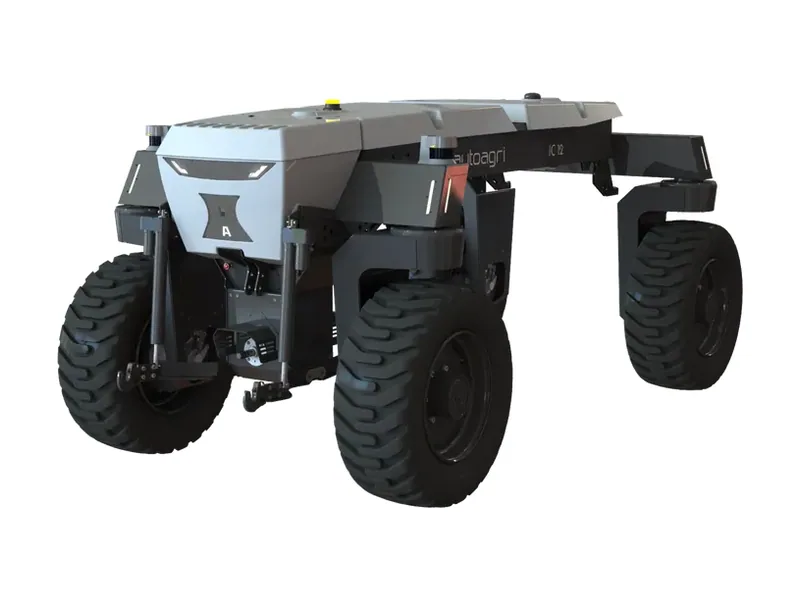
IC12
Smaller electric autonomous implement carrier.
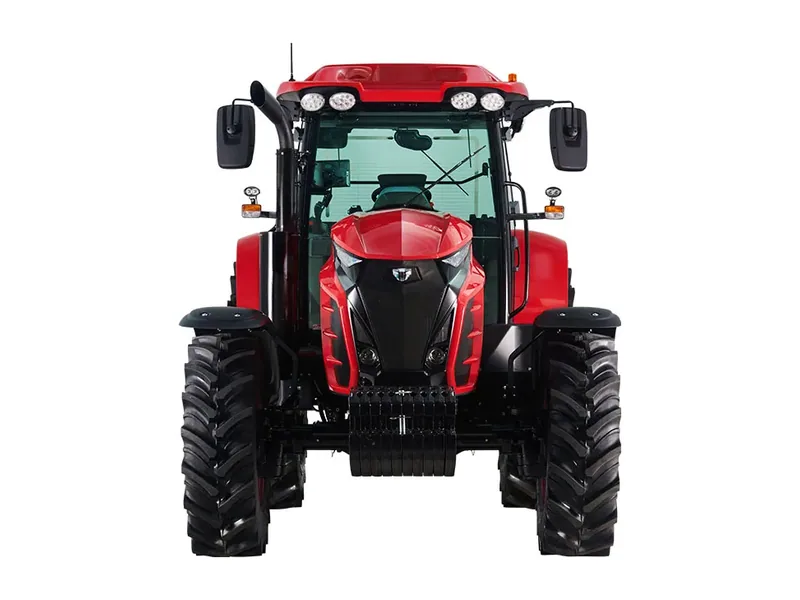
T130 autonomous tractor
Tractor with own autonomous driving (2 cm GNSS-RTK) for 24-hour operation, managed via MYTYM app.
What to check before you buy
Ask which tools work today, how the robot finds its way, and who repairs it.
Ask which tools are actually available today. A platform that may take many tools in the future is less useful if only one tool works now.
Ask if the software is open or closed. Open software lets you or a local partner add new jobs. Some research platforms use ROS (Robot Operating System), free robot software that many developers use.
Check the navigation. Most field robots use RTK GNSS: satellite positioning, like GPS, with a correction signal that makes it very accurate. Many also use lidar (a laser scanner) or cameras to see obstacles.
- Connectivity: does it need mobile signal or Wi-Fi where it works?
- Safety: how does it detect people, and can you stop it from a distance?
- Service: who repairs it near you, and how fast?
- Rules: is it allowed to work without a person nearby in your country?
Check the commercial stage
25 of the 43 robots in our catalogue are on sale now. The rest are pilots, prototypes or unclear.
On sale means you can order it today. In this catalogue, 25 machines are on sale.
Pilot means the maker is testing the robot on real farms. Prototype means a test machine or concept that is not for sale yet. Here, five machines are in pilot, five are prototypes, and eight have an unknown stage.
Do not plan your season around a machine that is not on sale yet. Ask for a delivery date and trial terms in writing.
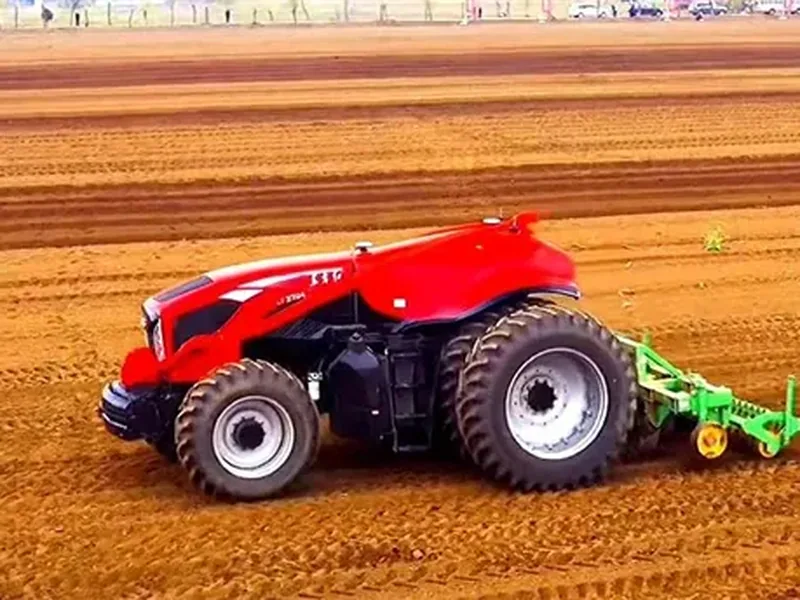
Dongfanghong LF2204 unmanned tractor
Cab-less driverless high-horsepower tractor with Beidou navigation, path planning, obstacle radar and remote…
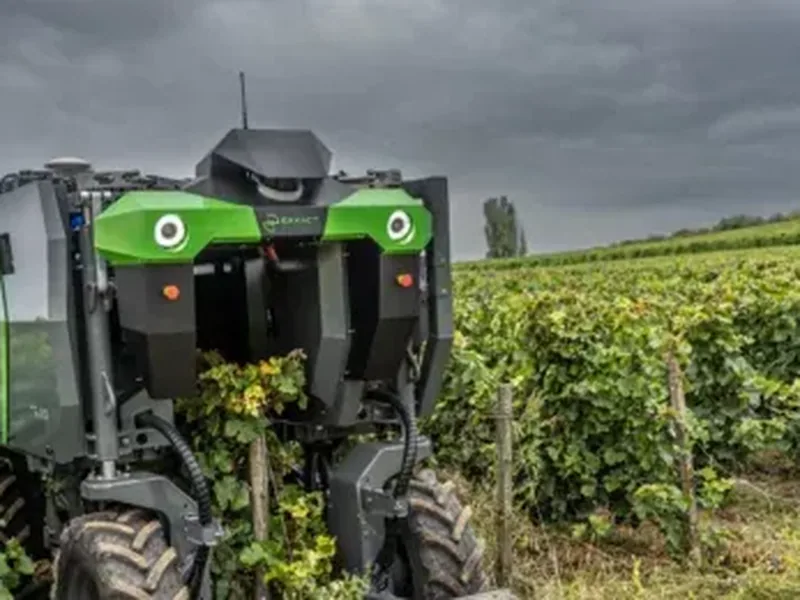
Concept Delta
New robot concept shown at SITEVI Dec 2025 on Tecnoma stand (no details on maker site)
Which one is for me?
- Arable or mixed farm with tractors and tools already: Look at robot tractors or autonomy kits that work with your current tools. Check the hitch, the PTO and which brands the kit supports. For example TREKTOR.
- Vineyard or orchard on steep ground: Look for narrow, tracked machines that follow rows. Check the width, the slope limit and which sprayers or mowers fit. For example ATOMATIKA.
- Greenhouse grower of tomatoes, cucumbers or strawberries: Look for a platform built for greenhouse paths, with tools for your crop. Check Wi-Fi coverage and how it moves between rows. For example Xenion.
- Livestock farm that wants barn cleaning or feeding: Talk to makers who build custom vehicles for barns. Check how it finds its way indoors and how easy it is to clean. For example Custom agricultural/livestock AGVs.
- College, research team or small grower testing ideas: Choose a small electric platform with open software you can program. Check which sensors and tools come with it. For example Vitirover Academy.
Compare all 43 machines in the catalogue by stage, tools and specs. Then ask two or three makers for a quote and a trial on your own land.