Solar panel cleaning robot buyer’s guide
Compared by Working Robots · 97 robots, 35 makers
Solar cleaning robots remove dust and dirt from panels, which can cost a plant several percent of its output in dry regions.
What the robot does and how it works
A cleaning robot removes dust from your panels so they make more power.
Dust and dirt on solar panels block sunlight. In dry regions this can cost a plant several percent of its output.
Most robots run along a panel row with a rotating brush and no water. When the row is done, the robot goes back to its dock. A dock is a parking place at the end of the row where it waits and charges.
Many robots charge from their own small solar panel and clean at night, when the plant is not making power. Others are moved by people, carried by a vehicle, mounted on a tractor or even flown.
Our catalogue lists 97 robots from 35 makers. 91 of them are on sale now.
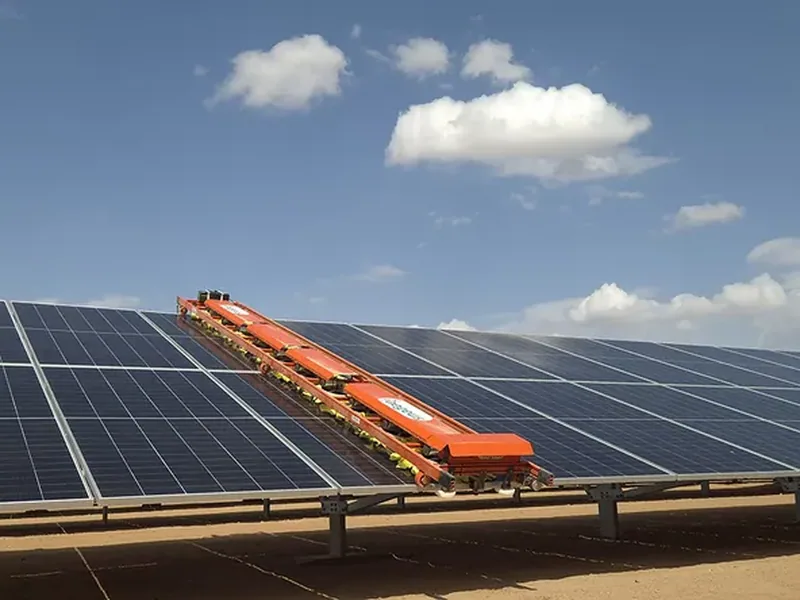
Unicorn
Autonomous waterless cleaning robot for utility-scale solar rows.
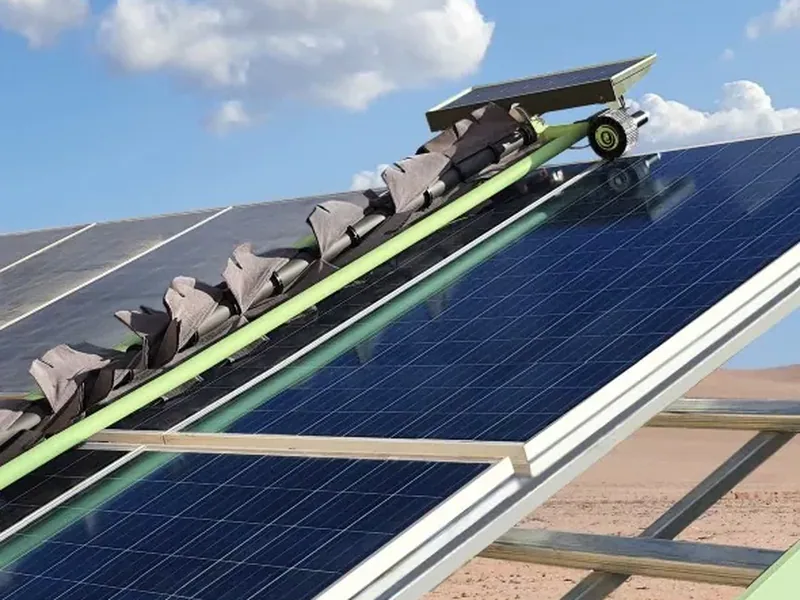
Ecoppia H4
Water-free autonomous row-mounted cleaning robot with Helix (spiral microfiber) technology; nightly cleaning
How much it costs
Almost every maker gives prices only on request, so ask for a cost per MW.
6 of the 97 robots in our catalogue have a published price. One is an autonomous row robot for fixed-tilt plants, listed at ₹1.75–2.84 lakh per MW, in Indian rupees.
MW means megawatt, a measure of how big a solar plant is. A price per MW makes it easier to compare offers for plants of different sizes.
For all other models you need to ask the maker for a quote. Some makers also sell cleaning as a service, so you pay for clean panels and do not buy the robot.
One maker of a fixed cleaning system claims a payback of 1-2 years. Payback is the time until the extra power pays for the robot. Ask every maker to show how they work this out for your site.
- Price for the robot and for the docks or rails
- Price for spare brushes and batteries
- Whether cleaning is offered as a service instead
The main kinds of cleaning robot
Choose between a robot that lives on each row, one robot shared between rows, or a machine you drive.
The kinds below differ in how much work people must do and how many robots you need.
One robot per row
The robot stays on its row and cleans it on a timetable, often every night. It needs no driver.
You need many robots for a big plant, but labour is very low. Some run on rails, which are metal tracks fixed along the row.
One robot shared between rows
One robot cleans a row and is then moved to the next one. A small transfer vehicle can carry it, or workers lift it across.
You buy fewer robots, but someone must move them or a vehicle must be on site.
Portable robots you steer
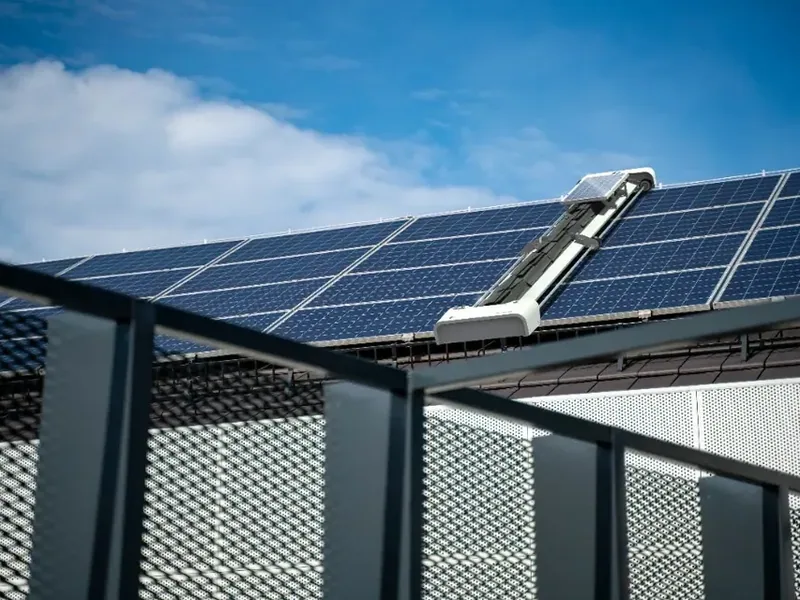
A light robot is placed on the panels and driven by remote control. It suits roofs and small plants.
It is easy to take from site to site, but an operator must be there.
Tractor-mounted and tracked machines
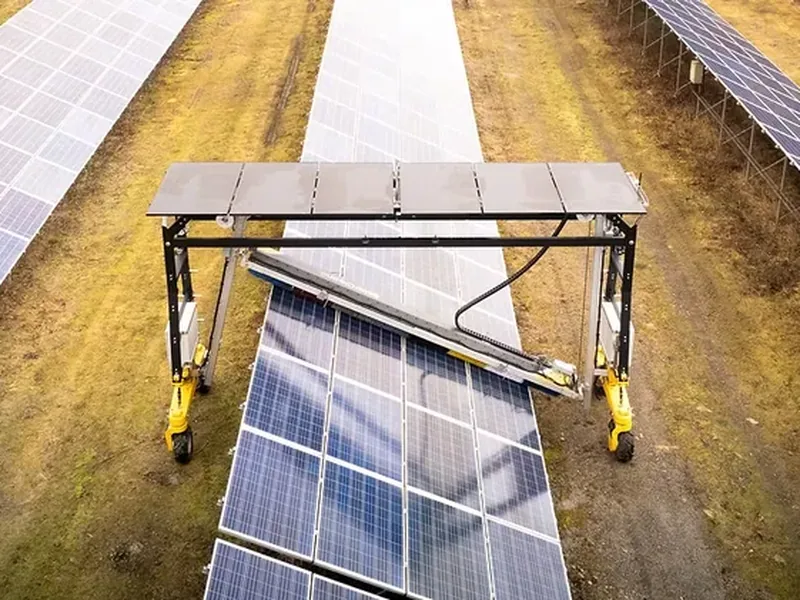
A long rotating brush is fixed on a tractor or on a tracked vehicle. Tracks are belts like on a digger. The machine drives between the rows and brushes the panels from the side.
Some of these are fully autonomous and follow the rows with LiDAR, a laser sensor that measures distance. A few makers also offer drones that clean or carry cleaning robots.
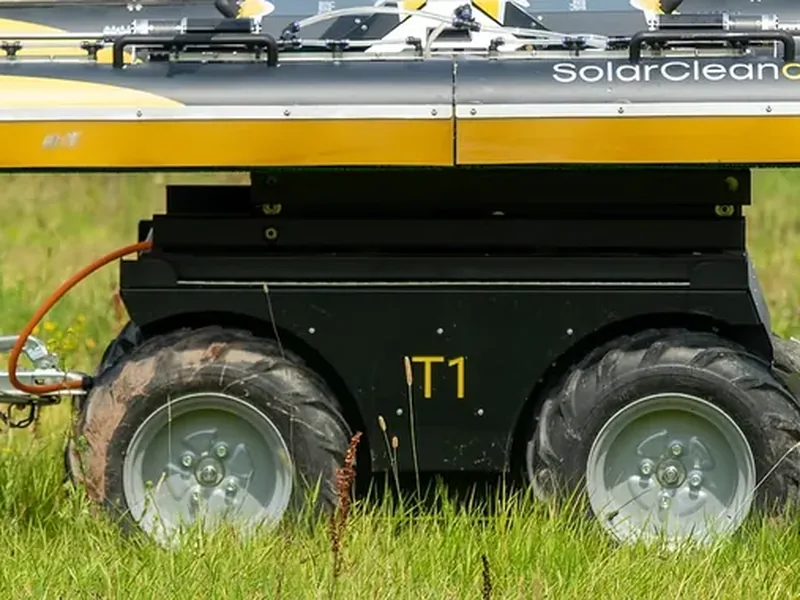
SolarCleano T1
Remote-controlled tracked transporter/lift platform that carries F1/M1/L1 between rows
SolarCleano B1
Remote-controlled tracked utility-scale vehicle with long brush arm
How to size it for your site
Match the cleaning speed and battery time to the area you must clean between rain or dust storms.
Makers give cleaning speed in square metres per hour (m²/h) or in MW per day. Small portable robots in our catalogue clean around 600 m²/h. Larger ones reach up to 2,400 m²/h.
Large tracked vehicles are rated by plant size per day, from 4-5 MW/day for a one-person cabin machine up to 20 MW/day for an autonomous one.
Check where the figure comes from. One maker gives up to 20 MW/day on one page and 15 MW/day elsewhere for the same machine.
Battery time also matters. In our data it goes from about 3 h for small robots up to 10 h for big vehicles. One maker suggests its narrow model for plants of 200 kWp to 2 MWp and its wide model for 2 MWp to 5 MWp.
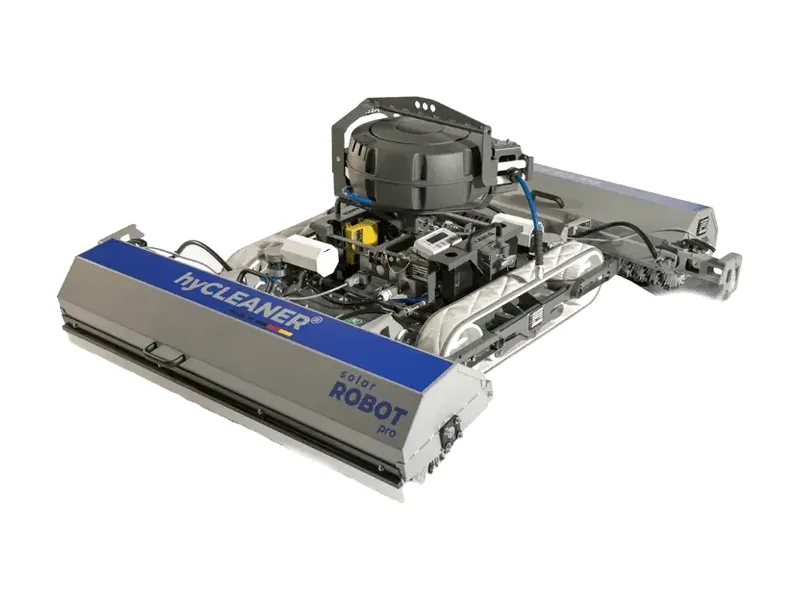
solarROBOT pro
Professional solar cleaning robot for commercial PV systems.
From €34,000
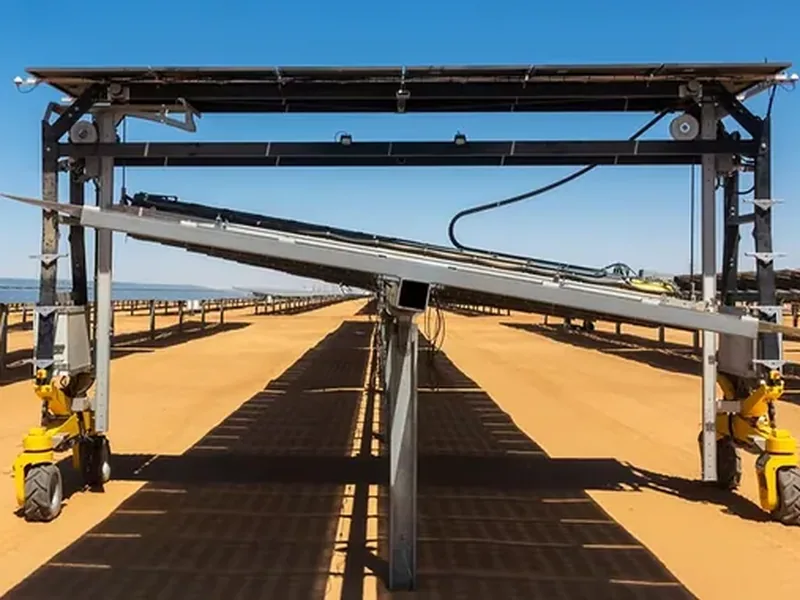
SolarCleano B1A
Fully autonomous utility-scale tracked cleaning vehicle following PV rows by LiDAR
Panel and tracker types
Make sure the robot fits your exact panels, mounting and tilt.
Fixed-tilt panels do not move. Single-axis trackers are frames that turn the panels to follow the sun. Many robots work on only one of these.
Robots for trackers often clean while the tracker is parked flat. Some cross to the next tracker over a small bridge.
Check the tilt angle the robot can handle, the gaps between tables it can cross, and the height steps between panels. Floating solar plants and rooftops need special models.
- Fixed tilt, seasonal tilt or single-axis tracker
- Maximum tilt angle and gap between tables
- Panel size and whether panels have a frame
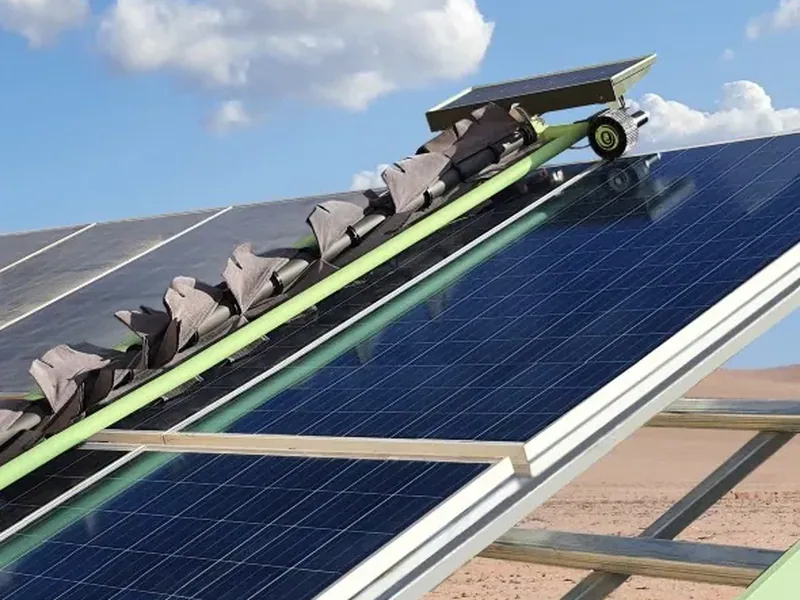
Ecoppia T4
Lightweight water-free robot for single-axis trackers, cleans while tracker is stowed; crosses to neighbouring…
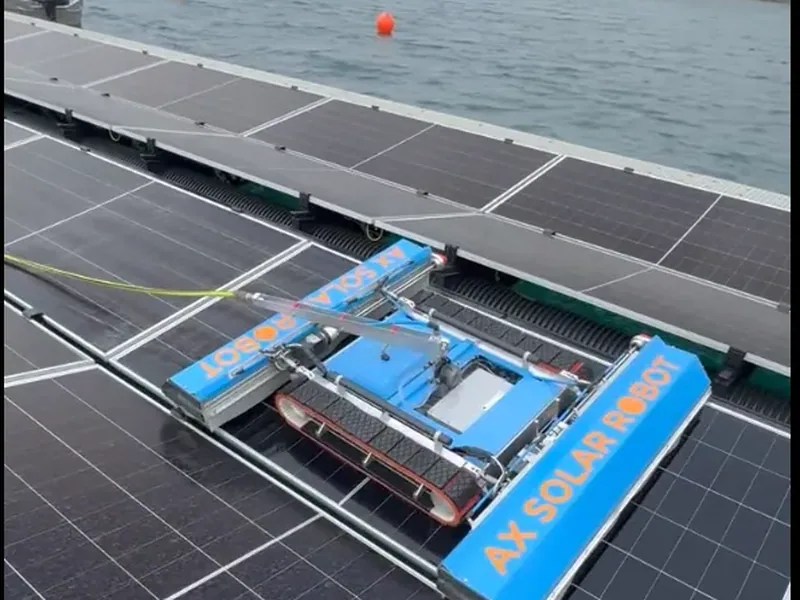
WETSLIDER F / Floating RIDER
Cleaning robots for floating solar plants.
Water, safety and service
Dry robots save water; wet robots need clean water and care with tilt.
Most robots clean dry, with brushes, microfibre cloth or air flow. This is useful where water is scarce. Wet robots wash with water and brushes. Some need very pure water from a reverse osmosis or demineralising system, so the water leaves no marks.
Panels can get microcracks, which are tiny cracks in the cells caused by too much weight or pressure. Ask the maker for crack test results and check that your panel warranty still holds. Some makers say their robots are approved by panel manufacturers.
IP65 means the robot is sealed against dust and water jets. Also check how it behaves in strong wind.
Ask how the robots report to you. Many connect to a cloud dashboard or to SCADA, the control system of the solar plant. Ask about spare brushes, batteries and local service.
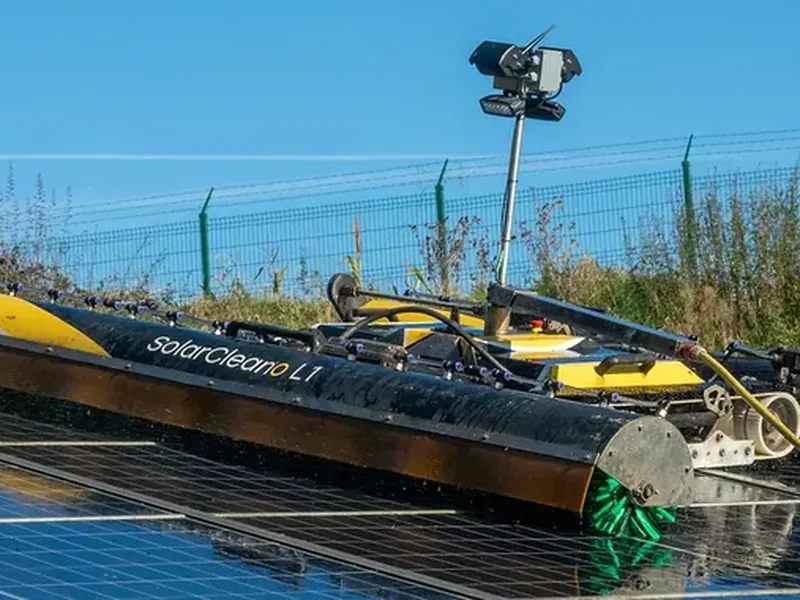
SolarCleano L1
Larger remote-controlled robot for 1P tracker rows
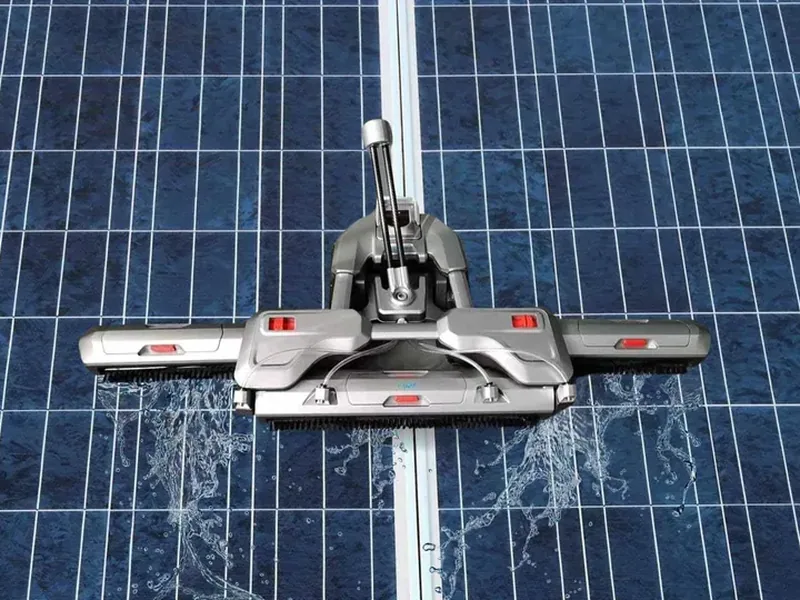
IFBOT M20
Water-based high-pressure solar-panel cleaning robot.
Which one is for me?
- Rooftop on a barn, shed or factory: Look for a light, portable robot that one person can carry and steer. Check the roof tilt it supports and whether it needs water. For example Solar Panel Cleaning Robot Type1.
- Small ground-mounted plant on a farm: A portable remote-controlled robot is often enough. Check its cleaning speed in m²/h and its battery time. For example solarROBOT compact.
- Large fixed-tilt solar plant: A robot on every row that cleans at night without water keeps labour low. Ask for a price per MW and the cost of docks. For example Ecoppia E4/E4+.
- Plant with single-axis trackers: Choose a model made for trackers. Check that it can cross between trackers and works when they are parked. For example GLYDE-X.
- Contractor cleaning several scattered sites: Look at robots that workers can move from row to row, or tracked machines you can bring by trailer. Plan the transport and staff time. For example HELYX.
Use the catalogue to compare models by panel type, water use and cleaning speed. Then ask two or three makers for a quote per MW for your site.