Robot lawn mower buyer’s guide
Robot mowers cut grass little and often, in gardens, parks, golf courses, sports pitches, vineyards and under solar panels.
What a robot mower does
A robot mower cuts your grass a little every day, so you never have to mow.
It drives around the lawn on its own and cuts a few millimetres at a time. The clippings stay on the grass and feed it.
When the battery runs low, it drives back to its charging station. It is quiet, so it can work in the evening.
How much it costs
Garden mowers: half cost under €1,600.
Across the 56 garden robot mowers with a published price in our catalogue, the cheapest is about €460 and the most expensive about €7,200.
You pay more for a bigger lawn, steeper slopes and not needing a wire.
Machines for parks, sports pitches and golf courses cost from about €800 up to €22,000.
Some models need a dealer to install them. Ask what that costs before you buy.
Wire or no wire
Most new mowers need no wire: 130 of the 156 that say how they find their way.
With a wire
A thin cable goes around the edge of the lawn, pinned down or buried. The mower turns back when it reaches it.
It works well and the mowers are cheaper. But laying the wire takes a day, and if it breaks, the mower stops.
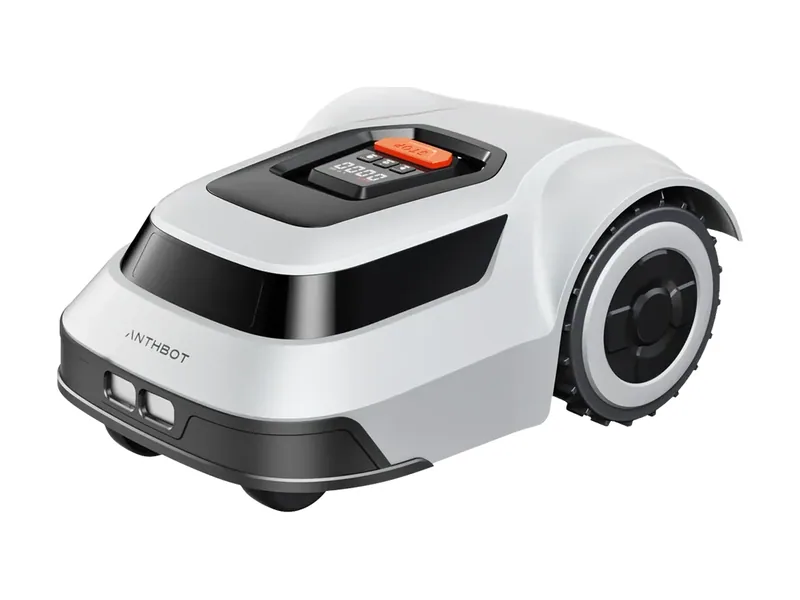
Anthbot Pion 1000
Boundary-wire mower with real-time mapping
From €699
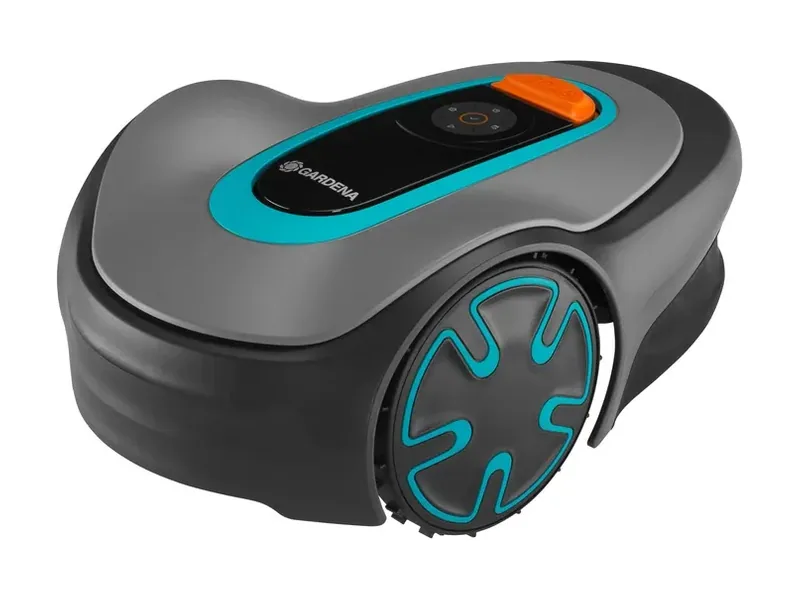
SILENO minimo 250 m2
Compact boundary-wire robotic mower for small lawns, Bluetooth app
From €630
Without a wire
You draw the edges of the lawn in the phone app instead. The mower finds its way in one of three ways:
- Satellite (RTK): very accurate on an open lawn. Tall trees and house walls can block the signal.
- Cameras: see the grass and edges like you do. They need daylight.
- Lidar: a laser scanner. Works under trees and in the dark.
Many models combine two of them.
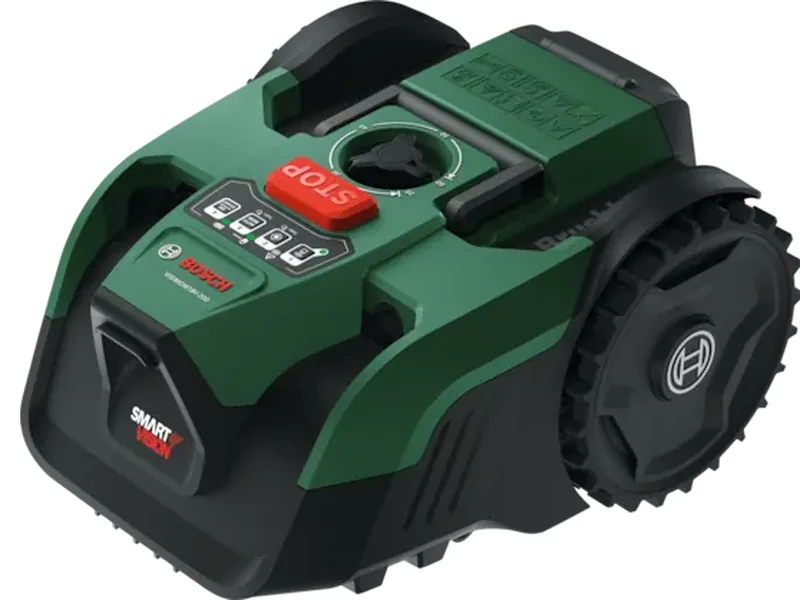
VISIMOW18V-200
Small-lawn wire-free robot using SmartVision camera plus ultrasonic sensors; runs on Bosch 18V POWER FOR ALL…
€565–616
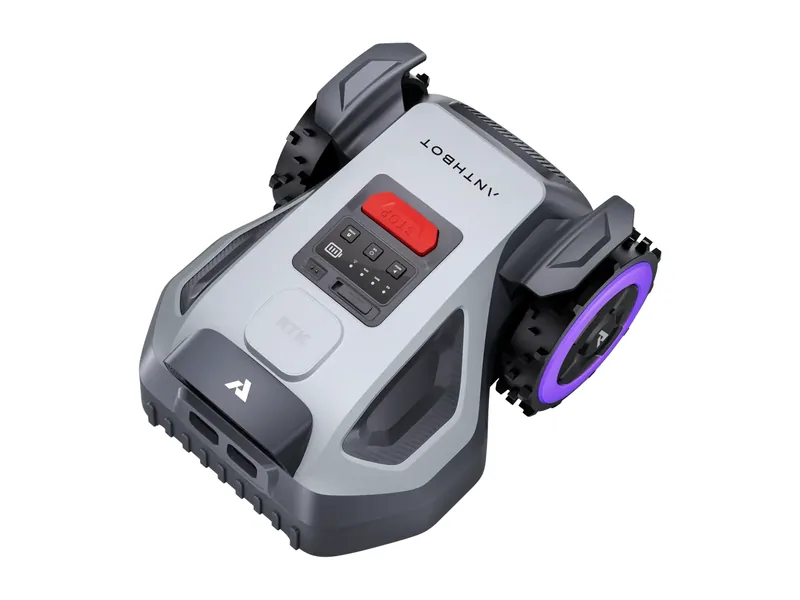
Anthbot M5 / M9
Low-cost wire-free mowers with full-band RTK + dual camera AI vision
€629–719
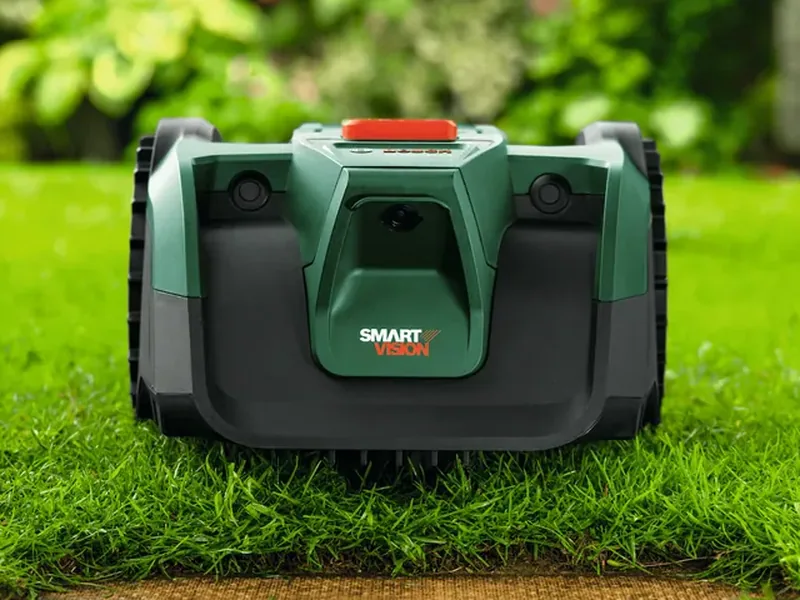
VISIMOW18V-100
Smallest wire-free vision robot for tiny lawns
From €462
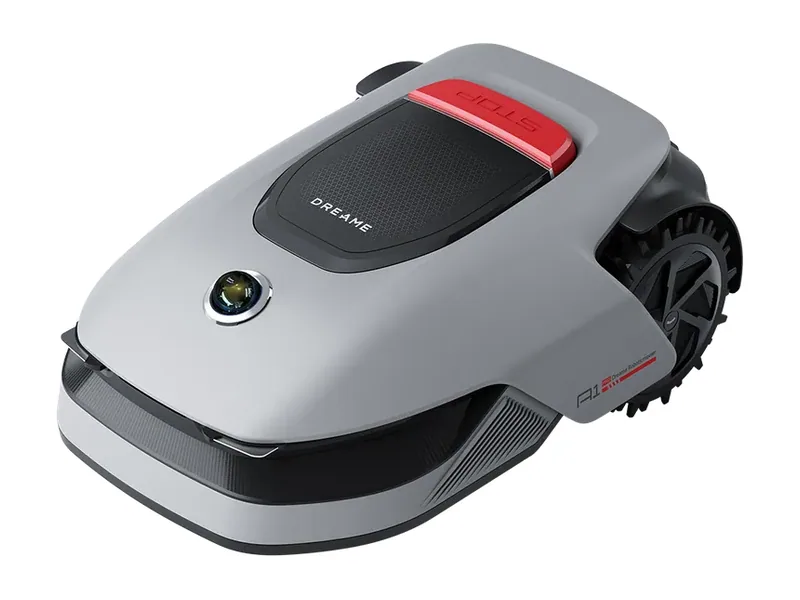
Dreame A1 Pro
Earlier LiDAR-based wire-free mower
From €799
How big your lawn is
Buy one rated well above your lawn size.
The maker’s figure is the biggest lawn the mower can handle, on a simple, flat lawn.
Many corners, flower beds or separate pieces of lawn make the job longer. Then pick a bigger model.
Almost every model covers a lawn up to 1,000 m². For 5,000 m² and more, look at the bigger all-wheel-drive models.
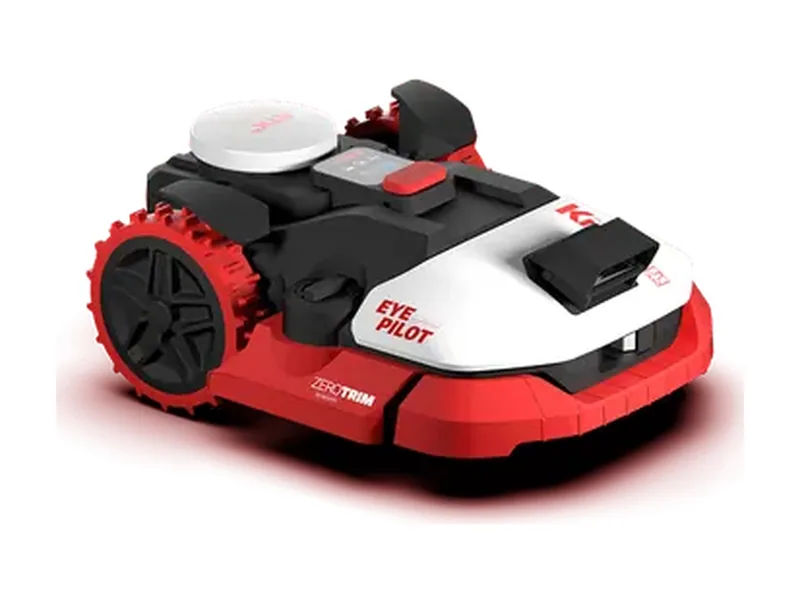
Kress EyePilot RTKn
Wire-free 2WD mower with antenna-free network RTK (RTKn) plus visual AI; ZeroTrim edge cutting on some; 4G on 'S'…
€999–3,999
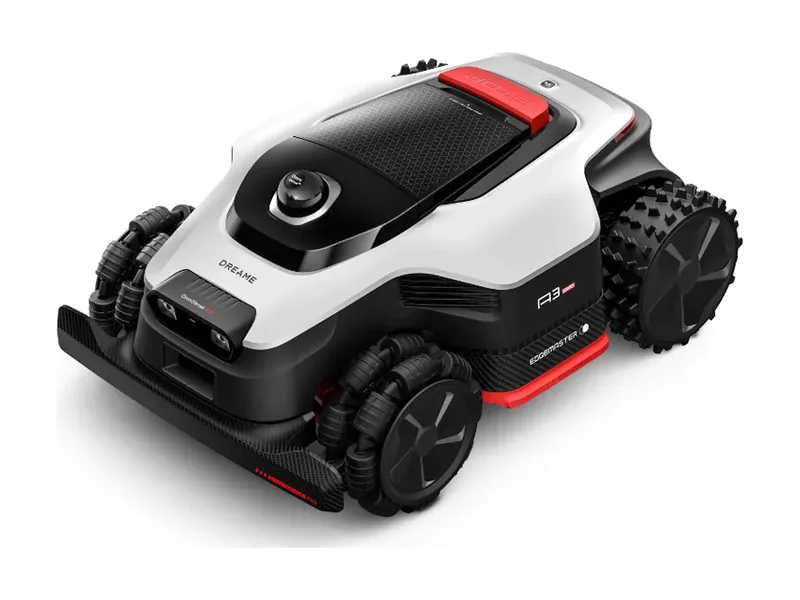
Dreame A3 AWD / A3 AWD Pro
All-wheel-drive wire-free mowers fusing 3D LiDAR and AI vision
€1,599–2,999
Slopes
Most gardens: 45% is enough.
Makers give the slope limit in percent. 50% is about 27 degrees, and it already feels steep when you walk it. 100% is 45 degrees.
For a steep garden, look for all-wheel drive. Some models manage 70% to 80% or more.
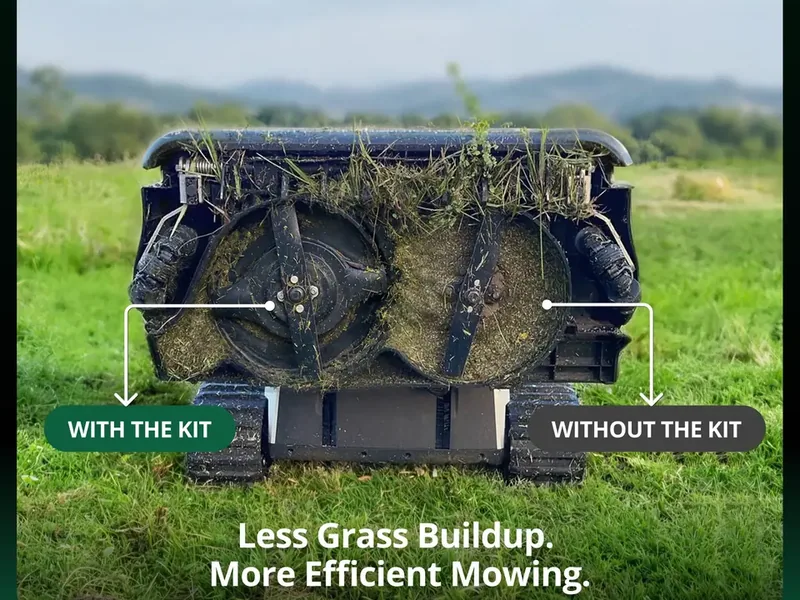
Lymow One Plus
Tracked wire-free mower for large, rough and steep properties using RTK + visual SLAM and AI vision
€2,599–2,748
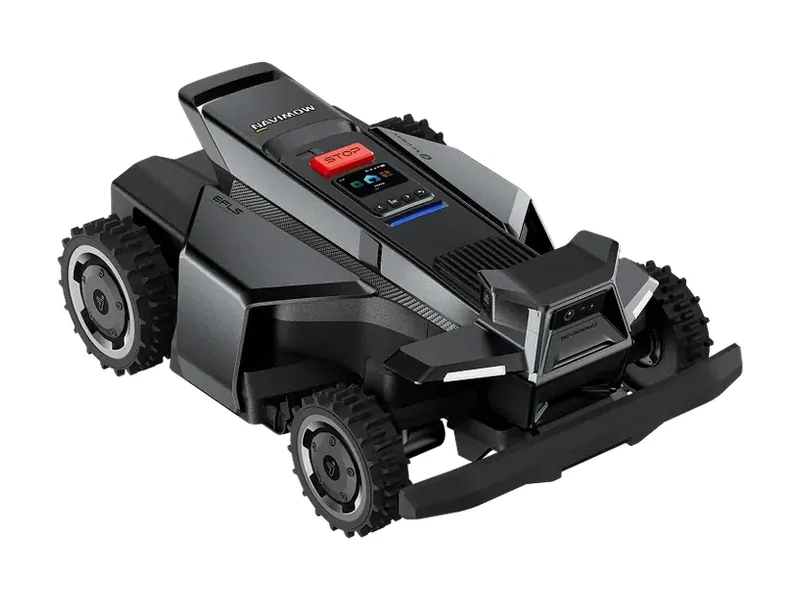
Navimow X4
Large-garden 4WD wire-free mower, tri-band RTK + 360° AI vision
€2,499–3,199
Theft, rain and winter
Look for a PIN, an alarm and GPS tracking.
Good models ask for a PIN and sound an alarm when someone lifts them. With GPS tracking you see on your phone where the mower is.
Most can mow in the rain, but the lawn is better off if they don’t.
In winter, clean the mower, charge it and keep it indoors.
Which one is for me?
- Small, open lawn: a wire-free mower with satellite positioning, for example VISIMOW18V-200.
- Garden with trees or narrow paths: cameras or lidar, for example VISIMOW18V-100.
- Steep garden: all-wheel drive, for example Lymow One Plus.
- Big lawn, 5,000 m² or more: for example Kress EyePilot RTKn.
Then compare two or three models on lawn size, slope, wire and price. Each robot page has the maker’s own figures.
Questions and answers
How much does a robot mower cost?
Garden robot mowers: €460 to €7,200; half cost under €1,600 (56 published prices). Commercial and sports-ground mowers: €800 to €22,000; half cost under €6,800 (9 published prices). Vineyard, orchard and field mowers: €18,000 to €220,000; half cost under €190,000 (4 published prices).
Do robot mowers need a boundary wire?
Not any more. 130 of 156 mowers with published navigation work without one, using RTK, cameras or lidar; wired models are usually cheaper.
Can robot mowers handle slopes?
Yes, within a limit. Half of the 88 mowers with a published figure manage 45% or more; the steepest manage 119%.
What should I check before buying a robot mower?
Area it can cover and slope limit. Wire or wire-free, and what positioning it uses. Theft protection and app control.