Hauling & field logistics buyer’s guide
Robots that carry loads around the farm: bins, trays, grain carts and tools.
What these robots do
They carry loads so your people walk less and carry less.
Hauling robots move bins, crates, trays, grain carts and tools around the farm. Some carry the load on their own back. Others pull a trailer or a tool behind them.
They find their way in one of three ways. They follow a person, they drive a route you have taught them, or they drive a GPS path. GPS is positioning by satellite.
Many can tow standard trailers and use standard tools, so you can keep using what you already own.
Our catalogue lists 50 robots from 45 makers. Most are for farms. A few are for building sites and quarries, and some are tractors that can drive without a driver.
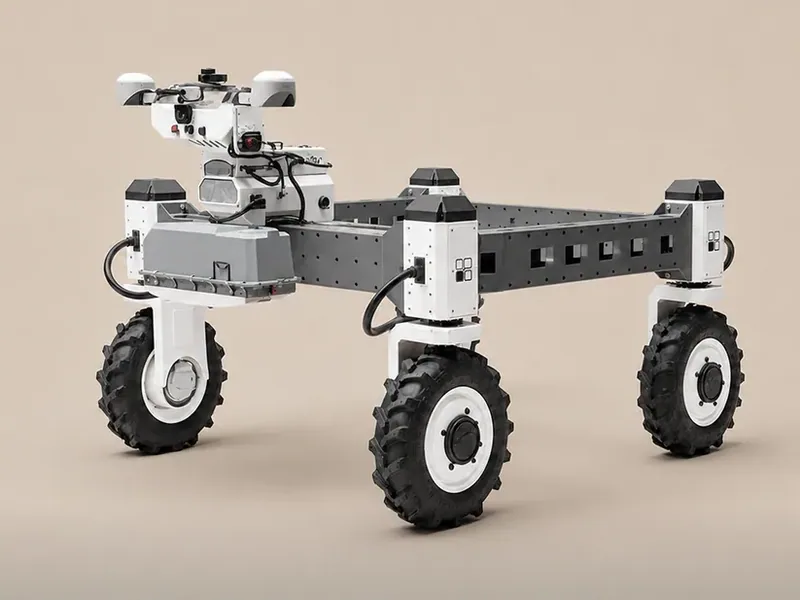
Amiga Max
Compact autonomous carrier that fits under tree canopy/narrow rows; tows implements, UVC treatment, bug vacuum…
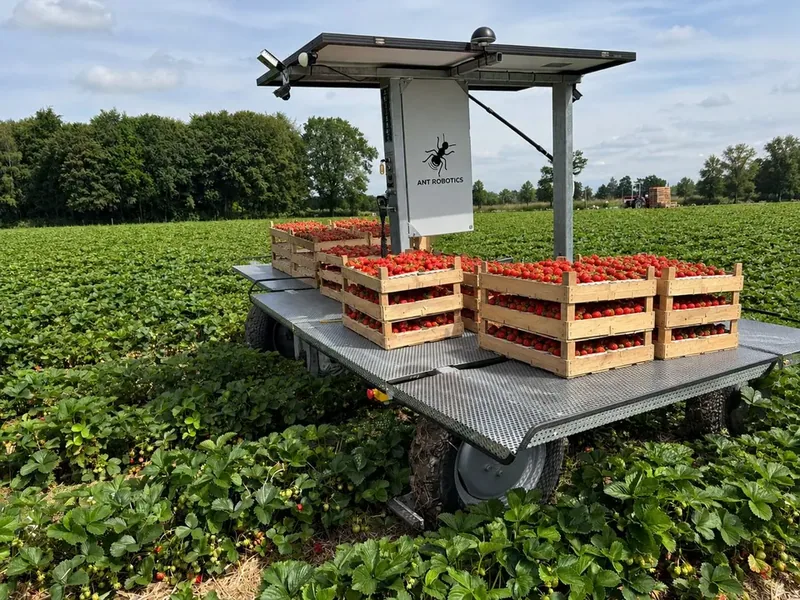
Transport robots
Autonomous transport robots for specialty-crop harvest logistics.
How much they cost
Few makers publish prices, so plan to ask for a quote.
5 of the 50 robots in our catalogue have a published price. Three of these prices are in euros.
Those euro prices start from €13,500 and go up to €18,000. The middle price is €15,000. They are small electric robots for vegetable beds and vineyards.
One small tracked sprayer that can also tow and carry loads lists $45,000–58,000. Larger carriers, driverless tractors and tractor kits are price on request.
When you ask for a quote, ask what is included: battery, charger, GPS signal, trailer or tool, training and service.
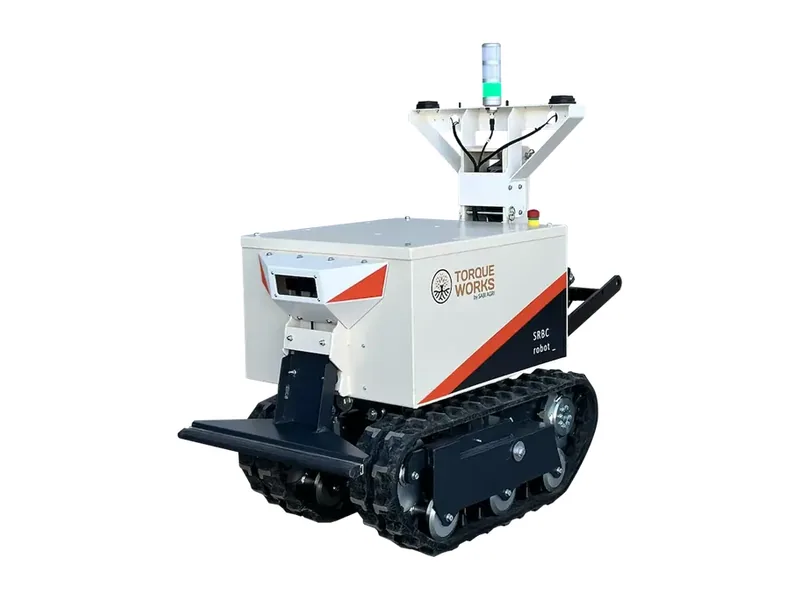
SRBC robots
Lightweight modular electric field robots/robot kits (bed-straddling or inter-row) for market gardening: hoeing…
€13,500–17,250
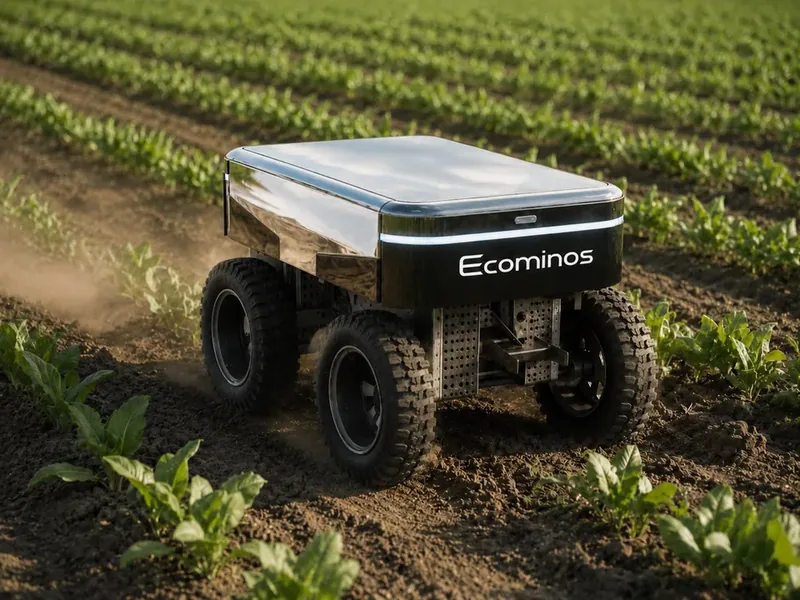
EcominoS
Compact battery-electric modular field robot for row-planted vegetables on small and medium organic and…
From €18,000
The main kinds
Choose between a robot that follows people and one that drives on its own.
The biggest choice is how much the robot does without a person. This changes the price, the safety rules and how you work.
Follow-me carts
The robot follows a worker along the row. It carries the crate or tray while the worker picks.
Some can then drive the full load to a collection point on their own. This is good for hand harvest of fruit, grapes and vegetables.
Fully autonomous carriers
The robot drives a mapped route or GPS path with nobody near it. Most use RTK GPS. RTK means the GPS signal is corrected by a nearby base station or a mobile signal, so the robot knows its place to a few centimetres.
These carriers often pull trailers or tools such as mowers and sprayers between jobs.
Guided vehicles in greenhouses
Inside a greenhouse, GPS does not work well. These robots follow a wire in the floor or read small tags (RFID) along the path.
Autonomy kits for tractors
Some makers sell a kit that makes your existing tractor driverless. A common job is the grain cart: the tractor brings the cart to the combine at harvest and drives it back to the truck.
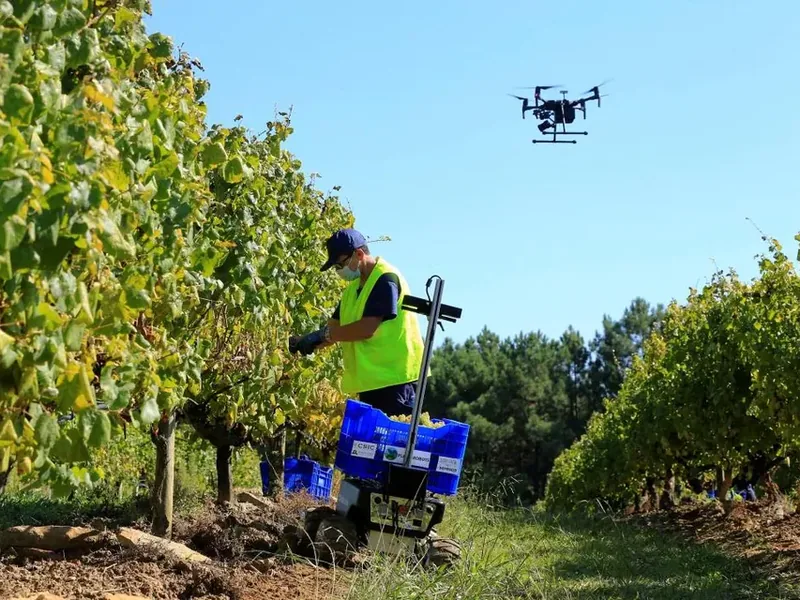
Robert
Follows a picker through the vineyard carrying the crate, drives full crates to an unloading point and is swapped…
€15,000–30,000
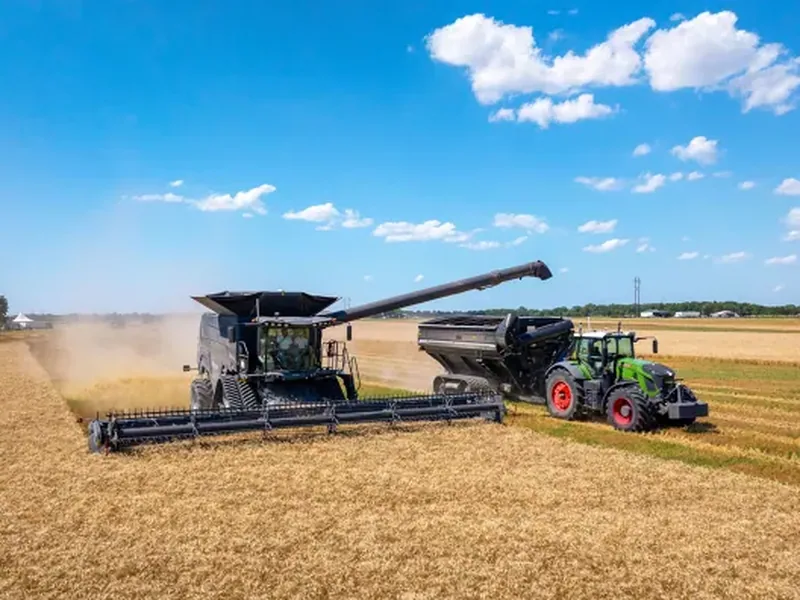
PTx OutRun
Retrofit autonomy kit for existing Fendt 900/1000 Vario tractors: driverless grain-cart shuttling to combines and…
How to size it for your work
Match payload, towing and runtime to your heaviest normal day.
Payload is the weight the robot carries on itself. Towing capacity is the weight it can pull on a trailer. Makers list both, and they are very different numbers.
In our catalogue, payload runs from about 300 kg on small transport robots to 4,000 kg on a large driverless tractor. Some list pounds (lb) instead of kilograms (kg), so compare with care.
Check the width too. A robot for narrow rows or under tree branches must be small enough to fit. Then check runtime: many electric models list 4-8 h on one charge.
- How many crates, bins or tonnes you move in one day
- The width of your rows, gates and paths
- How many hours a day the robot must work
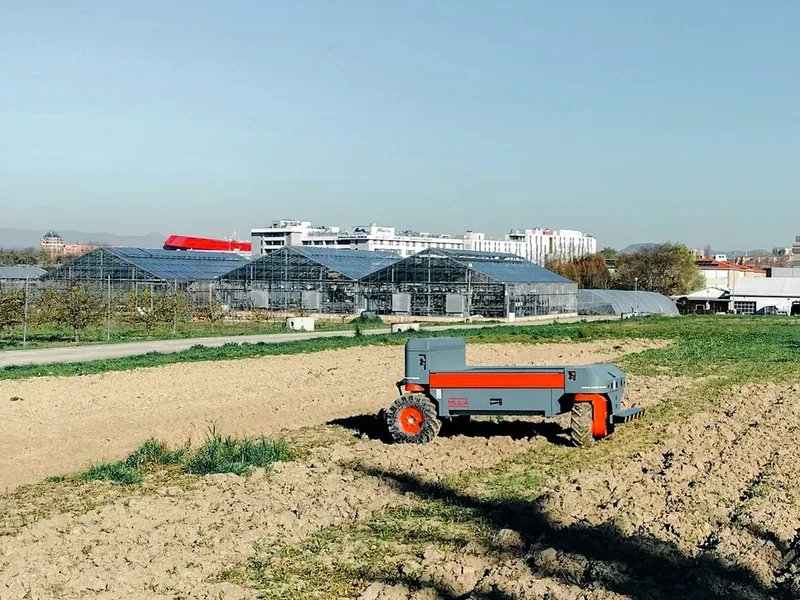
MULA 1250
Multipurpose autonomous electric 4x4 carrier that pulls/carries conventional implements (CAT I/II) for woody…
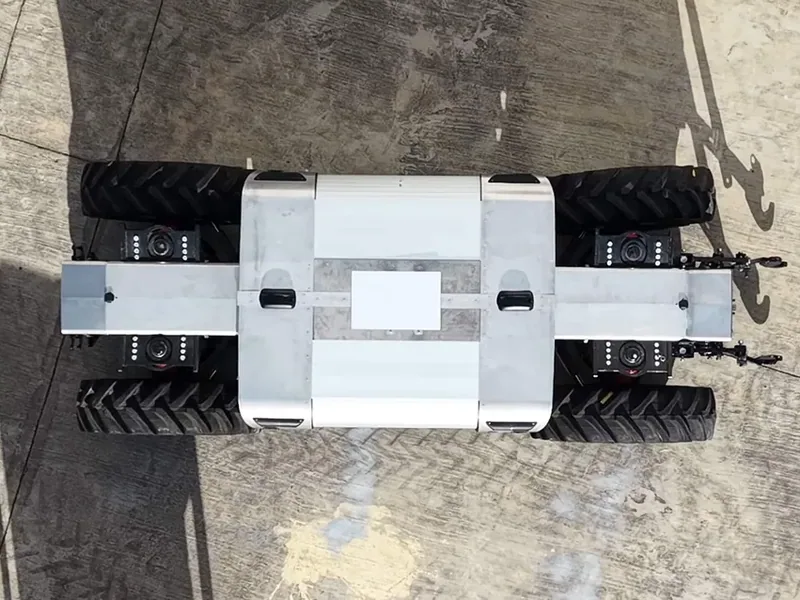
Voltrac THOR
Cab-less, driverless battery-electric tractor/UGV built from scratch; uses standard 3-point implements (ploughs…
Terrain, slope and safety
Ask for the slope limit with a full load, on your kind of ground.
Every robot has a slope limit. Makers write it in degrees or in percent, which are not the same thing. For example, one lists 18° and another lists 35% unloaded. Ask for the limit in the same unit, and with a full load.
Wet grass, mud, stones and soft soil change what a robot can do. Wheels and tracks behave differently, so ask for a demo on your own ground.
For safety, look for an emergency stop button, obstacle detection and geofences. A geofence is an invisible border on the map that the robot will not cross.
Rules for driverless machines are different from country to country. Ask your dealer what is allowed on your land and near public roads.
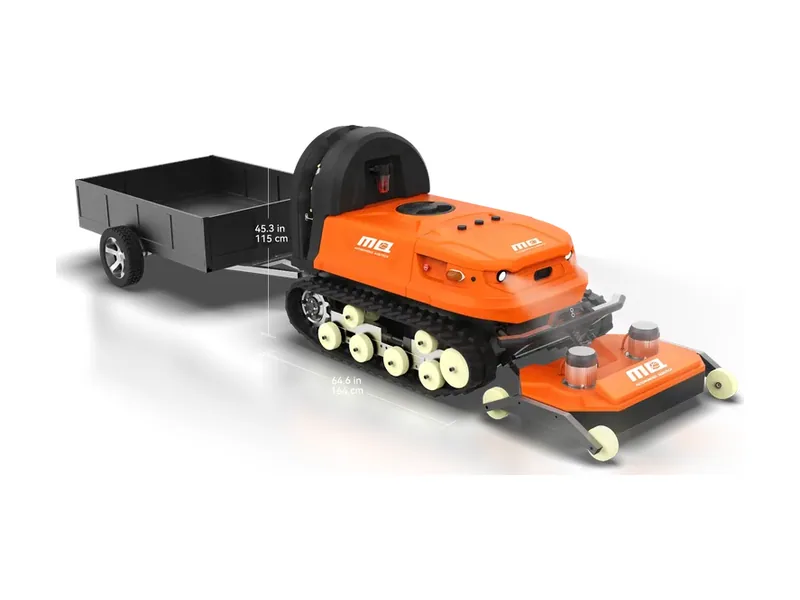
M200 autonomous sprayer
Compact all-electric tracked autonomous sprayer for orchards, vineyards and greenhouses; remote control or…
$45,000–58,000
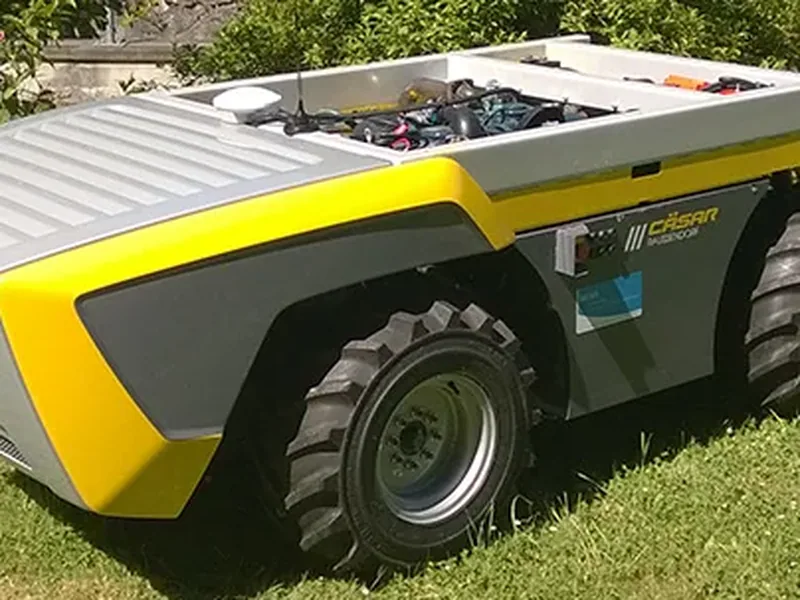
Obstroboter Cäsar
RTK-GPS guided autonomous carrier for orchards and vineyards doing spraying, tillage, fertilising, mowing…
Power, signal and support
Check charging, GPS signal and who will repair it before you buy.
Most hauling robots are electric. Some have swappable batteries, so you can change a battery and keep working. Listed charging times run from about 8 h to about 12 h, so plan when and where it charges.
Robots that use RTK GPS need a correction signal. This comes from your own base station or from a paid service through mobile data. Check mobile coverage in your fields.
29 of the 50 robots in our catalogue are on sale now. The others are at pre-order, pilot or prototype stage, and one has been discontinued. Ask about the local dealer, spare parts and how fast a technician can come.
- Battery: fixed or swappable, and how long it lasts
- GPS correction: your own base station or a paid service
- Service: local dealer, spare parts, remote help
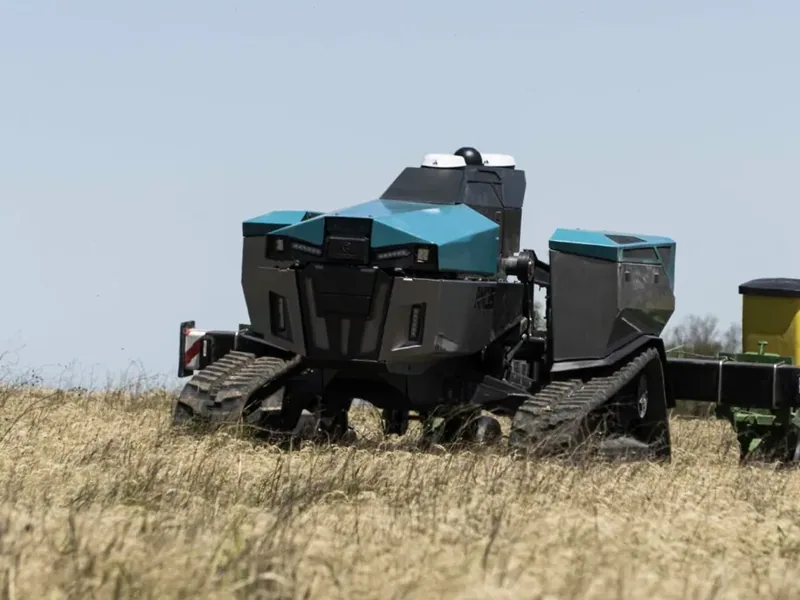
Amos autonomous electric tractor
Cab-less, fully electric, modular autonomous tractor with CAT II hitch for field and orchard work (cultivation…
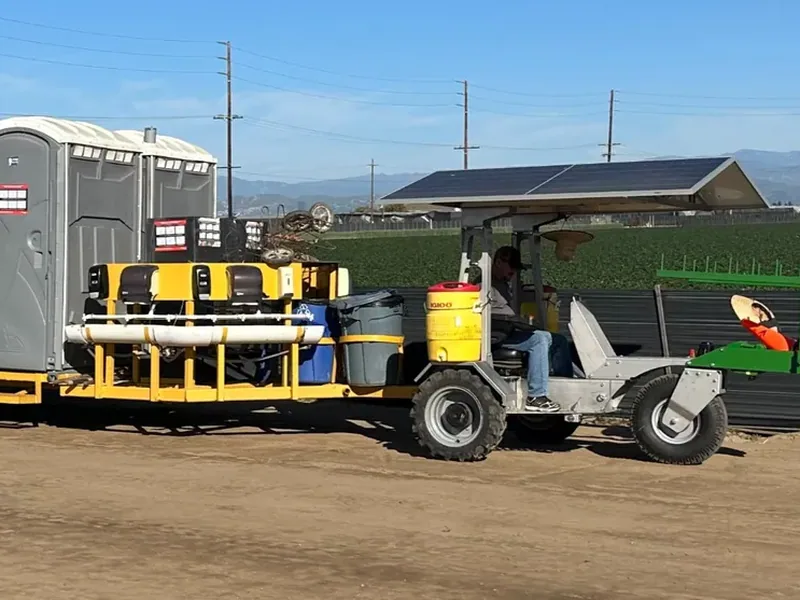
Paco solar tow-tractor
Electric tow tractor with integrated solar panels (E-Series).
Which one is for me?
- Small market garden or organic vegetable farm: Look for a light electric carrier that fits between your beds and can also do other jobs like hoeing or seeding. RTK GPS guidance helps it stay in the row. For example Oz.
- Fruit farm or vineyard with picking crews: Look for a follow-me cart that carries crates beside the pickers and drives full loads to the collection point. Check payload, row width and slope limit with a full load.
- Orchard or vineyard that already runs compact tractors: Look at autonomy built into tractors or added to them, so your existing tools keep working. Ask which tractor models and tools are supported. For example Agtonomy-Enabled tractors.
- Greenhouse grower: Look for a guided vehicle that follows a floor wire or tags, since GPS does not work well under glass. Check that it fits your paths and your harvest trolleys. For example BeTrac AGV.
- Large arable farm at grain harvest: Look for a kit that makes your existing tractor drive the grain cart without a driver. Check that it fits your tractor and combine, and that it has obstacle detection and geofences.
Compare all 50 hauling and field logistics robots in the catalogue by payload, slope limit, stage and price. Then ask two or three makers for a demo on your own ground.