Harvesting and fruit picking robots
Harvesting robots buyer’s guide
Harvesting robots pick fruit and vegetables or carry the harvest, the job where farms struggle most to find people.
What a harvesting robot does
Some robots pick the crop. Others carry it so your pickers can keep picking.
Harvesting robots help with the job that farms find hardest to staff: picking fruit and vegetables and moving the harvest.
A picking robot uses cameras to find ripe fruit. An arm then takes it with a gripper (a soft robot hand) or with suction, or cuts the stem.
A carrier robot does not pick. It follows pickers along the row, holds their trays or bins, and drives full loads to the end of the row.
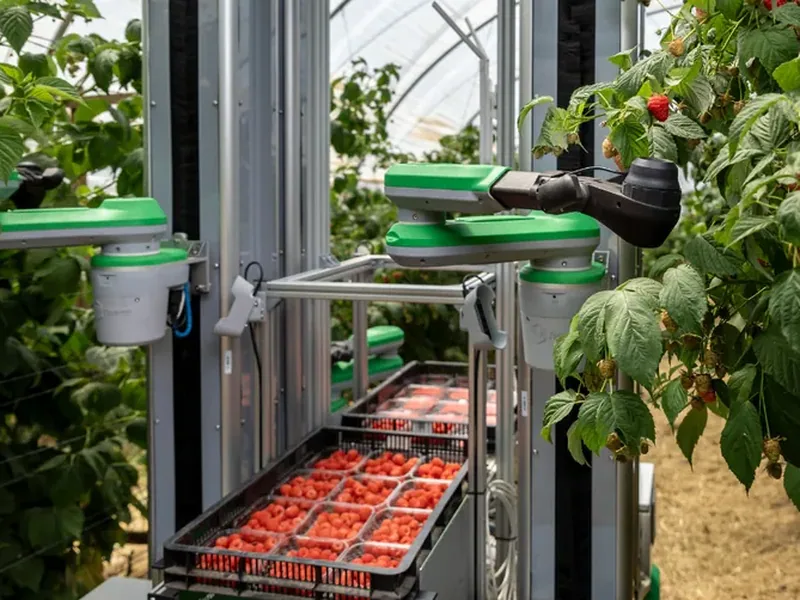
Fieldworker 1
Modular autonomous raspberry-picking robot with four picking arms, AI 3D cameras and ML.
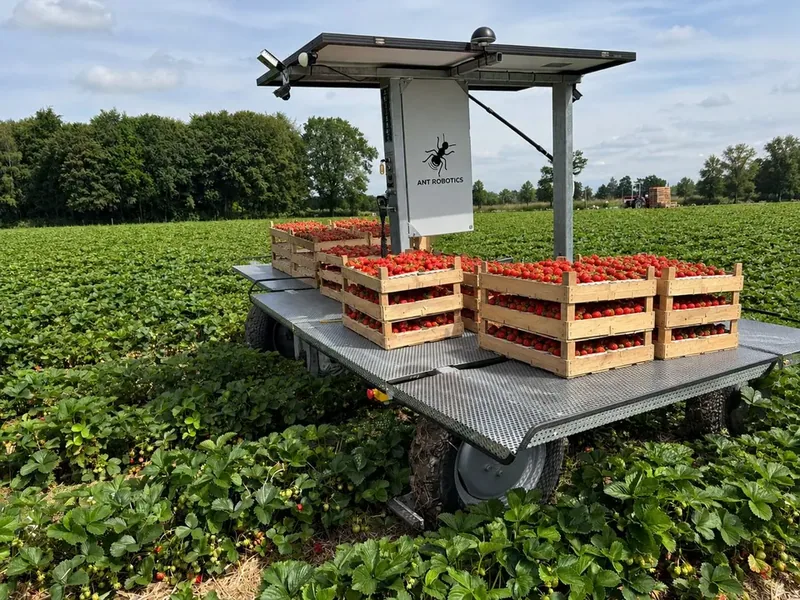
Transport robots
Autonomous transport robots for specialty-crop harvest logistics.
What it costs
Expect to ask for a quote. Some makers charge for what the robot picks instead of selling it.
5 of the 46 robots in our catalogue have a published price. For the others, you must ask the maker.
One prototype that follows grape pickers and carries their crates is listed at €15,000–30,000.
Some makers do not sell the robot. They run it on your farm as a service, and you pay for what it picks. One apple picker is paid per bin picked. One strawberry and grape service charged $0.60–0.85 per kg picked, but it has been discontinued.
A service means less money up front, and the maker handles repairs. Buying can cost less over time if you use the robot a lot.
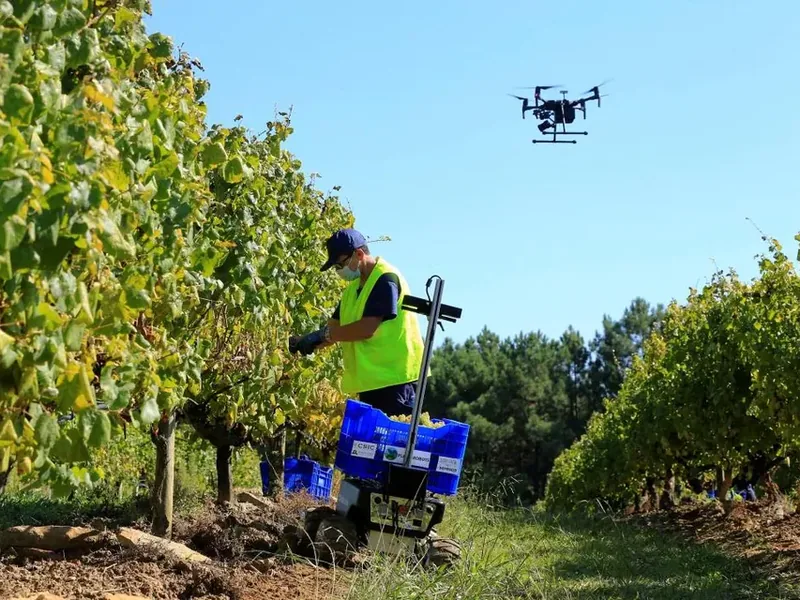
Robert
Follows a picker through the vineyard carrying the crate, drives full crates to an unloading point and is swapped…
€15,000–30,000
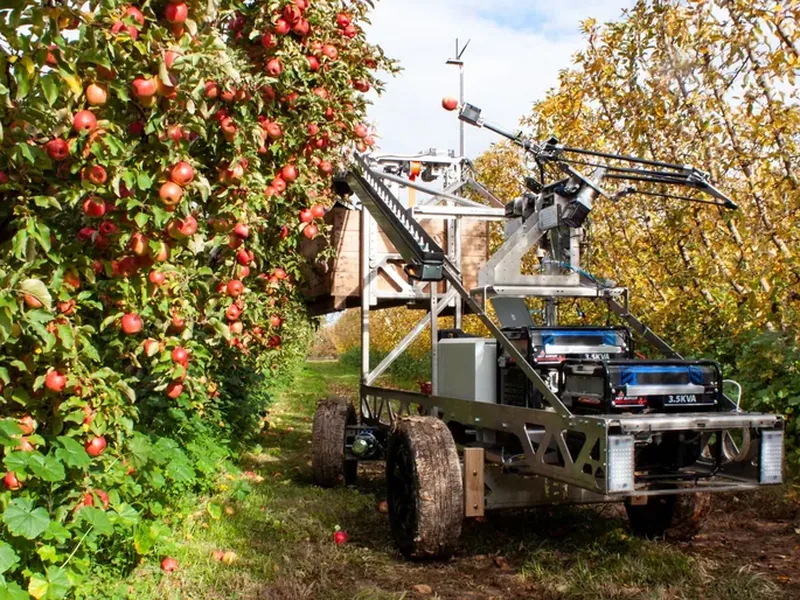
Eve
Commercial-prototype apple and stonefruit picking robot for 2D planar or V-trellis orchards; AI grades each fruit…
Paid per bin picked
The main kinds
Choose a robot that picks, a robot that carries, or a carrier that also does other field work.
Harvesting robots fall into a few groups. Each group saves labour in a different way.
Picking robots
These robots find and pick the crop themselves. Most are built for one crop, such as strawberries, tomatoes, asparagus or apples.
Many have several arms that work at the same time, so one machine can pick much more than a single arm.
Carts that follow pickers
These carts follow a picker or drive a set route. They take full trays to the end of the row, so people walk less and pick more.
They work in many crops, because people still do the picking. In greenhouses, some follow a wire in the floor (an induction loop) or small tags.
Multi-purpose carriers
These are electric tractors or tracked platforms for orchards and vineyards. At harvest they carry bins. The rest of the year they pull sprayers, mowers or soil tools.
Many steer by RTK-GPS, a very precise kind of satellite positioning that uses a correction signal.
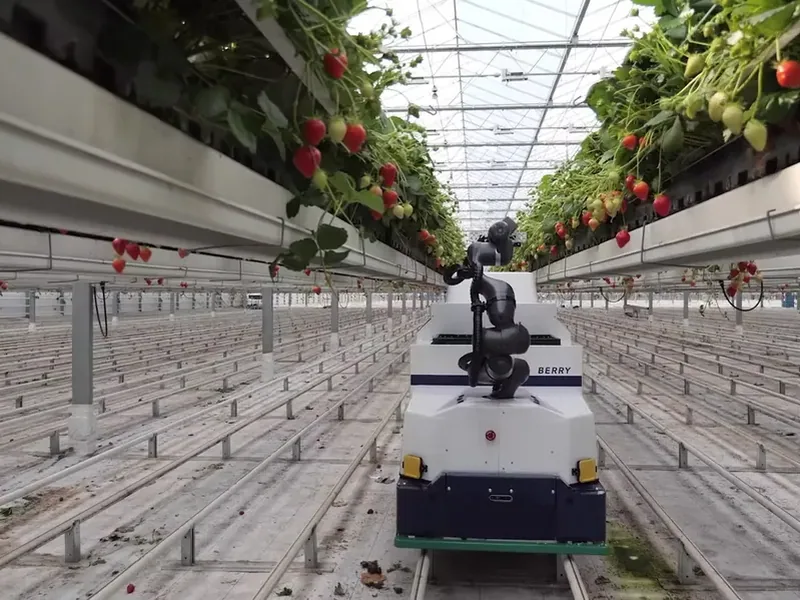
BERRY
Autonomous greenhouse strawberry harvesting robot with quality control, weighing and packaging.
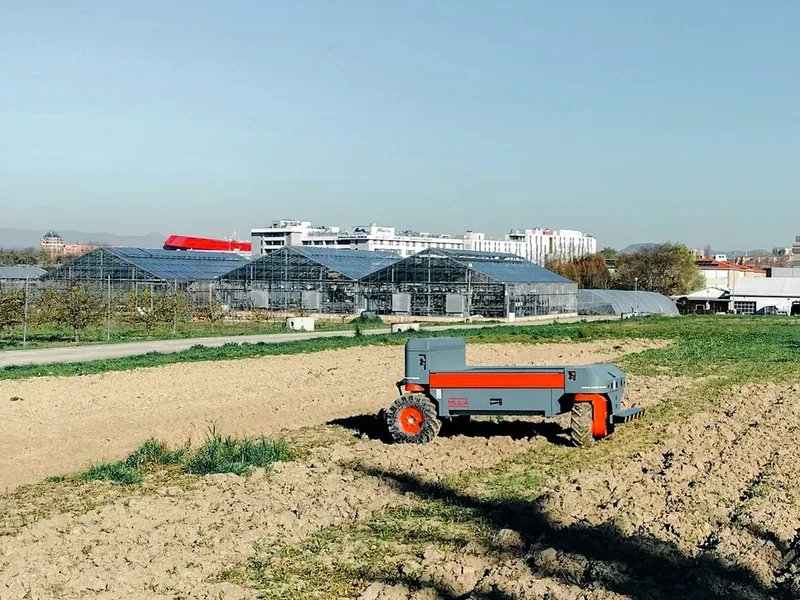
MULA 1250
Multipurpose autonomous electric 4x4 carrier that pulls/carries conventional implements (CAT I/II) for woody…
Size it for your farm
Match the robot to your crop, growing system and row width before you compare speed.
A picking robot only works in the crop and growing system it was made for. Strawberry robots, for example, are often made for table-top beds (raised gutters at waist height) in greenhouses or polytunnels.
Apple pickers often need flat fruit walls, such as 2D planar or V-trellis orchards, where the fruit hangs in a narrow wall.
Measure your rows. One strawberry robot needs a row pitch (the distance from one row centre to the next) of at least 1.1 m. One orchard carrier needs rows of at least 2.1 m.
Then compare output with your busiest days. Makers give figures such as about 200 kg of strawberries a day, 43 kg of tomatoes an hour, or up to 9,000 asparagus spears an hour.
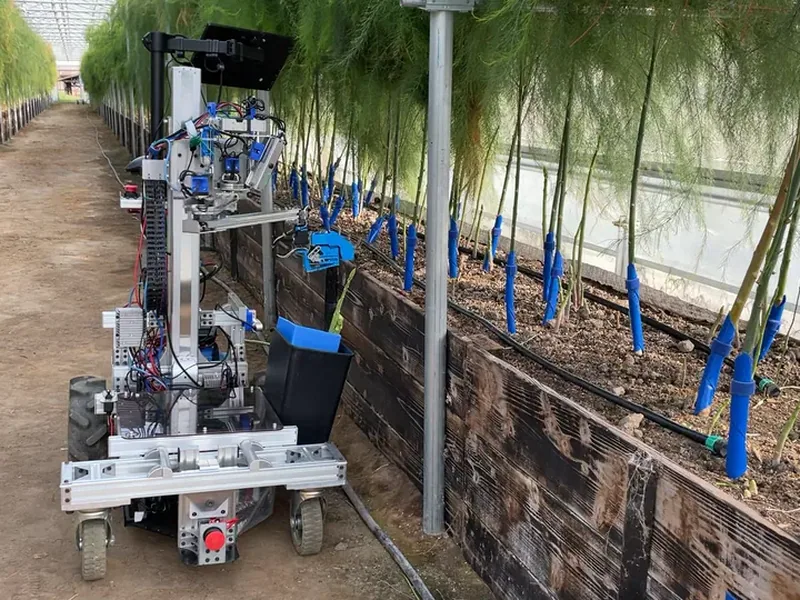
High Ridge Asparagus Harvesting Robot
Robot that harvests asparagus grown on high ridges.
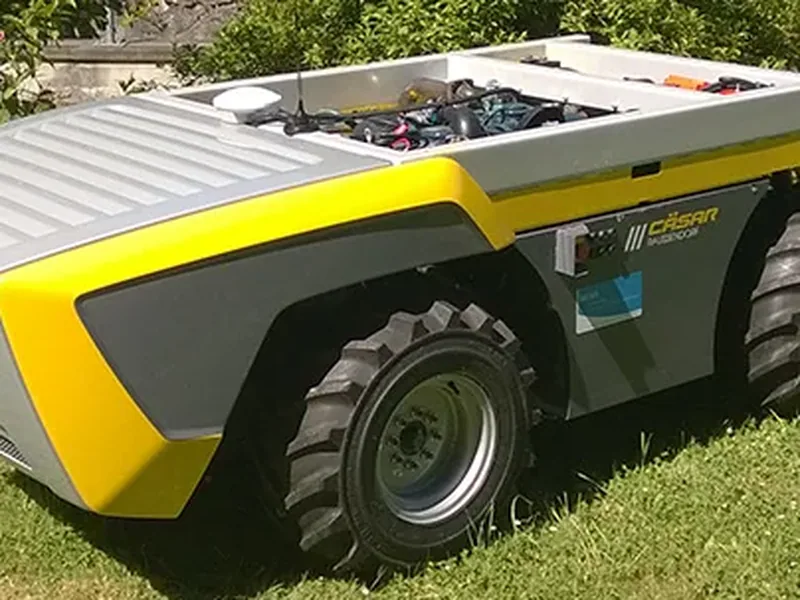
Obstroboter Cäsar
RTK-GPS guided autonomous carrier for orchards and vineyards doing spraying, tillage, fertilising, mowing…
What to check before you buy
Ask for pick rate, damage rate and safety features, measured on a farm like yours.
Ask for the pick rate per hour and the damage rate. A fast robot that bruises fruit can cost you more than it saves.
Ask how the robot keeps people safe. Look for an emergency stop and sensors such as LiDAR, a laser scanner that sees people and objects around the robot.
- Power: how long it runs, how long it takes to charge, and whether batteries can be swapped
- Connectivity: whether it needs a GPS correction signal or mobile network in your fields
- Service: who repairs it in the middle of harvest, and how fast
- Varieties: which crop varieties and growing systems it has been tested on
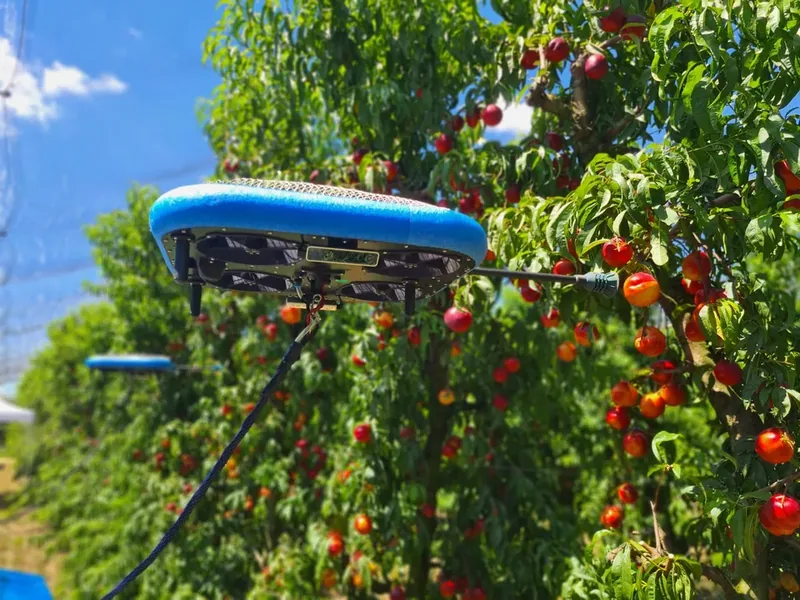
Flying Autonomous Robots (FAR)
Tethered AI drones on a ground platform that pick fruit selectively by ripeness/colour, around the clock, and log…
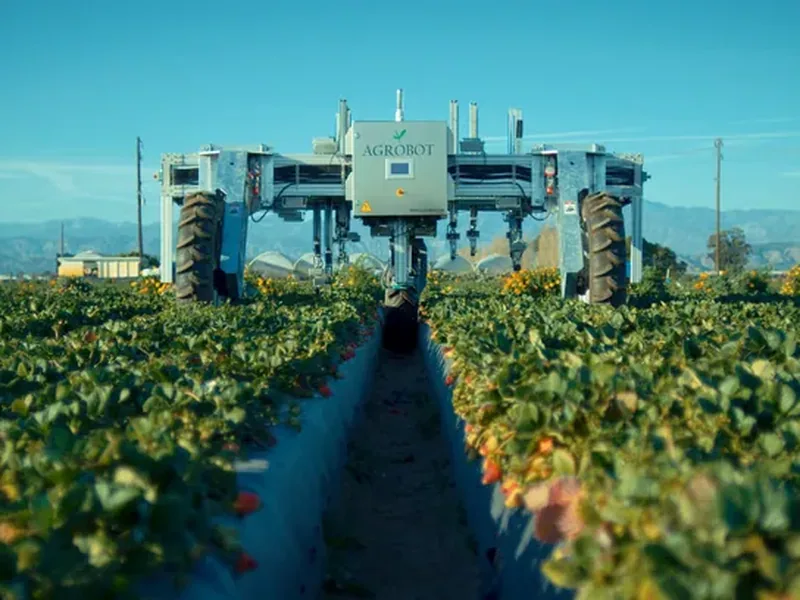
Agrobot E-Series strawberry harvester
Selective strawberry harvester: up to 24 independent arms grip and cut stems by vision/AI ripeness assessment and…
Many are still being tested
Fewer than half of these robots are on sale today, so check the stage of each model.
Our catalogue lists 46 robots from 37 makers. 19 of them are on sale now. The others are pilots (running on a few farms), prototypes or of unknown stage, and some have been discontinued.
A pilot can be a low-risk way to try a robot. But plan your harvest so you still have enough pickers if the robot stops working.
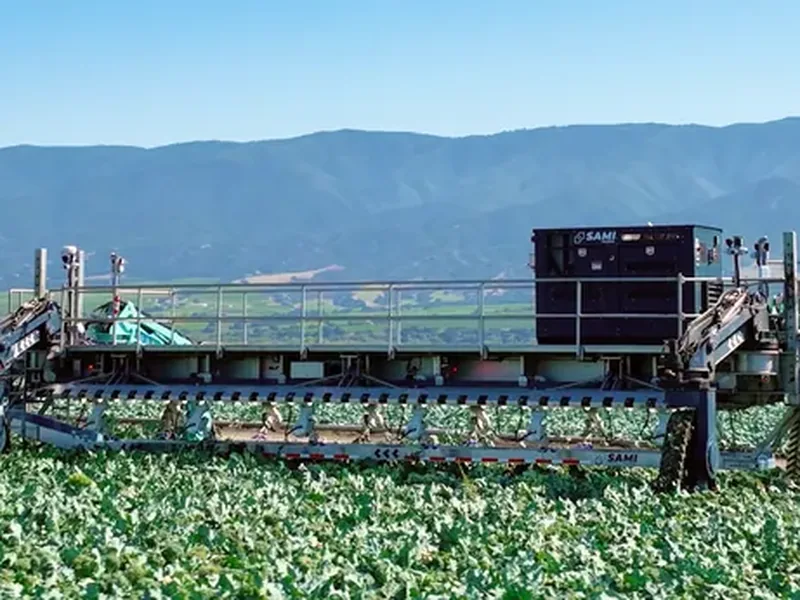
SAMI
Multi-arm field platform that maps beds with cameras and selectively harvests heads with interchangeable end…
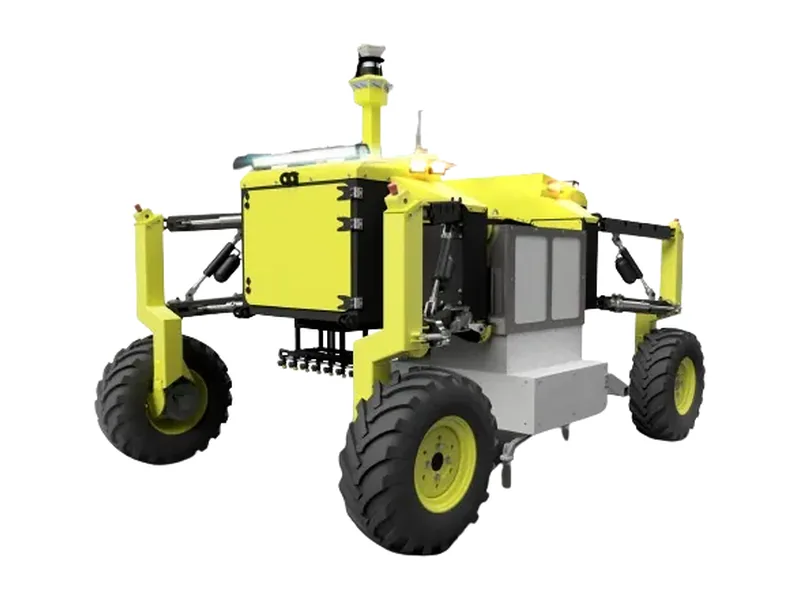
ETAROB
Solar multi-purpose vegetable field robot doing per-plant 'spot farming' from soil preparation and sowing to…
Which one is for me?
- Asparagus grower: Look for a robot that picks only the spears that are ready. Check the spears-per-hour figure and how many operators it needs. For example AVL Compact S9000.
- Nut orchard: Look for a self-driving sweeper that fits your current harvest line. Ask how it handles row ends and obstacles. For example Flory V-62 (autonomous sweeper).
- Vineyard or orchard on slopes: Look for a carrier that stays stable on your steepest slope and can pull your own tools outside the harvest season. For example Slopehelper.
- Greenhouse vegetable grower: Look for a guided vehicle that moves harvest trolleys while staff pick. Check how it finds its way and that it fits your paths. For example BeTrac AGV.
- Berry grower with a picking crew: Look for a cart that follows pickers and takes full trays to the row end. Check your row width and ground conditions. For example Goyo (CFS-15) strawberry aid harvester.
Compare all 46 harvesting robots in our catalogue by crop, stage and how they are sold. Then ask two or three makers for a demonstration on your own farm.