Glass & facade robot buyer’s guide
Robots that install glass panes and curtain-wall modules, drill and fix facade brackets, and clean or maintain facades.
What these robots do
They lift and place heavy glass, fix facade parts, or clean the outside of buildings.
A facade is the outside wall of a building. Many modern buildings have a curtain wall: a wall made of large glass panels or modules, hung on the building frame.
Glass and facade robots help with this work. Some lift and place glass panes. Some drill holes and fix the metal brackets that hold the facade. Others clean or check the facade after the building is finished.
A glazing robot is a small crane or manipulator (a machine arm that holds and moves a load). It holds the pane with vacuum cups, which grip the glass by suction. The operator guides the pane into place with a remote control.
Facade robots work on the wall itself. They climb it, hang from cables, ride on a lift, or fly as a drone.
How much they cost
No maker in our catalogue publishes a price, so you must ask for a quote.
Our catalogue lists 17 robots from 13 makers. None of them shows a price on the maker's site. Every price is on request.
When you ask for a quote, ask what is included. A low machine price can hide extra costs.
- Vacuum cups, arms and other attachments
- Delivery, operator training and service
- Rental or pay-per-job options
- Whether the maker runs the robot for you
The main kinds
Choose by the job: lifting glass, fixing brackets, or cleaning.
The robots in this group do quite different jobs. Start with the job you need done most often.
Glazing robots
These lift, turn and tilt glass panes so a small crew can install them. In our catalogue they lift from 350 kg up to 1,500 kg.
Small models work indoors and on floors. High-reach models work on the outside of the building, up to a working height of 26.16 m.
Bracket and module robots
These drill holes and fix the brackets that hold a curtain wall. Some use a total station, a survey instrument that measures position very exactly, to put each bracket in the right place.
Some run on a mobile base at the slab edge (the edge of each floor). Others hang from cables across the whole facade.
Cleaning robots
These wash windows and facades so people do not need to hang on ropes. Some are drones that spray water from the air. Some hang from cables at the corners of the facade.
Others are robot arms fitted to a building maintenance unit (BMU), the cradle on the roof that window cleaners already use.
Other building robots
Our catalogue also lists a few robots that print building parts or lay bricks. They are not for glass, but they may interest builders who work on facades.
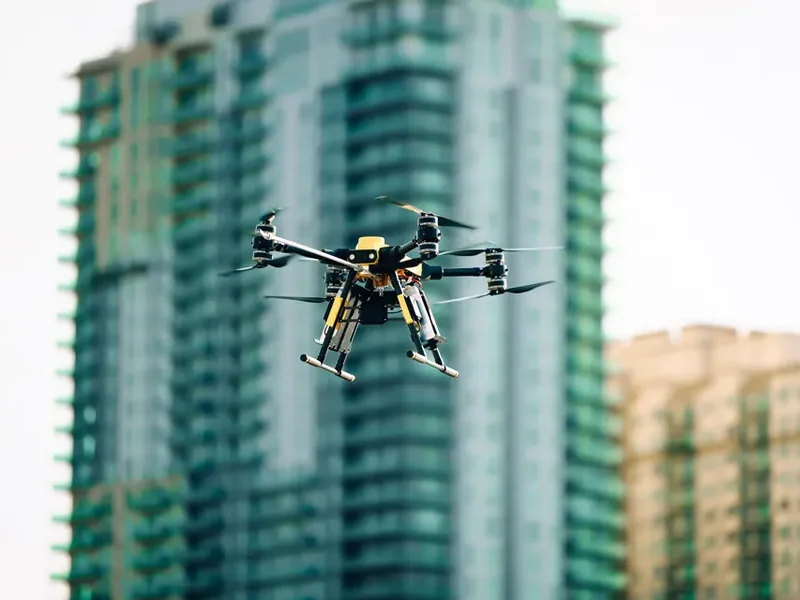
Power & Soft Wash drone
Autonomous drone that pressure-washes building exteriors, windows, stadiums and solar panels.
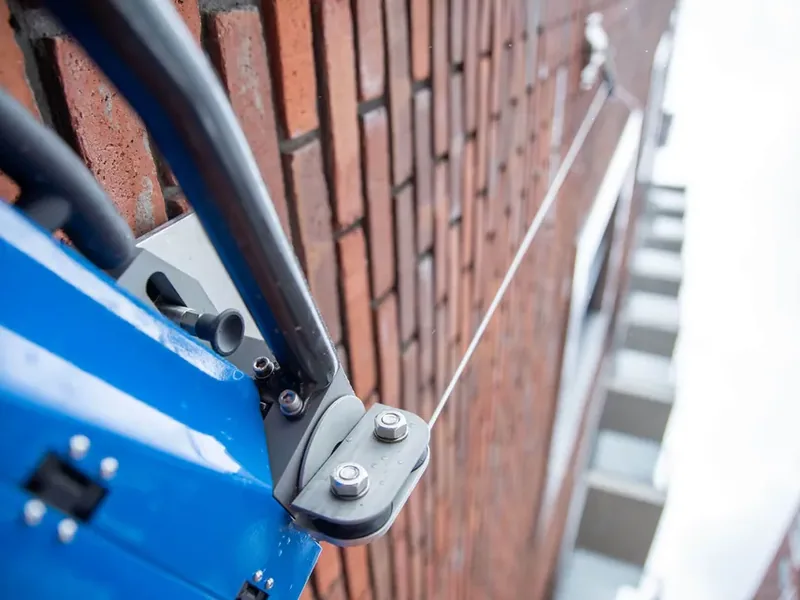
KITE robot
Autonomous robot that cleans windows, frames and facades of high-rise buildings with demineralised water and can…
Size it for your job
Check the weight it can hold at full reach, not only the top figure.
Start with your heaviest pane or module. Then check the lifting capacity in the position you will really use.
Capacity drops when the arm is extended or lifting overhead. One compact model in our catalogue lifts 600 kg close in, but 300 kg with the arm fully out and 200 kg overhead.
Next, check working height. Indoor robots work at floor level. High-reach robots and drones work much higher; one cleaning drone lists a maximum height of 60 meters.
For indoor work, check the machine width against your doors and lifts. One compact glazing robot has a chassis 780 mm wide.
What to check before you buy
Think about site, power, safety and rules, not only the machine.
Ask if the robot is for indoor use, outdoor use, or both. Wind and rain change what is safe on the outside of a building.
Check the weight of the machine itself. A glazing robot can weigh 550 kg before counterweights, so floors, ramps and scaffolds must carry it.
- Power: battery, mains or fuel, and how long a charge lasts
- Safety: vacuum alarms and what happens if suction or power fails
- Rules: drone flight permits and work-at-height rules where you work
- Service: spare vacuum cups, local repair and operator training
On sale or still a prototype
Ten robots are on sale; some others are still being tested.
13 of the 17 robots in our catalogue are on sale now. Three are prototypes, which means test machines that you cannot simply order yet. For one robot, we do not know the stage.
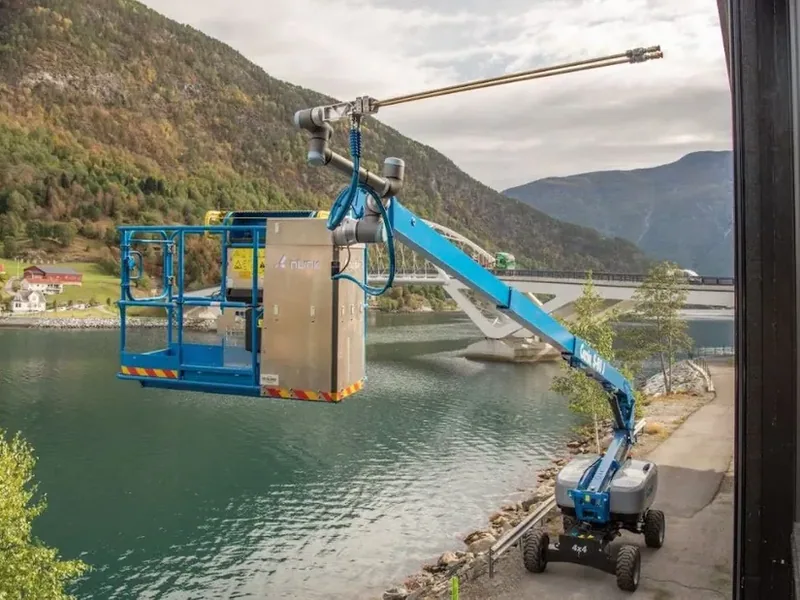
Prototypes show where the work is going, for example robotised boom lifts and cable robots that fix facade modules. For a job soon, choose a robot that is on sale and has local service.
Which one is for me?
- Glazing contractor, shopfronts and indoor glass walls: Look for a compact battery glazing robot that fits through doors and lifts your heaviest pane with the arm extended.
- Curtain-wall installer on mid- and high-rise buildings: Look at high-reach glazing robots with enough lifting capacity for your modules, and at robots that drill and fix brackets at the slab edge.
- Facility manager of a high-rise office or hotel: Look for a cleaning robot that hangs from cables or fits on your existing roof cradle, and ask if it can also inspect the facade.
- Owner of large roofs, solar panels, barns or a stadium: Look for a washing drone. Check its maximum height, water pressure and the drone flight rules where you work.
Compare all glass and facade robots in our catalogue by lifting capacity, working height and stage. Then ask two or three makers for a quote for your job.