Autonomous excavators and earthmoving
Earthmoving & heavy machinery buyer’s guide
Autonomy for heavy machines: excavators, dozers, rollers and haul trucks that work without an operator in the cab.
What these robots do and how they work
Most of these robots are kits that you add to a machine you already own.
These robots are excavators, dozers, rollers and haul trucks that work without a driver in the cab. Most of them start as normal machines and are changed with an add-on kit. This is called a retrofit.
The kit adds GPS, which tells the machine where it is, and lidar, a laser scanner that sees the ground and obstacles around it. A control computer then moves the machine. The site plan tells it where to dig, push or compact the ground.
A person still watches the work. They sit in an office or a control room, or they hold a tablet with a stop button.
How much it costs
Almost every maker gives prices only on request, so ask for a full quote.
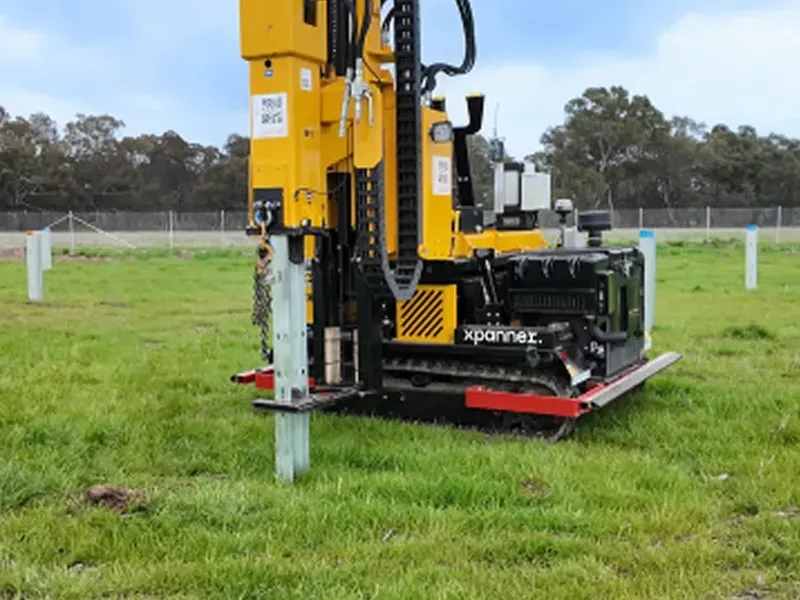
Our catalogue lists 34 robots from 28 makers. Only 1 of them has a published price. One is a guidance kit that costs from $3,000 per month.
All other makers give a price on request. Some sell the kit, and some rent it out by the month.
When you ask for a quote, ask what is included. The kit is only one part of the cost.
- Installation on your machine and training for your staff
- Base station or network equipment for the site
- Software fees and remote support each month
The main kinds
Decide how much the machine should do alone: from remote control to full autonomy.
The robots in this group give different levels of help. Some only make the work easier for a driver, and some work alone.
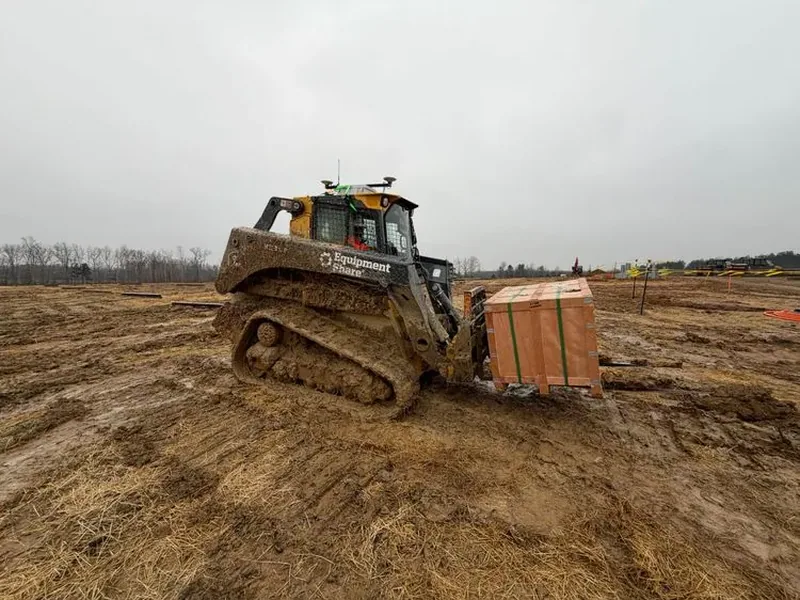
Guidance only
A guidance kit shows the driver exactly where the machine is on the site plan. GNSS is the general name for satellite positioning such as GPS.
The driver stays in the cab. This is the simplest step.
Remote control
Teleoperation means a person drives the machine from far away, for example from a cockpit in an office. Cameras and a fast network send the picture and the controls.
This keeps the operator away from dust, noise and danger.
Supervised autonomy
The machine does a repeated job on its own, such as loading trucks or rolling asphalt. A person watches and can stop it at any time.
Often one person can watch several machines at once.
Fleet software
Fleet software plans the work for many machines together. It can mix machines with drivers and machines without drivers on the same site.
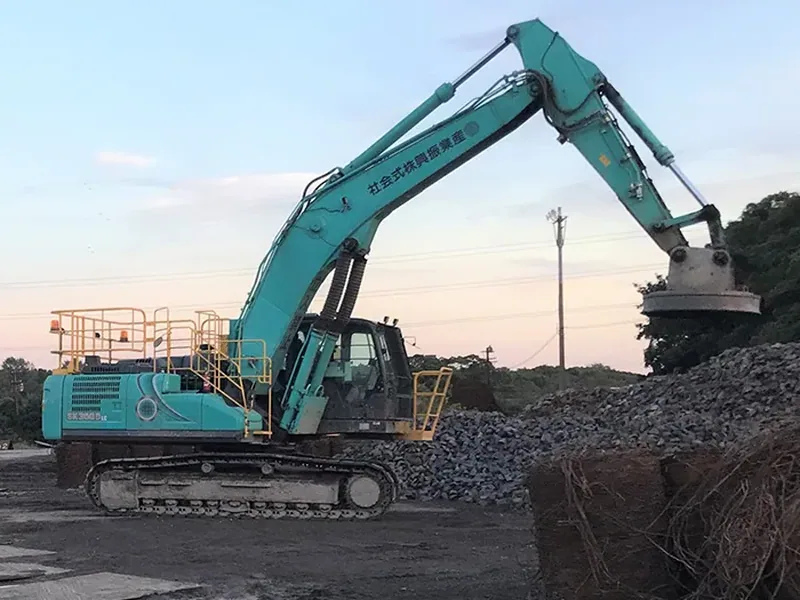
K-DIVE remote operation system
Lets operators run excavators from a remote cockpit over wide-area networks, combined with a cloud system that…
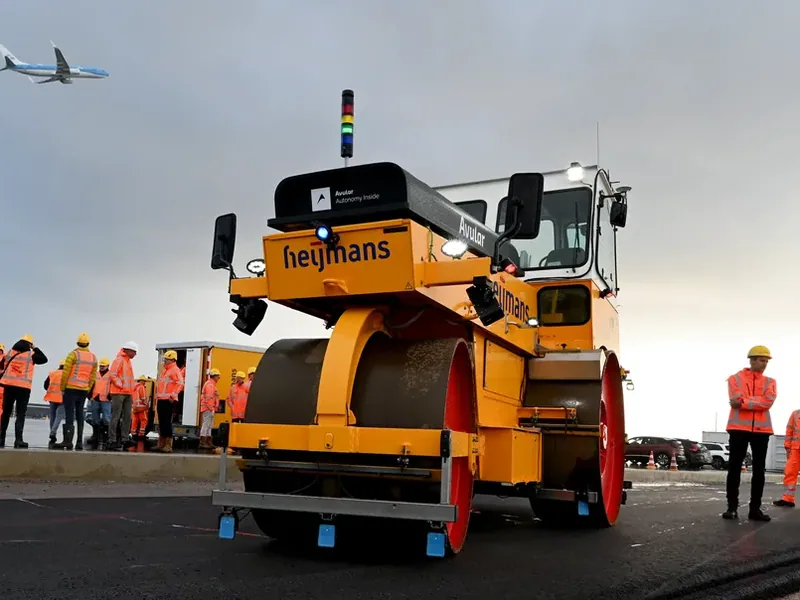
Autonomous electric asphalt roller
Driverless battery-electric asphalt roller retrofitted with Avular mobile-autonomy stack, remotely supervised…
How to size it for your site or job
Start with one repeated task and the machines you already own.
These robots are best for work that repeats all day: loading trucks, hauling the same road, pushing soil to a level, or rolling asphalt in passes.
Look at your fleet first. One kit in our catalogue fits excavators and wheel loaders from 10 to 100+ t and has been installed on about 12 brands. Other kits fit only excavators, or only haul trucks.
Large mines and quarries often run a whole fleet of driverless haul trucks. A smaller contractor may start with one machine, or with guidance or remote control only.
What to check before you buy
Check brand fit, the supervision setup and the safety rules on your site.
Ask which machine brands and models the kit fits. Some kits need electro-hydraulic pilot valves, which means the machine's controls must work with electric signals, not only with levers and oil pressure.
Ask how the machine is supervised. Some systems use long-range Wi-Fi or a private mobile network (private LTE) on the site, and some can keep working offline when the signal drops.
- Which machine brands and sizes the kit fits
- Remote supervision: who watches, from where, and over which network
- Safety: emergency stop, obstacle detection and closed work zones
- Local rules for driverless machines on your site
On sale or still being tested
Only some of these robots can be bought today.
16 of the 34 robots in our catalogue are on sale now. The others are pilots, which are trials with real customers, or prototypes, which are test machines, or their stage is not known.
A pilot or prototype can show where the market is going. But if you need a machine for work this season, choose one that is on sale and ask the maker for sites where it already works.
Which one is for me?
- Earthworks contractor with excavators and wheel loaders: Look for a retrofit kit that fits your brands and machine sizes, with a tablet stop button and remote supervision. Ask if it can load trucks and survey the ground. For example Gravis RACK.
- Mine or quarry with haul trucks: Look for driverless haulage that works on your existing trucks, with a strong site network and a certified safety system. Ask how it works next to machines with drivers. For example Pronto Autonomous Haulage System.
- Road building and asphalt contractor: Look at driverless rollers and pavers with obstacle detection and an emergency brake. Many are still tests, so ask what you can buy today, such as remote control or obstacle detection on normal rollers. For example ROBOMAG BW 177 / BW 154.
- Crusher or aggregates plant: Look for a fixed boom you can control from a safe room to break up stuck rock at the crusher. Ask about the control station and the camera view. For example Brokk Pedestal Boom.
- Small contractor or farm doing its own earthworks: Start with a guidance kit that shows the driver where to dig or spread material. Monthly rental keeps the first cost low.
Compare all 34 earthmoving and heavy machinery robots in our catalogue. You can filter by machine type, stage and maker, then ask the makers for a quote.