Spraying & spreading drones buyer’s guide
Agricultural drones spray crop protection, spread fertiliser and seed from the air, reaching wet, steep or tall crops that ground machines cannot.
What a spraying drone does
A spraying drone carries a tank or hopper and flies a planned route over your field by itself.
An agricultural drone sprays crop protection products, spreads fertiliser and sows seed from the air. It can work in wet, steep or tall crops where a tractor cannot go.
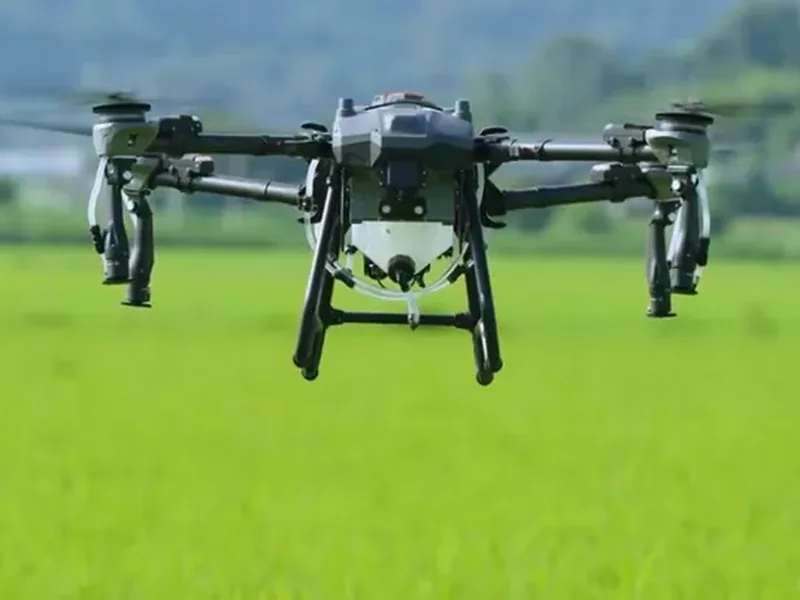
Most are multi-rotor drones, which means a frame with several propellers. A few are small helicopters or aircraft with wings. The tank and nozzles, or a spreader hopper (a box for granules), sit under the frame.
Before the job, you map the field on a controller or tablet. The drone then flies the route by itself using RTK positioning. RTK is satellite positioning with an extra correction signal, so the drone knows where it is much more exactly than with normal GPS.
Radar or other sensors measure the height above the crop. This keeps the drone at the same height when the ground goes up or down. You stay on the ground, watch the flight and refill the tank.
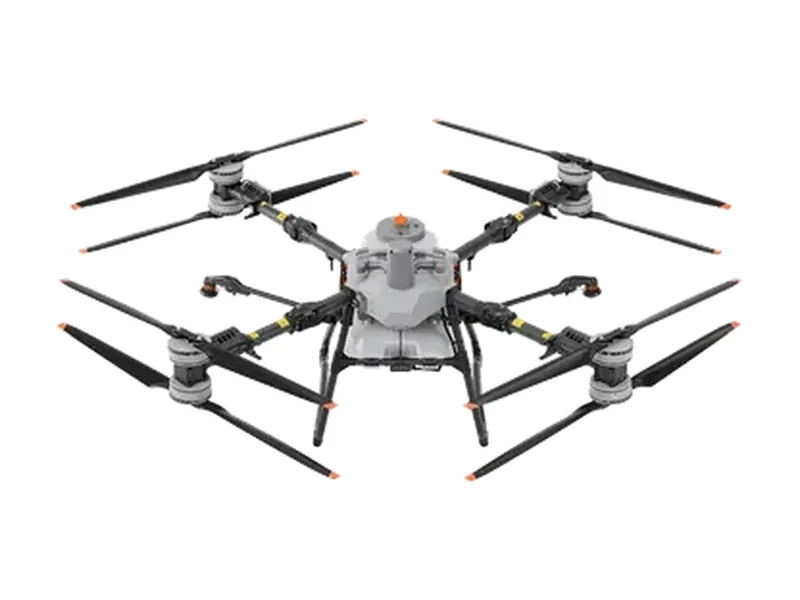
DJI Agras T100
Heavy agricultural drone for crop-protection spraying and spreading.
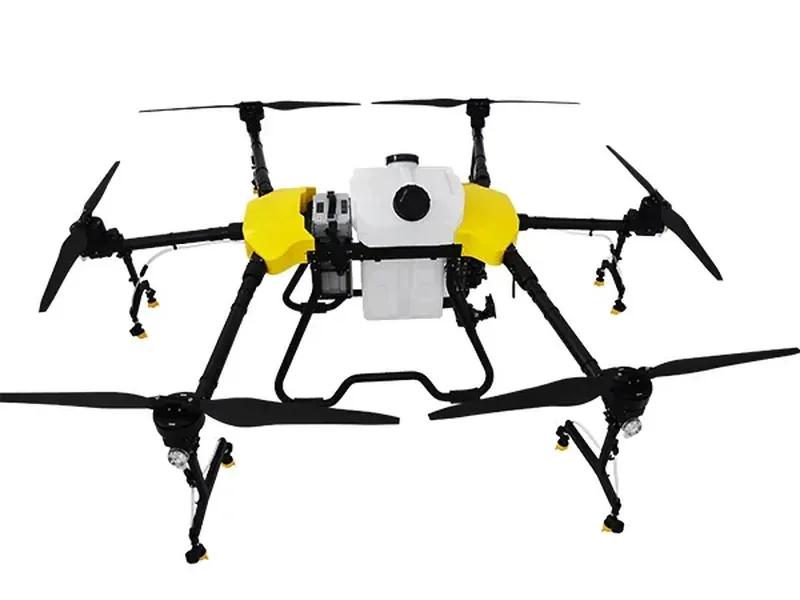
JT30L-606
30 L hexacopter for spraying, granule spreading and seeding.
How much they cost
Almost every maker gives the price only on request, so ask for a full quote.
Our catalogue lists 82 spraying and spreading drones from 36 makers. 62 of them are on sale now. 5 of them have a published price.
Those two prices show how wide the range is. A multi-rotor crop-protection drone from ALIGN starts from NT$278,000. The Pelican 2, a large electric aircraft with wings for plantations, costs $550,000–580,000.
For all other models you must ask the maker or a dealer. Ask what the price includes:
- Spare batteries and a fast charger
- Spreader kit or other add-ons
- Training and any licence course
- Service, spare parts and software updates
The main kinds of spraying drones
Choose the kind by how many hectares you treat and how big your fields are.
Spraying drones come in very different sizes, from a 10 L tank to an aircraft that carries 300 L.
Small multi-rotor drones
These carry about 10 L. They are light, often fold up, and fit in a car or pick-up. They suit small fields, terraces and orchards.
Some, like the Tobisuke J10, take 10 L of liquid or 10 kg of granules. Flights are short: one 10 L model lists a maximum flight time of 18.28 minutes.
Large multi-rotor drones
These carry from 30 L up to 100 L of spray. The DJI Agras T100 takes a 100 L spray tank or a 150 L spreading tank.
They cover more ground per flight. But they need a trailer, more batteries and stronger chargers.
Helicopters and fuel hybrids
Some machines run on petrol, alone or together with batteries. A drone that uses both is called a hybrid. Fuel gives longer flights.
The Yamaha FAZER R carries 32 L and flies up to 55 minutes. The R44 Sprayhawk is an unmanned helicopter with a 110-gallon spray system and a two-person ground crew.
Aircraft with wings
Fixed-wing drones fly fast, like a small plane, and suit very large blocks of land. The Pelican 2 sprays a 20 m swath (the width of one strip) and lists 105 hectares/hour at 10 L/ha.
Some new models use a camera and onboard AI to find weeds and spray only them. This is still at the pilot stage.
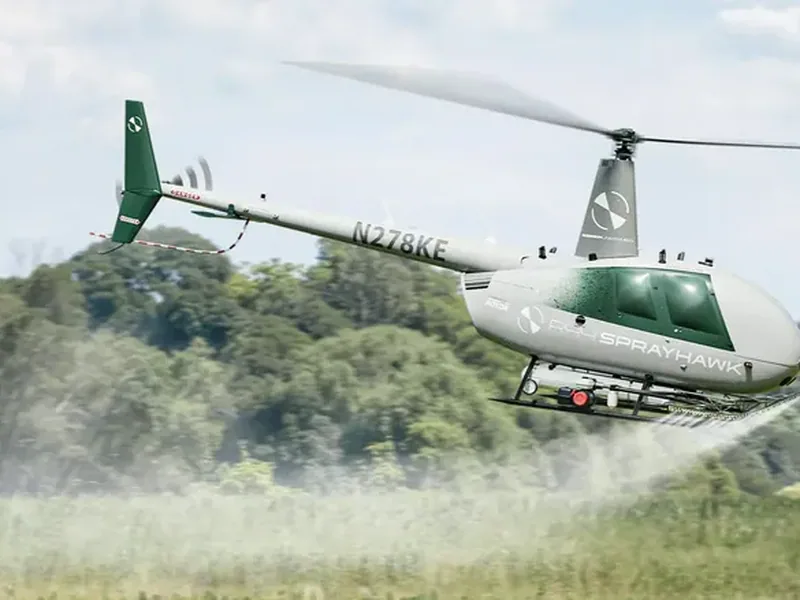
R44 Sprayhawk
Unmanned R44-based helicopter for precision aerial application (110 gal, 200+ acres/h) with automated path and…
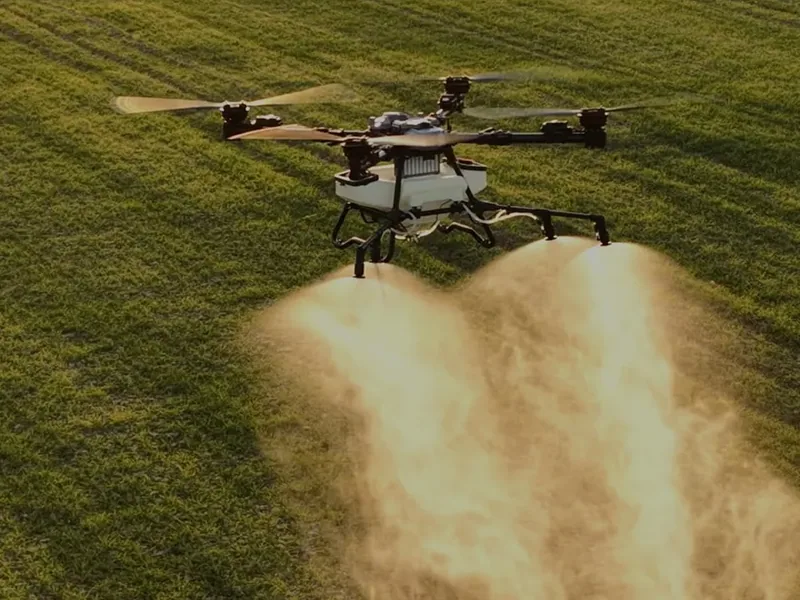
EFT Z80
Flagship all-in-one complete agricultural spraying/spreading drone.
Spraying, spreading and other jobs
Check if one drone can take both a spray tank and a spreader, so it works more weeks of the year.
Many drones can swap the spray tank for a spreader hopper. The hopper drops granules such as fertiliser or seed, often with a spinning disc or an auger (a turning screw that pushes granules out).
The spreader often holds more than the spray tank. For example, the L50 takes a 50 L sprayer tank or a 70 L spreader system.
There are two main nozzle types. Pressure nozzles push liquid through a small hole. Centrifugal nozzles use a spinning disc to throw out droplets, and you can often set the droplet size.
A few drones in the catalogue do other jobs, such as dropping pollen in orchards and greenhouses, or dropping seed balls to plant trees.
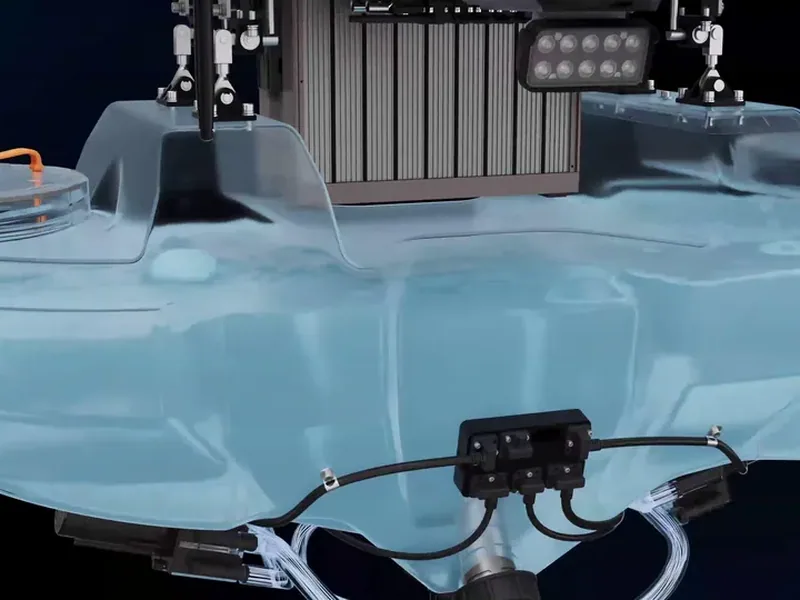
A80 agricultural unmanned aircraft
Modular agricultural drone with swappable spraying (four centrifugal nozzles), auger-driven spreading/seeding and…
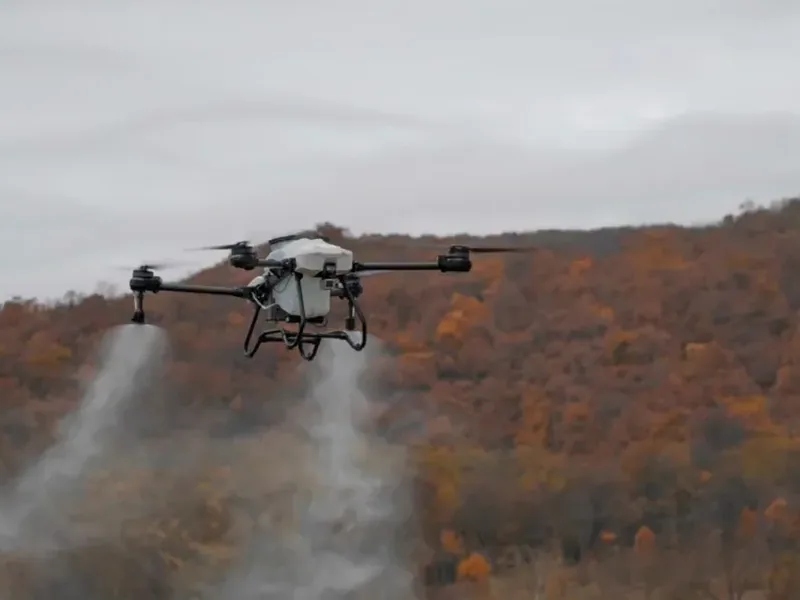
L50
70 L field-spraying drone (up to 24 ha/h) with optional spreading.
How to size a drone for your farm
Work out the hectares you must cover in a day, then count refills and battery swaps, not only tank size.
Makers give a work rate in hectares per hour (ha/h). It depends on tank size, spray width and how much liquid you put on each hectare. For example, the JT16L-404QC lists 8-10 ha/hr and the JT30L-606 lists 12-15 ha/hr.
Batteries are often the real limit. Some small drones list only 7 or 10 minutes of flight per battery with a full load. For a full day you need several battery sets, a fast charger and a generator or strong power supply at the field.
Before you choose, check these points:
- How many hectares you must cover on a good spray day
- Spray width and ha/h at your normal rate per hectare
- Flight time with a full tank
- How many batteries can charge while the drone flies
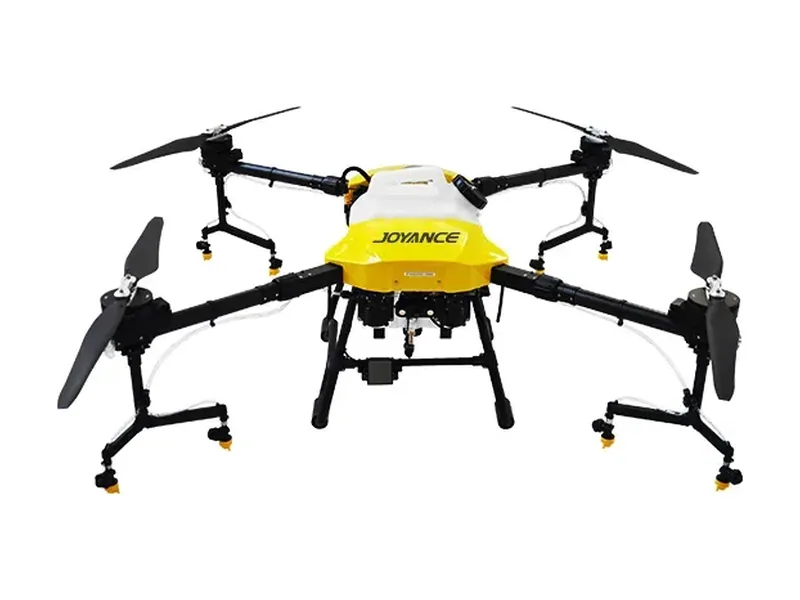
JT10L-404QC / JT16L-404QC
10-16 L quadcopter crop-spraying drones.
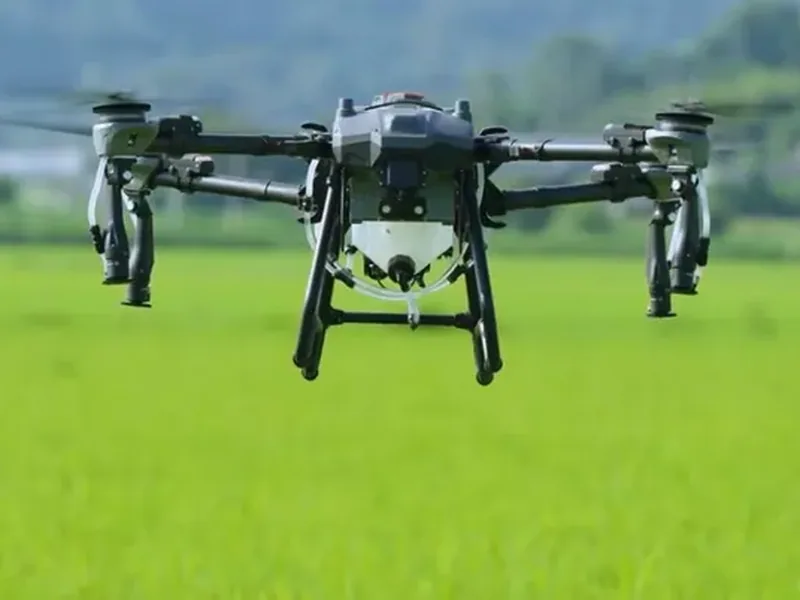
PANAX 35T / 25T / 20T RTK
Korean-made agricultural spraying drones (20-35 L class) for rice paddies, fields and orchards.
What to check before you buy
Check the rules for spraying from the air in your country before anything else.
Many countries treat drone spraying as aerial application, which means spraying from an aircraft. You may need a pilot licence, a spraying licence, and products approved for use from the air. Ask your local authority or dealer first.
Some makers sell a training version for new pilots. Some drones carry a national type certificate, for example from India's DGCA.
Also check:
- Safety: obstacle radar, terrain following and what the drone does if it loses signal
- Spray drift: wind limits and safe distances from water, homes and neighbours
- Service: a local dealer with spare arms, propellers and pumps
- Data: where your field maps and spray records are stored
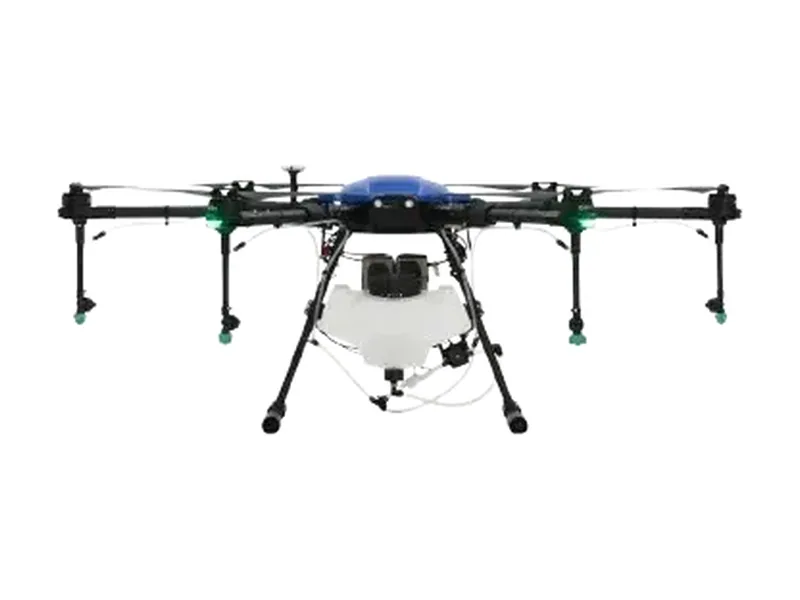
PANAX 616 EDU
Training version of the spraying drone.
Agri Kisan Drone
DGCA type-certified agricultural drone for precision spraying of fertilisers, pesticides and nutrients with…
Which one is for me?
- Small farm or hillside orchard: A light 10 L drone that folds into a car, with terrain following and obstacle radar. For example SYENA-H10i.
- Rice paddy grower: A light spray drone made for paddies, with automatic flight. Variable-rate support lets you put more product only where the crop needs it. For example AC102.
- Large arable farm or contractor: A large drone with a big spray tank and a spreader option, plus enough batteries and chargers for full days. For example DJI Agras T70P.
- Vineyard or orchard that does not want to own a drone: A spraying service run by the maker or a contractor. Check that it works in your area. For example RMAX / FAZER spray service.
- Plantation or very large estate: A fixed-wing aircraft or large helicopter with a wide swath and long flights. Expect a large budget and a trained crew. For example Pelican 2.
Compare all 82 spraying and spreading drones in the catalogue by tank size, work rate and maker. Then ask two or three dealers for a full quote.