Demolition & concrete removal buyer’s guide
Demolition and concrete removal robots break, crush and cut where it is too dangerous or heavy for people.
What these robots do
A demolition robot does heavy, dangerous breaking work while the operator stands at a safe distance.
Demolition and concrete removal robots break, crush and cut where the work is too dangerous or too heavy for people.
Most are small machines on tracks (belts like a tank) with a long arm. The operator walks beside or behind the machine and drives it with a remote control.
The arm carries a tool. A breaker is a big hydraulic hammer, and a crusher is a pair of strong jaws. Hydraulic means the tool is moved by oil under high pressure.
Our catalogue lists 32 models from 9 makers. All of them are on sale now.
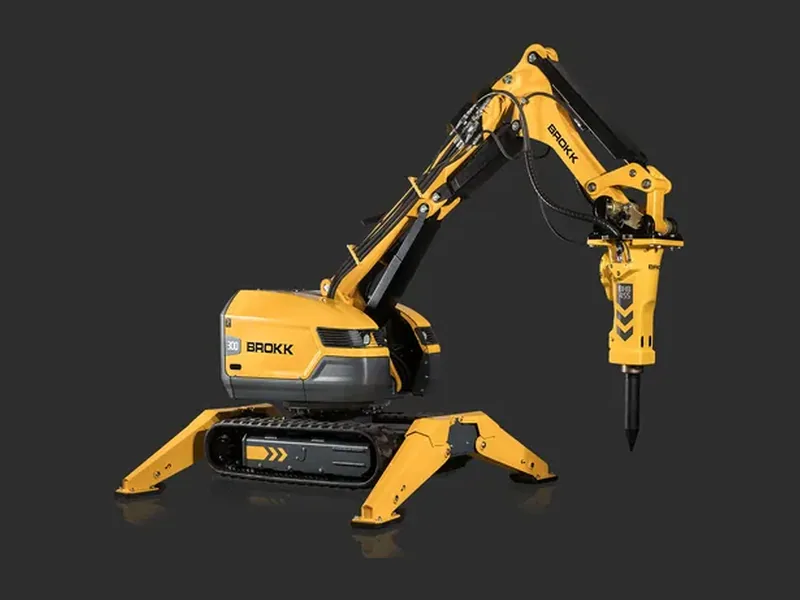
Brokk 300+
Remote-controlled electric demolition robot, ~6 m reach
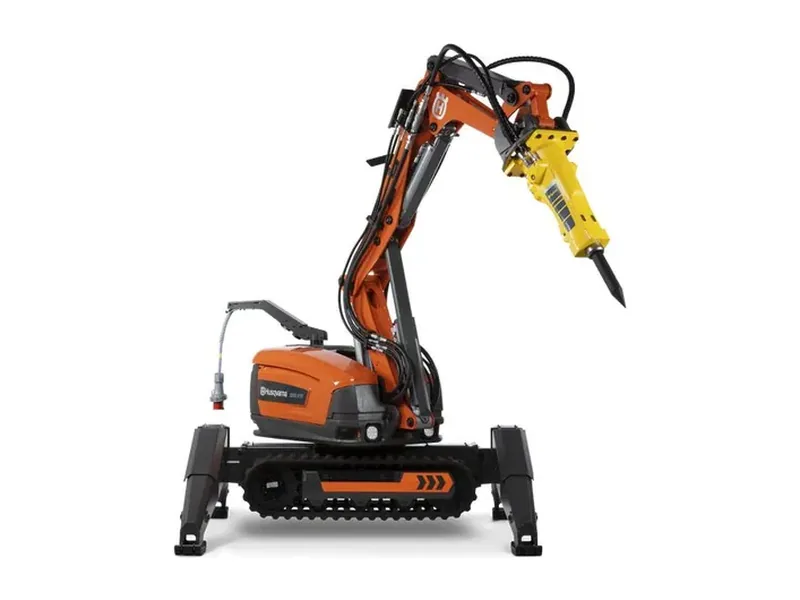
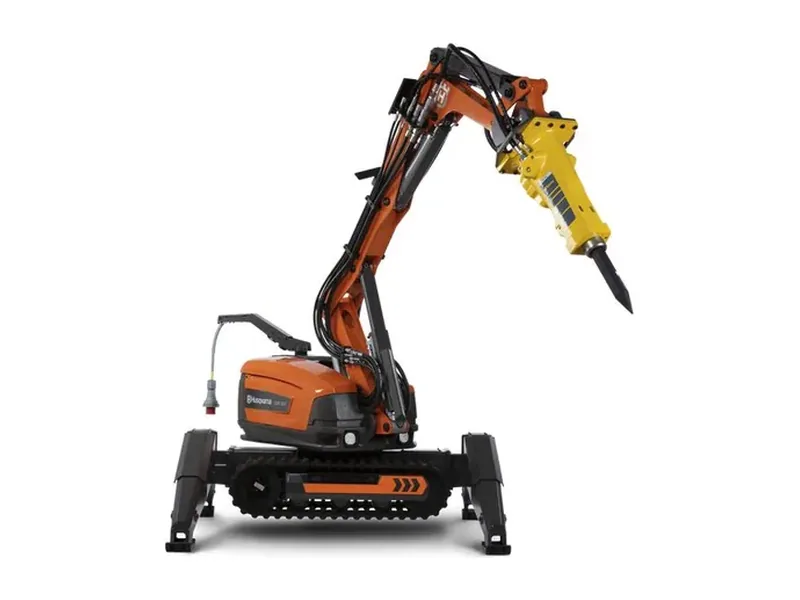
Husqvarna DXR 275
Mid-size remote demolition robot
How much it costs
No maker publishes a price, so ask several dealers for a full written quote.
None of the 32 robots in our catalogue has a published price. Every maker asks you to contact them for a quote.
Ask for the total price, not only the machine. Tools, a spare remote, transport, training and a service plan can add a lot.
Renting is common for this type of machine, and it is a good way to test before you buy. Some makers also sell older models or used machines, which can cost less.
- The machine and the tools you need (breaker, crusher, cutter)
- Transport, training and the first service
- Spare parts and how fast they arrive
The main kinds
Choose a hammer-and-crusher robot to knock things down, and a water-jet robot to remove concrete but keep the steel inside.
The robots in this group work in quite different ways. Pick the kind first, then the size.
Breakers and crushers on tracks
This is the most common kind. The arm hits, crushes or cuts walls, floors and foundations.
They range from small machines for inside buildings to very large ones for heavy industrial work.
Water jets (hydrodemolition)
These robots remove concrete with a very strong jet of water. The water breaks the concrete but leaves the rebar intact. Rebar is the steel bars inside the concrete.
They are used to repair bridges, car parks, tunnels and dams, where the old steel must stay in place.
Fixed booms and special machines
Some machines do not drive around. A pedestal boom is a fixed arm next to a rock crusher in a mine or quarry, used to break stones that get stuck.
Other robots in this group clean metal plants, mill inside sewers, or drill holes in ceilings and walls on building sites.
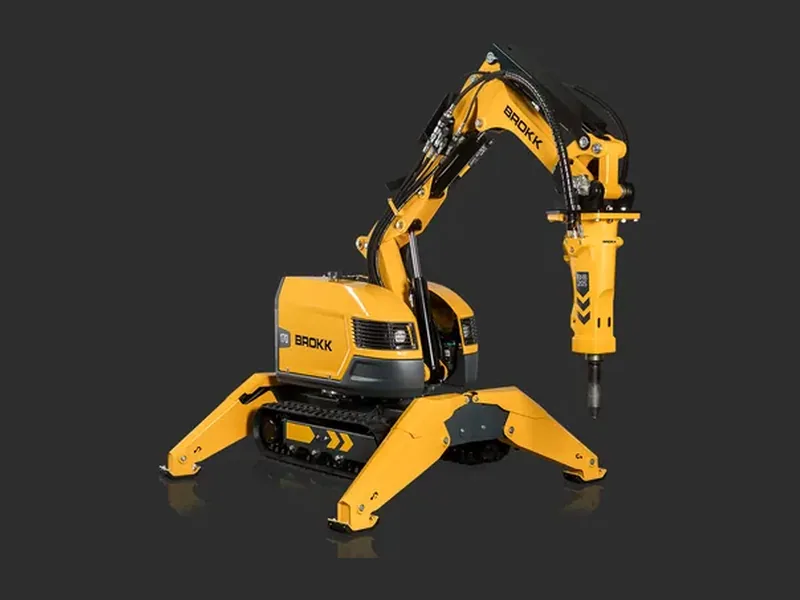
Brokk 110+ / 130+ / 170+ / 200+
Mid-size SmartPower+ remote-controlled electric demolition robots
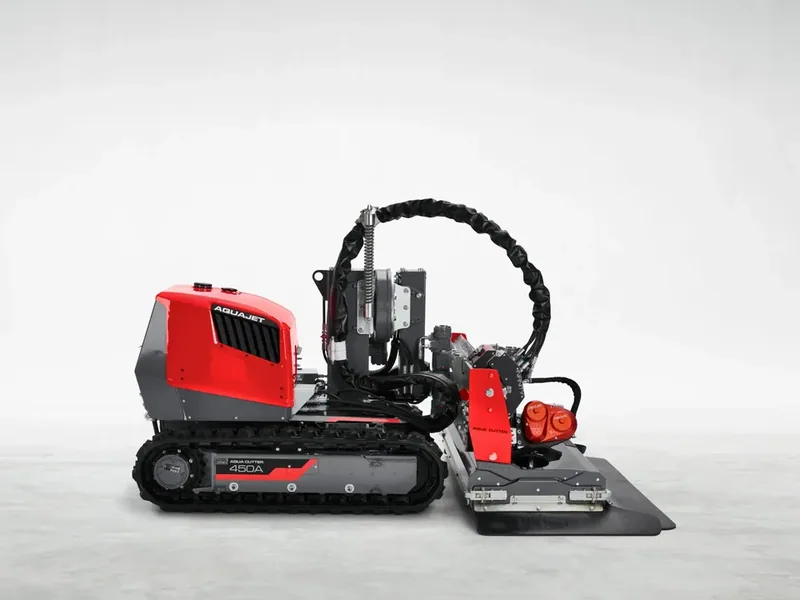
Aqua Cutter 410A / 410V
Compact tracked hydrodemolition robots (A = automated horizontal, V = vertical/overhead) for concrete removal
Size it for your job
The robot must fit through your door and your floor must carry its weight; then check that the arm reaches far enough.
Start with the smallest door, lift or corridor on the way to the work. A narrow model is 771 mm wide, while a large one is 1.2 m wide.
Then check the weight against what your floor can carry. A compact model weighs 589 kg. A mid-size one weighs 3,650 kg, and the largest weighs 11,400 kg.
Reach is how far the arm can go. A compact robot reaches about 3.16 m, while the largest reaches 9.1 m up. A longer reach usually means a heavier machine.
If you work on slopes or ramps, ask for the maximum incline. One mid-size model is rated for 30°.
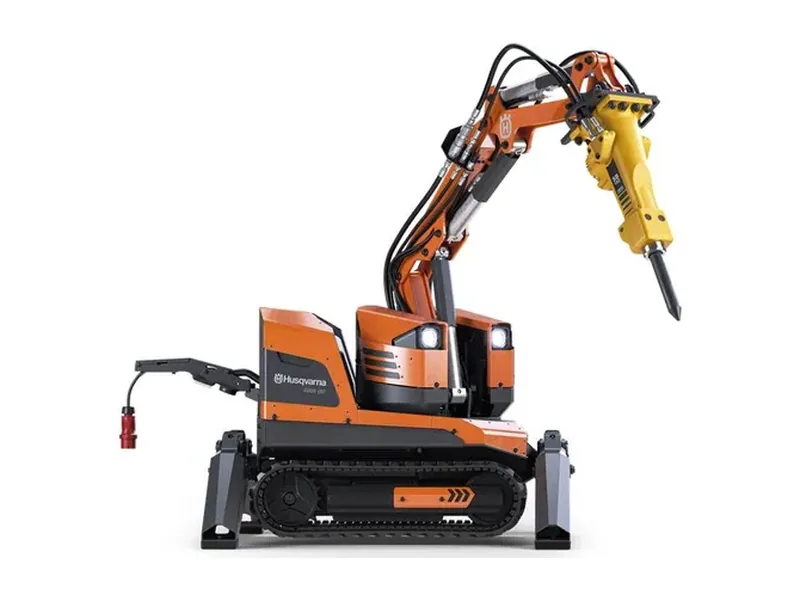
Husqvarna DXR 95
Compact remote-controlled electric demolition robot
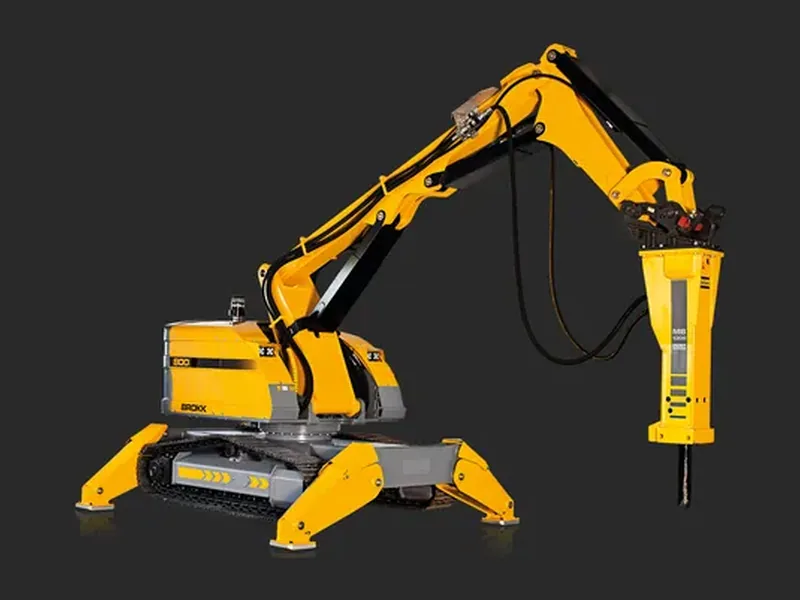
Brokk 900 / 900 Rotoboom
Largest Brokk demolition robot, diesel or electric
Electric or diesel
Electric robots suit indoor work with no exhaust fumes; diesel suits sites with no strong power supply.
Electric robots make no exhaust fumes, so they are the normal choice inside buildings, tunnels and plants. They need a cable and a strong power supply on site.
Check the fuse size you need. A fuse is the safety switch that protects the power line. One small model needs a 16 A fuse, while a 3,650 kg model needs a 63 A fuse.
Diesel robots work where there is no strong power, such as outdoor sites. Some models come in both versions, for example 55.5 kW diesel or 71 kW electric.
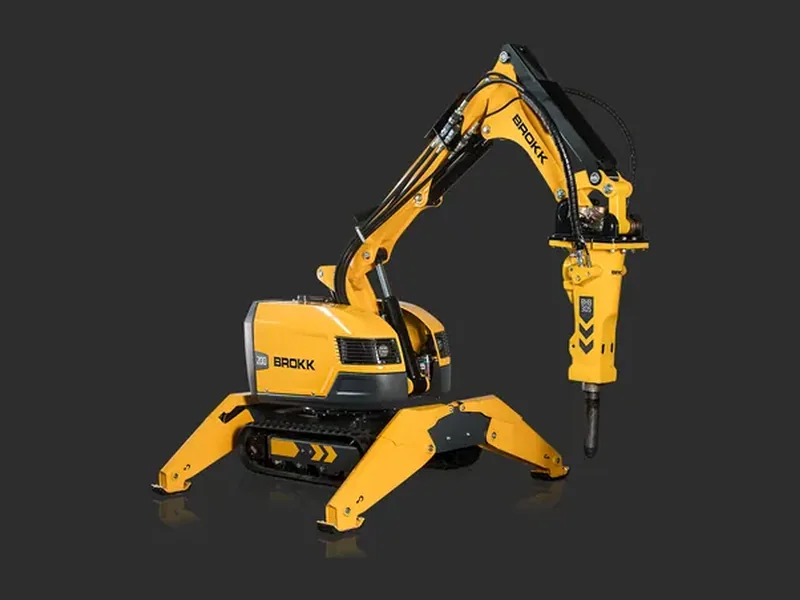
Brokk 70 / 120DII / 170 / 200 / 300 / 500 / 520D
Previous/standard generation remote demolition robots (D = diesel versions)
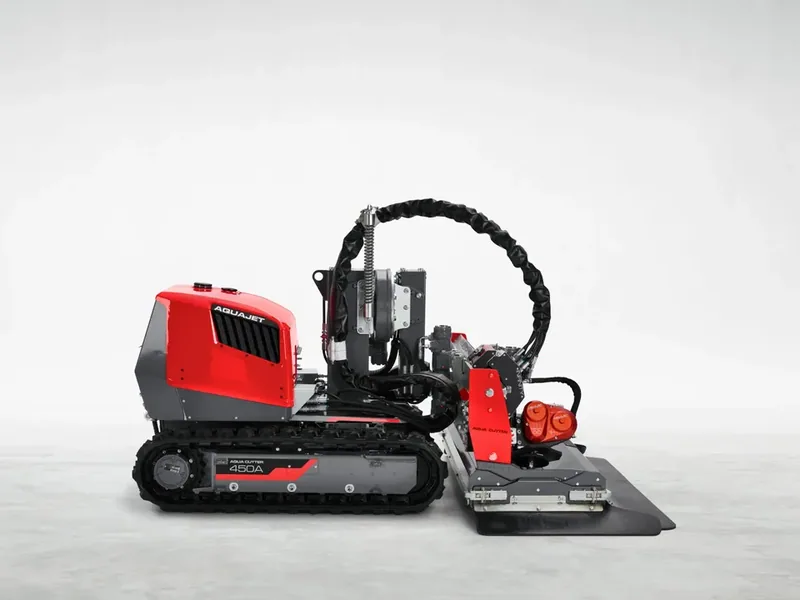
Aqua Cutter 710V / 710V XL / 710H / 710VE
Heavy-duty tracked hydrodemolition robots; XL extended reach, H horizontal, VE electric variant
Remote control and safety
Check the remote range, what happens if the signal is lost, and the safety rating of the controls.
Most robots use a radio remote. Several models list a range of up to 300 m. Some can also use a cable, which helps where radio does not work well.
Ask what the machine does if the radio signal is lost or the remote battery runs out. It should stop safely.
Look for a safety rating for the control system. One model lists PLd, a recognised level of safety for machine controls, and approval that its radio does not disturb other equipment.
Plan for dust, noise and flying pieces. Keep people out of the work area, and train every operator.
If you choose water jets
A water-jet robot is only one part of the job: you also need a high-pressure pump, a lot of water and a plan for waste water.
A hydrodemolition robot needs a separate high-pressure pump. Ask if the robot works with your pump, because some models work with pumps from other makers.
You also need a good water supply and a way to collect and clean the dirty water before it leaves the site. Check your local rules for this.
Choose the model by the surface: floors and decks, walls, or ceilings. Some makers sell small kits for tight spaces, and rail systems for pipes, shafts and walls.
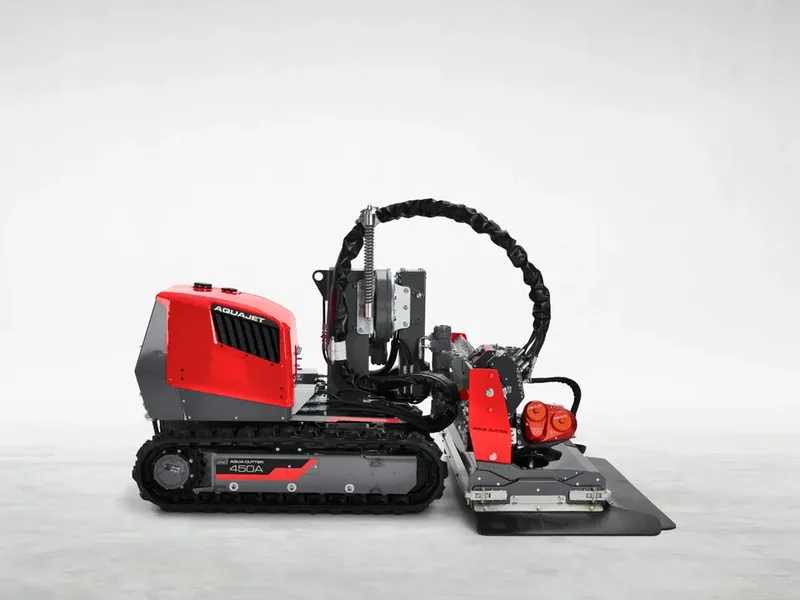
Aqua Cutter 750V
Large tracked hydrodemolition robot
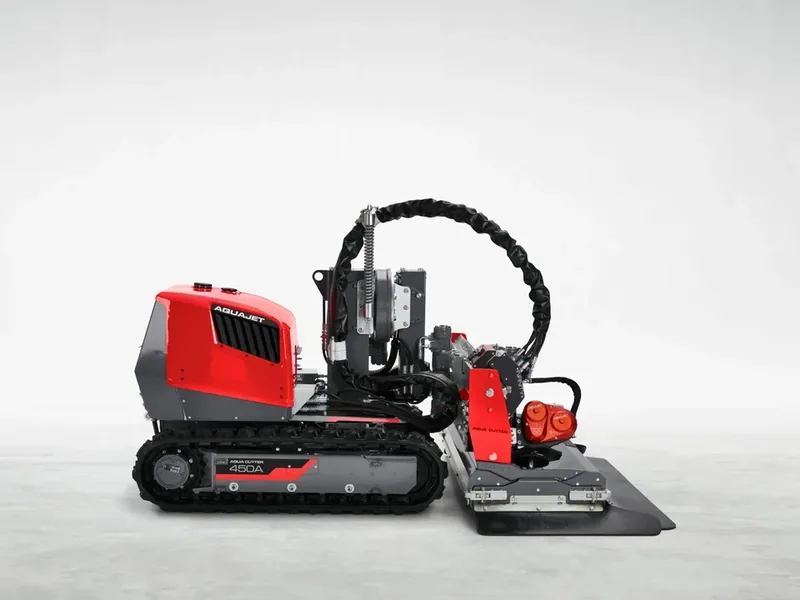
ERGO GO / ERGO Spine GO
Compact hydrodemolition kits for confined/hard-to-reach areas
Which one is for me?
- Renovation contractor working inside buildings: Look for a narrow, light electric robot that fits through a standard door and does not overload upper floors. A cable or radio remote and low noise matter most. For example Husqvarna DXR 145.
- Bridge, car park or tunnel repair contractor: Look at water-jet robots that remove damaged concrete and keep the rebar. Check pump compatibility, water supply and reach for decks, walls or ceilings. For example Aqua Cutter 450A / 450V.
- Large demolition or industrial contractor: Look for a larger robot with long reach and strong tools. Check transport weight, the power supply on site, and whether you need diesel. For example Brokk 500+.
- Metal plant or foundry facility manager: Look for machines built for cleaning and breaking in hot, dusty process areas. Ask about heat protection, service visits and spare parts. For example Brokk Descaler.
- Mine or quarry with a rock crusher: Look for a fixed, remote-operated boom next to the crusher to break stuck stones. Ask about reach over the crusher and control from a safe room. For example Brokk Pedestal Boom.
Measure your doors, check your power supply, then compare weight, reach and power for all 32 models in the catalogue. Ask two or three makers for a quote and a demonstration on your own site.