Autonomous tractors and retrofit kits
Autonomous tractors & retrofit kits buyer’s guide
Compared by Working Robots · 24 robots, 19 makers
Driverless tractors and kits that make existing tractors autonomous.
What an autonomous tractor does
It drives and works a field by itself while a person watches from a tablet.
An autonomous tractor drives itself. It follows a route you plan in advance and uses the same kinds of tools as a normal tractor.
A retrofit kit does the same for a tractor you already own. Retrofit means adding new parts to an existing machine.
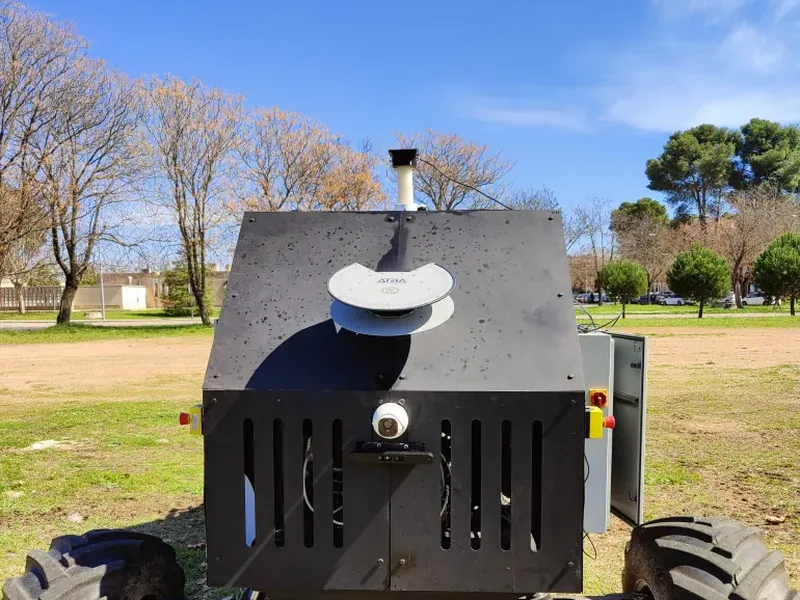
The kit adds positioning, cameras or lidar, safety sensors and a computer. Lidar is a sensor that uses laser light to measure the distance to things around the machine.
You draw the field and the job on a tablet. The machine then does the work, and a person supervises it from a distance and can stop it.
The main kinds
Choose between a kit for your own tractor, a new driverless tractor or a smaller tool carrier.
The catalogue lists 24 robots from 19 makers. Most of them fall into three main groups.
Retrofit kit
A kit turns a tractor you already have into a driverless one. You keep your tractor and your tools.
Check the fit first. Some kits fit only one brand or a few models. Others are sold to machine makers, who build them into their own machines.
Driverless tractor
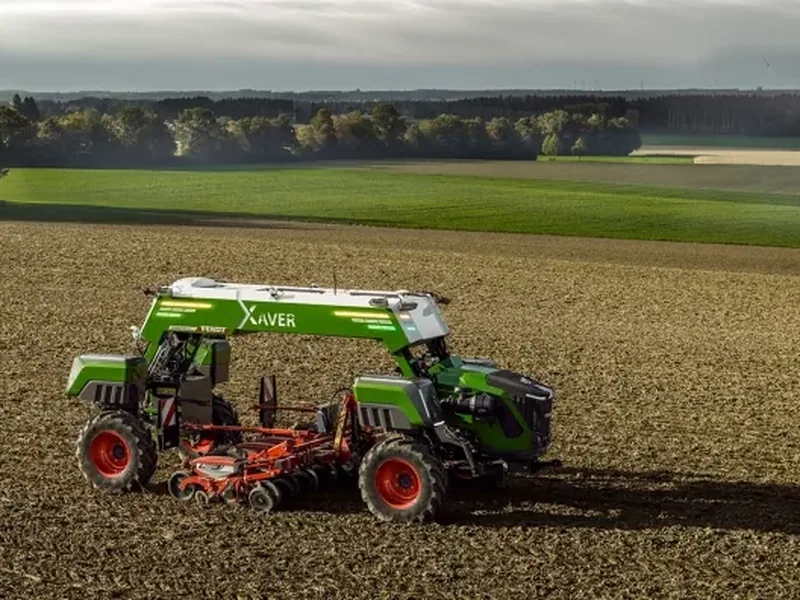
This is a new machine built to work without a driver from the start. It is made for heavy fieldwork with normal implements.
Some run on diesel. Others are battery-electric.
Compact tool carrier
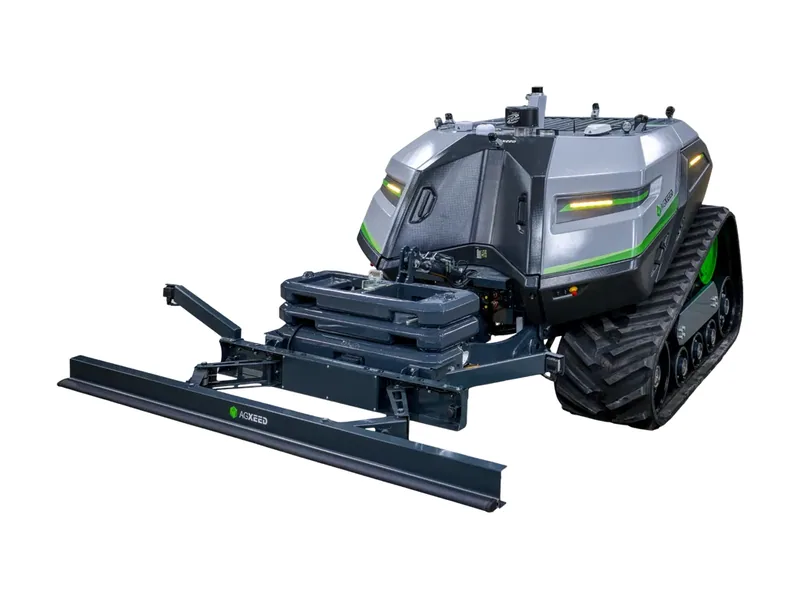
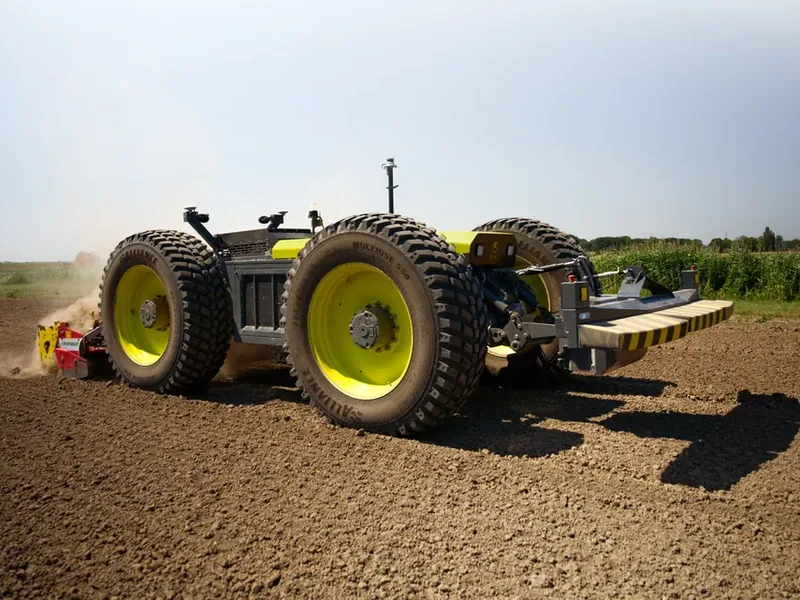
This is a smaller, lighter frame that carries tools at the front, middle or back.
Carriers are often made for rows of vegetables, fruit or vines, or for repeated jobs such as weeding and harrowing.
How much it costs
Almost every maker gives prices only on request, so ask for the full cost per year.
3 of the 24 robots in our catalogue have a published price. One is a compact tool carrier for vegetable, fruit and wine growers, from €150,000.
For all the others, you must ask the maker or a dealer. Ask for the cost per year and per tractor, not only the purchase price.
Ask if there is a yearly fee for software, maps or the positioning signal. Also count setup, training and service visits.
Size it for your farm or job
Match power, hitch and width to the tools and fields you already have.
Start with your heaviest job. Deep tillage and wide drills need a lot of pulling power. The largest machine in the catalogue has a 170 kW (230 hp) engine and a rear linkage that lifts 9 t.
The linkage is the set of arms at the back or front that holds the tool. The PTO (power take-off) is the turning shaft that drives tools such as mowers and sprayers. Check that both match your tools.
For row crops, check the track width. This is the distance between the wheels, and it must fit your rows. The compact carriers in the catalogue range from 1.20 m to 2.25 m.
A driverless machine can work long hours. Plan who refuels or recharges it and who moves it between fields.
Diesel, electric or hybrid
An electric machine needs a charging plan, a diesel one needs a refuelling plan.
Diesel machines refuel quickly and can work far from the yard. Battery-electric machines are quieter and have no exhaust, but they must stop to charge.
Some makers offer a charging unit that goes out to the field, so the tractor can work longer. Others use swappable batteries, which you change instead of waiting for a charge.
A hybrid uses a small diesel engine to make electricity for electric motors. Ask how many hours one charge or one tank lasts, and how long charging takes.
What to check before you buy
Check stage, fit, safety rules, signal and service before you talk about price.
Many of these machines are not on sale yet. 13 of the 24 robots in our catalogue are on sale now. The others are pilots, which are tested on real farms with a small group of customers, or prototypes, which are test machines.
Ask what the local rules say about driverless machines. Often a person must supervise the machine, from the field edge or from a distance.
Ask how the machine stays in its area. Many use a geofence, which is a virtual fence on the map. The machine stops if it tries to leave it.
- Fit: which tractor brands and models the kit works with
- Safety: which certification it has and how it stops for people and animals
- Signal: RTK (a correction signal that makes GPS very precise) and mobile coverage in your fields
- Service: who repairs it and how fast a dealer can come
Which one is for me?
- Orchard or vineyard with tractors you already own: Look at retrofit kits made for permanent crops. Check that the kit fits your tractor brand and model, and that a local dealer installs and services it.
- Vegetable, fruit or wine grower with narrow rows: Look at a compact tool carrier that takes your tools at the front, middle and back. Check that the track width fits your rows. For example InnoTRAC / CAESAR.
- Large arable farm with heavy fieldwork: Look at a full-size driverless tractor with high pulling power, a strong linkage and a PTO. Check how long it runs on one tank or one charge. For example EOX Frontier.
- Contractor working on many farms: Look for kits that fit several tractor brands and a fleet app that shows all machines on one screen. Ask about the cost per tractor.
- Large grass or solar site that uses mowing robots: Look at a field charging station with a shelter, so the robots can recharge and update without coming back to the yard. For example Recharge Pod.
Compare all 24 models in the catalogue by stage, power and tractor fit. Then ask the makers on your shortlist for a full yearly price.